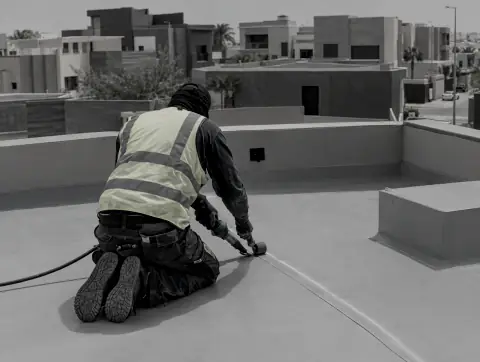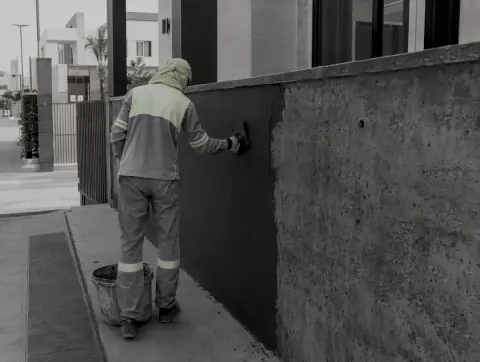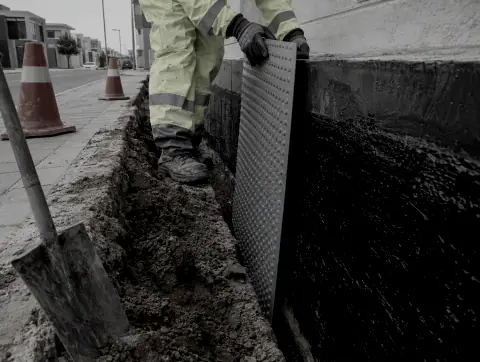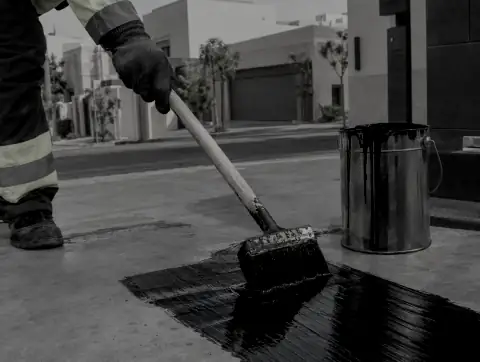
What the cold bitumen work covers
- Checking the surface and locating cracks and weak points
- Cleaning the surface and removing loose material and grease
- Treating cracks and joints before application
- Applying the waterproof coating by brush or roller over the whole surface
- Closing the waterproofing at the parapet, drain openings and AC bases
- Adding the protective layer on sun-exposed surfaces once dry
Four steps for the cold bitumen coating
Send photos of the area
On WhatsApp: photos of the surface to be waterproofed, any cracks, and the surrounding area, so we can decide the right treatment and material.
Clean and prepare the surface
The surface is cleaned of dust, oils and loose material. Cracks and joints are treated, and the surface is left to dry fully before application. A damp surface prevents the coating from bonding.
Apply the waterproof coating
The material is brushed or rolled over the whole surface, turned up at walls and the parapet, and closed tightly around drain openings, AC bases and any penetration. The layers applied depend on the surface condition and its location.
Cure and protective layer
The coating is left to dry and harden. On surfaces exposed to sun, a protective layer is added over it, because cold bitumen left bare is degraded by intense heat and ultraviolet light over time.
Why Abraj Al Azl?
No flame in confined spacesBrush and roller application makes the coating suitable for bathrooms, planters and any space where a flame is not safe.
Penetrates pores and hairline cracksThe liquid body lets the material enter pores and hairline cracks in the concrete before it sets, forming a seal both inside and at the surface.
We reply 5 AM to 10 PMSaturday to Thursday, and Friday on its own hours.
Talk to us directlyCall or WhatsApp on the same number.
Some of our work

















What our customers said
ماشاء الله عملهم للعزل والتسريبات ممتاز وخبره ودقه في العمل انصح بالتعامل معهم موفقين يارب
اتعاملت معاهم في العوازل عند كفيلي شغل يبيض الوجه انص التعامل معهم
ماشاء الله تبارك الرحمن عزل اسطح ممتاز
Real Google reviews, shown exactly as their authors wrote them.
Questions about cold bitumen waterproofing
What is the difference between cold bitumen and bitumen rolls?
Bitumen rolls are a continuous sheet bonded by heat or adhesive, suited to large open surfaces. Cold bitumen is a liquid applied by brush or roller that reaches tight corners, confined areas and surfaces where rolls do not fit. The right choice depends on the location and the surface condition, and photos help us decide.
Can cold bitumen be applied to freshly poured concrete?
It is not applied immediately after pouring. The concrete must complete its cure and dry fully first. Internally damp concrete prevents the coating from bonding and traps moisture beneath it, reducing how well the layer works. Send a photo and tell us when the concrete was poured and we will advise the right time to apply.
Does cold bitumen need a protective layer on a roof?
On surfaces exposed to direct sun, yes. Intense heat and ultraviolet light damage bare cold bitumen over time. A suitable protective layer, tiles or a thermal coating is added on top, depending on the roof and how it is used. In foundations and bathrooms that will be finished over, no extra protection is needed because the coating will be covered.
Can cold bitumen be applied over old bathroom tiles?
In some cases yes, if the tiles are firm, clean and free of grease the coating bonds over them and closes the joints. If the tiles are loose or there is moisture beneath them, they are lifted first and the concrete surface is treated. Send photos of the bathroom and we will say which way suits.
What decides the cost of cold bitumen waterproofing?
The area to be waterproofed, its condition regarding cracks and moisture, whether tiles need lifting or prior treatment is needed, ease of access, and whether a protective layer is required. Send photos and rough dimensions on WhatsApp and we will work out the treatment and the cost.
Is cold bitumen suitable for outdoor planters and planting beds?
Yes. Cold bitumen is used on the inside walls of planters and planting beds to stop irrigation water reaching the adjacent walls or the surface below. It is applied to the concrete or tiles after cleaning, left to dry before the planter is filled with soil. Good ventilation of the space during application is important.
Areas for cold bitumen waterproofing
Choose your area to open the page for this service there.
More in Bitumen & membrane insulation