Epoxy waterproofing in Industrial Area
Epoxy waterproofing in the Industrial Area begins with a photo of the roof, tank or floor sent by call or WhatsApp. The area has diverse factories and production facilities, where moisture and leakage are common problems.
The Industrial Area combines long-established factories with modern facilities, all needing protection from leakage and moisture. Older roofs show signs of sun, moisture and cracking, and tanks may be made of different materials in varying condition. Industrial floors bear heavy loads and spills, requiring strong, durable waterproofing. Photos show the surface type and current damage to determine the right epoxy treatment.
- The Industrial Area is an industrial district in the Eastern Province, near the Second and First Industrial Areas and Yanbu, with several factories and facilities.
- Water and oil tanks in the industrial area are under constant pressure from liquids and heat, which speeds the breakdown of surface protection.
The scope of the work in Industrial Area
- Emptying the tank or pool and waiting for the surface to dry fully
- Cleaning the surface, removing old coatings and roughening it
- Inspecting the internal surface and locating leak points and cracks
- Treating hairline cracks and joints before the resin is applied
From first contact to the finished job in Industrial Area
Send photos of the surface
On WhatsApp: photos inside the tank, the pool or on the floor, showing the cracks, joints and anywhere the leak shows, so we can decide the right treatment.
Dry and prepare the surface
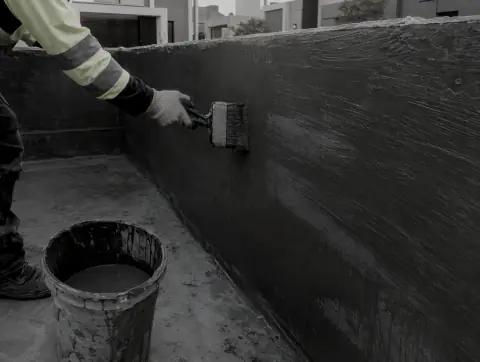
The tank or pool is emptied completely and the surface is left to dry, because epoxy does not bond to damp concrete. The surface is cleaned of dirt and old coatings, then roughened or treated to open the concrete pores.
Treat cracks and joints
Hairline cracks are opened slightly and cleaned, then filled with a suitable material before the resin goes on, because the layer alone does not bridge moving or wide cracks.
Apply the resin layers and let them cure
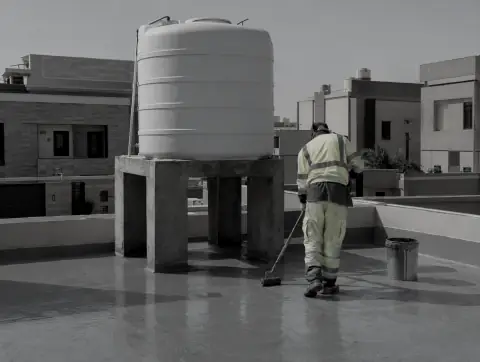
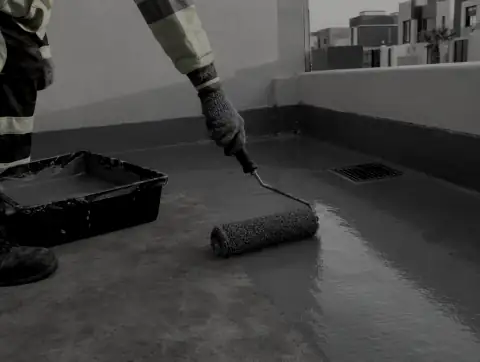
The two epoxy parts are mixed and successive layers are applied, each left to cure before the next, with particular care at corners, joints and drain outlets.
Why Abraj Al Azl?
Bonded, not floatingEpoxy bonds into the concrete rather than sitting on top, which makes it hard for water pressure from inside to push it off.
We serve Industrial Area and around itIncluding Second Industrial Area, First Industrial Area and Yanbu, as part of our work across the Eastern Province.
Epoxy waterproofing in Industrial AreaWe choose the method and the materials once we know the condition of the spot.
We reply 5 AM to 10 PMSaturday to Thursday, and Friday on its own hours.
Some of our work

















What our customers said
أفضل شركة عزل اسطح الفوم وخزانات المياه
ماشاء الله عملهم للعزل والتسريبات ممتاز وخبره ودقه في العمل انصح بالتعامل معهم
ماشاء الله تبارك الرحمن عزل اسطح ممتاز
Real Google reviews, shown exactly as their authors wrote them.
Common questions on epoxy waterproofing in Industrial Area
Is epoxy suitable for tanks holding oil or industrial materials?
Yes, but it depends on the exact substance and its temperature. Some oils and chemicals may require a specific epoxy formulation. Send photos and describe the contents and use so we can advise the right solution.
How often does epoxy waterproofing need renewal in an industrial environment?
This depends on the liquid type, mechanical load and climate factors. Periodic inspection for damage signs helps determine when renewal is needed.
Why must the surface be completely dry before epoxy is applied?
Epoxy is a chemical resin that needs to react with the concrete, not with water. Moisture in the concrete prevents full adhesion and can cause the layer to blister or separate later. That is why tanks are emptied and the surface is left to dry before work begins.
Is epoxy suitable for waterproofing external roof surfaces?
Epoxy is mainly suited to internal surfaces. Outdoors the layer is exposed to ultraviolet light, which causes yellowing and gradual loss of its properties. On open external surfaces, other materials such as bitumen or liquid membranes are usually more suitable. Photos help us advise which is right for your surface.
How do I know if an old epoxy layer needs renewing?
Signs that renewal is due include blisters or bubbles on the surface, sections that have separated or are lifting, leaks returning through the layer, and unusual discolouration or roughness. If you notice any of these, send photos on WhatsApp and we will assess the condition.
What should I send you from Industrial Area?
Send clear photos of the spot and a short description of the problem on WhatsApp, mention that you are in Industrial Area, and we will work out the next step with you.
We also offer it in neighbouring areas
We also offer epoxy waterproofing in Second Industrial Area, First Industrial Area and Yanbu, among the closest areas to Industrial Area.
More services in Industrial Area