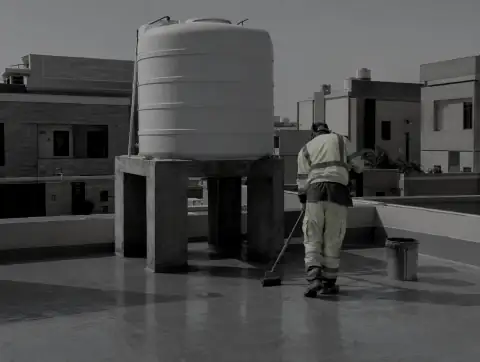
Overhead tank waterproofing in Industrial Area
Overhead tank waterproofing in the Industrial Area starts with a photo of the tank, base and pipes, sent by call or WhatsApp. The area has diverse industrial buildings, and each tank has unique needs based on use and location.
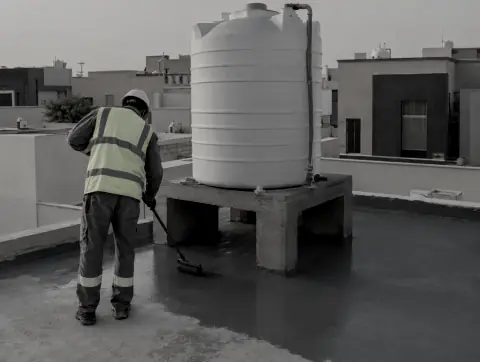
Overhead tanks in the Industrial Area serve multiple purposes: water supply, cooling, and production processes. Their size and height vary by building, some older and some newer. Constant exposure to sun, humidity and industrial dust causes lining cracks and weakens joints. Multiple pipes and entries need special care. Photos determine the current tank and support condition before the right method and materials are chosen.
- The Industrial Area is a district in the Eastern Province, near the Second Industrial Area, the First Industrial Area and Yanbu, with large factories and workshops.
- Industrial tanks carry heavy loads and face severe environmental changes, so waterproofing must be strong and durable.
The main items of overhead tank waterproofing in Industrial Area
- Checking the tank body, its cracks, joints and base
- Applying a waterproof layer to the body and base according to where the leak is
- Treating hairline cracks, open joints and pipe entries
- Leaving the layer to dry and cure before the tank is refilled
This is how we work in Industrial Area
Send photos of the tank and the roof
On WhatsApp: photos of the tank body, its base, the pipe entries, the surrounding roof and any damp patches below, so we can read the extent of the leak and decide the right treatment.
Empty and clean the tank
The tank is emptied completely and cleaned inside and out, then the body, the base and all pipe entries are inspected for cracks and open joints.
Treat cracks and joints
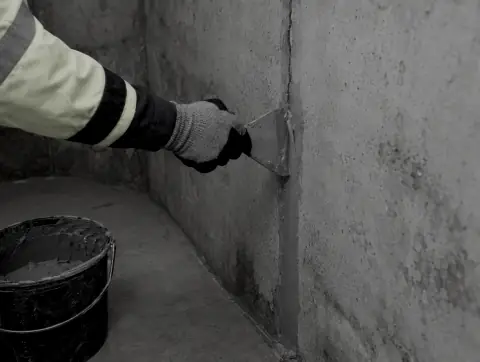
Hairline cracks, open joints, the edges of pipe entries and any nearby AC base are treated before the waterproof layer goes on, depending on the condition of each point.
Apply the layer and allow it to cure
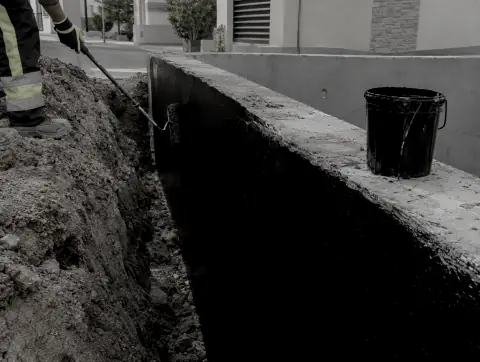
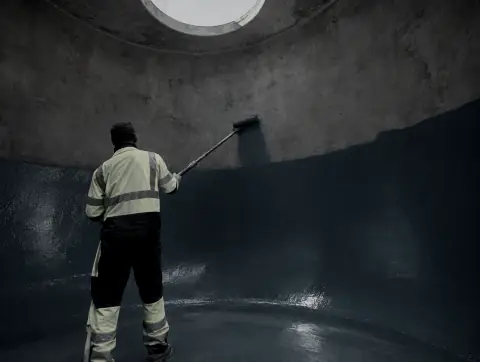
The waterproof layer is applied to the tank body from the inside, the outside or both, according to where the leak is, closed firmly around each pipe entry and across the base, then left to dry and cure before the tank is refilled.
Why Abraj Al Azl?
The tank stops losing water to the roofSealing the tank body and its base stops the slab and the walls being continuously wet, which protects the reinforcement from rust.
Industrial Area is in our service areaWe work there and across the Eastern Province, from our base in Al Uwaymiriyah, Hofuf.
Start from Industrial Area with one messageSend us photos of the spot on WhatsApp and we will work out the next step with you.
We reply 5 AM to 10 PMSaturday to Thursday, and Friday on its own hours.
Some of our work

















What our customers said
ماشاء الله عملهم للعزل والتسريبات ممتاز وخبره ودقه في العمل انصح بالتعامل معهم
اتعاملت معاهم في العوازل عند كفيلي شغل يبيض الوجه انص التعامل معهم
أفضل شركة عزل اسطح الفوم وخزانات المياه
Real Google reviews, shown exactly as their authors wrote them.
Questions about overhead tank waterproofing in Industrial Area
Does waterproofing a large industrial tank require shutting down production lines?
It depends on system and tank design. Send photos and describe how the tank connects to operations so we can plan an approach that minimises downtime.
What is the difference between waterproofing a regular water tank and an industrial process tank?
Process tanks may hold different liquids or face higher heat or pressure. Waterproofing materials must match tank contents and conditions. Photos will clarify the tank's use so we choose suitable materials.
Does the tank have to be emptied before waterproofing?
Yes. The tank must be fully emptied to clean the walls, check the cracks and joints and apply the waterproof layer to a clean surface. If the treatment is on the outside only the situation may differ, but photos guide us on what is needed before we arrive.
Why does the damp patch sometimes appear far from the tank?
Water enters at the tank base or around a pipe, then travels inside the slab or between the roof layers until it finds a weaker point and shows there. That is why the patch can be metres away from the tank itself. Photos help us trace the path.
Does the tank concrete suffer from temperature swings?
Yes. A hot climate sees wide temperature swings between summer and winter and between day and night. Repeated expansion and contraction opens hairline cracks in the concrete and weakens joints, especially in tanks that face direct sun. This is one of the most common causes of leaks in overhead tanks.
Do you cover Industrial Area?
Yes. We serve Industrial Area and nearby areas such as Second Industrial Area, First Industrial Area and Yanbu, from our base in Al Uwaymiriyah, Hofuf. Start with a call or a WhatsApp message.
Areas near Industrial Area
Nearby areas we also cover: Second Industrial Area, First Industrial Area and Yanbu.
More services in Industrial Area