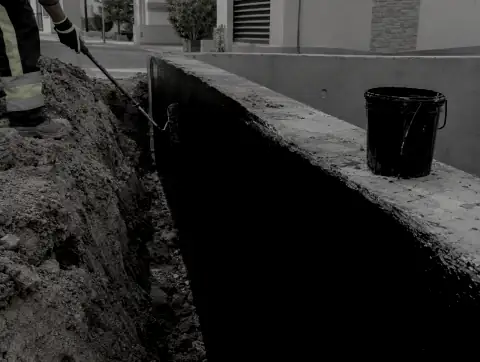
Ground tank waterproofing in Industrial (near Hafar Al-Batin)
Ground tank waterproofing in the Industrial district begins with photos sent by call or WhatsApp. This industrial area holds factories, workshops and warehouses, each with ground tanks for water storage and distribution. Understanding the tank's use and concrete condition from photos helps us choose the right method for inner and outer waterproofing.
Underground tanks in the industrial district serve different production processes and endure stress from heavy machinery and vibration. Concrete may crack from shaking and constant pressure, and water chemistry may attack the walls. Soil pressure beneath the tank can be intense, and dampness around it may destabilise nearby structures. Dual waterproofing ensures lasting protection for the tank and surrounding facilities.
- Industrial is an industrial district in the Eastern Province near Ar Rawdah, Al Fayha and Ar Rabie.
- Large industrial tanks face pressures that may exceed residential use, so strong waterproofing inside and out is essential.
The scope of the work in Industrial (near Hafar Al-Batin)
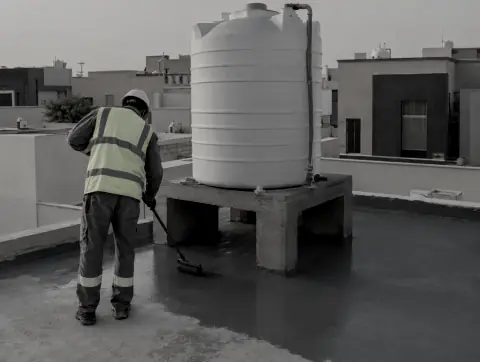
- Waterproofing the outer wall where groundwater pressure requires it
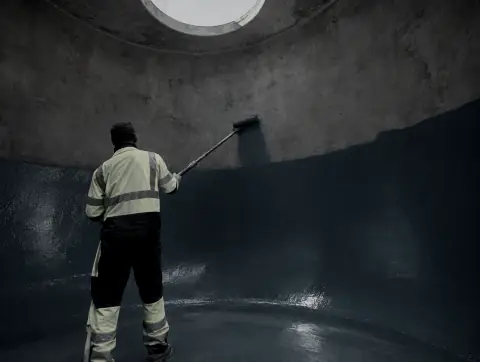
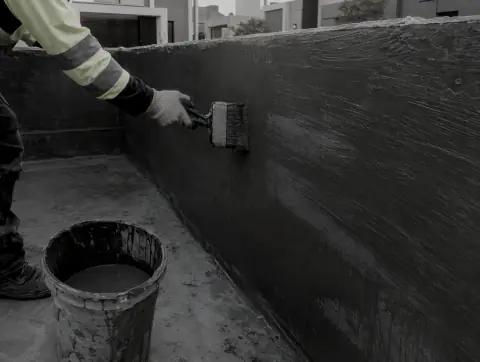
- Applying a waterproof layer over the inner walls, floor and joints
- Rinsing the tank before refilling once the layer has dried and hardened
- Checking the walls, floor, joints and pipe entries
From first contact to the finished job in Industrial (near Hafar Al-Batin)
Send photos of the tank
On WhatsApp: photos of the inner walls, the joints, the pipe entries, the floor and any wet patches outside the tank, so we can read the leak and decide whether the work is inside, outside or both.
Empty and clean the tank
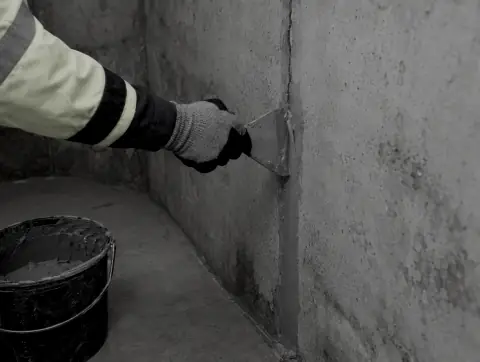
The tank is emptied completely, the inner surface is cleaned of deposits and loose material, then the wall, the floor, the joints and the pipe entries are checked for cracks and any open gaps.
Treat cracks and joints
Hairline cracks are opened slightly and filled, then the wall-to-floor joints and the pipe entries are treated with care, as these are the most common leak points in ground tanks.
Apply the layer and let it cure
The inner waterproof layer is applied over the walls, the floor and the joints, then left to dry and harden. The tank is rinsed before it is refilled. Where external waterproofing is needed, the outer wall is treated before the trench is backfilled.
Why Abraj Al Azl?
Joints and pipe entries are closed firstTreating the most common entry points before the layer goes on reduces the chance of a new leak appearing after the work.
Start from Industrial (near Hafar Al-Batin) with one messageSend us photos of the spot on WhatsApp and we will work out the next step with you.
We serve Industrial (near Hafar Al-Batin) and around itIncluding Ar Rawdah (near Hafar Al-Batin), Al Fayha (near Hafar Al-Batin) and Ar Rabie (near Hafar Al-Batin), as part of our work across the Eastern Province.
We reply 5 AM to 10 PMSaturday to Thursday, and Friday on its own hours.
Some of our work

















What our customers said
ماشاء الله عملهم للعزل والتسريبات ممتاز وخبره ودقه في العمل انصح بالتعامل معهم
اتعاملت معاهم في العوازل عند كفيلي شغل يبيض الوجه انص التعامل معهم
أفضل شركة عزل اسطح الفوم وخزانات المياه
Real Google reviews, shown exactly as their authors wrote them.
Your questions on ground tank waterproofing in Industrial (near Hafar Al-Batin)
Does a leaking tank in a factory damage nearby foundations and buildings?
Yes, a continuous leak saturates the soil and can weaken nearby foundations and roads. Repairing the leak inside and out protects the surrounding environment and ensures facility safety. Send photos of the tank and its surroundings.
Does water quality in an industrial tank affect leak rate and corrosion?
Yes, acidic or salt-laden water accelerates corrosion and leaking. Photos may show corrosion marks, and information about the tank's use helps us choose waterproofing that resists chemical conditions.
Does the ground have to be dug out around the tank to waterproof it?
It depends on the problem. If the leak is from the inside, internal waterproofing often works without digging. If groundwater is pressing in from outside or the outer wall is damaged, excavation is needed to apply an external layer. Photos help us decide before any work starts.
What decides the cost of waterproofing a ground tank?
The area of the inner walls and floor, the number of cracks and joints, whether external waterproofing and excavation are needed, the depth of the tank, and how easily it can be reached. Send photos and rough dimensions on WhatsApp, and tell us if there are damp signs outside the tank as well.
Do you offer ground tank waterproofing in Industrial (near Hafar Al-Batin)?
Yes. Industrial (near Hafar Al-Batin) is within our service area in the Eastern Province, and we also work in Ar Rawdah (near Hafar Al-Batin), Al Fayha (near Hafar Al-Batin) and Ar Rabie (near Hafar Al-Batin). Call us or send photos of the spot on WhatsApp.
How is a leak in a ground tank different from a leak in an overhead tank?
A ground tank faces two pressures: water leaving through cracks and joints, and soil water or groundwater pressing in from outside. An overhead tank has no external pressure and its leaks show on the roof or walls below. That difference changes both the materials and the method.
Areas near Industrial (near Hafar Al-Batin)
If the site is outside Industrial (near Hafar Al-Batin), the same service is available in Ar Rawdah (near Hafar Al-Batin), Al Fayha (near Hafar Al-Batin) and Ar Rabie (near Hafar Al-Batin).
More services in Industrial (near Hafar Al-Batin)