Concrete tank waterproofing in Industrial (near Hafar Al-Batin)
Concrete tank waterproofing in the Industrial district starts with photos of your tank and the surrounding facility, sent by call or WhatsApp. Factories in the industrial zone rely on tanks to supply water for production, and their condition is critical to continuous operation.
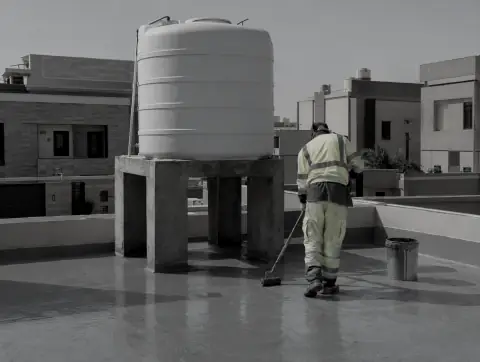
Factories and industrial facilities in this zone use large concrete tanks, often exposed and under constant pressure from production processes. These tanks may face chemicals, high temperatures or strong pressure, speeding concrete deterioration. Cracks and leaks can stop production or waste water. We inspect the tank carefully and understand how it is used before choosing a waterproofing method that withstands industrial stress.
- Industrial is a district in the Eastern Province, close to Ar Rawdah, Al Fayha and Ar Rabie.
- Factory tanks face more pressure and heat than domestic tanks, so addressing existing damage before it worsens is critical.
The concrete tank waterproofing work in Industrial (near Hafar Al-Batin)
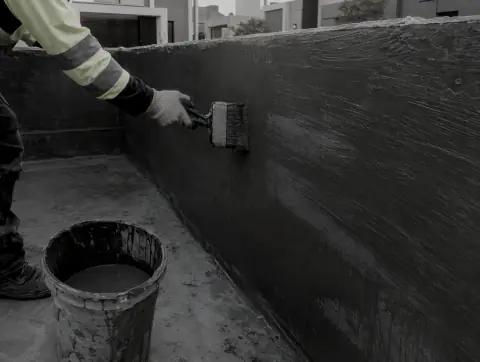
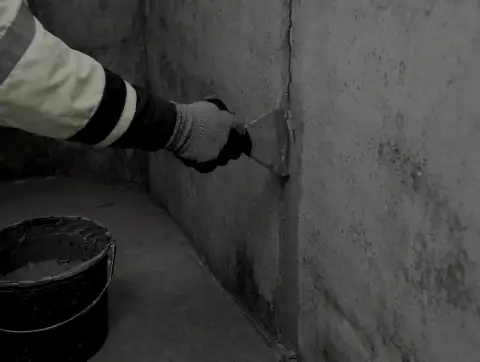
- Cleaning the surface and removing any flaking or loose render
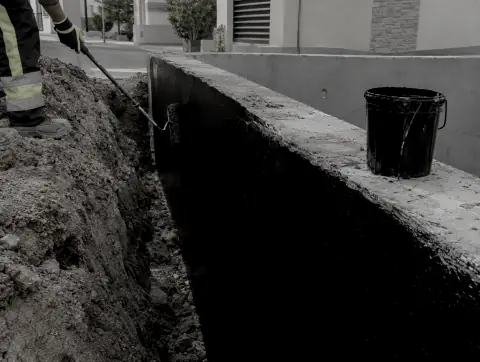
- Checking the inside and outside walls and the tank base
- Treating pour joints and pipe entries with care
- Locating cracks, pour joints and pipe entries
This is how we work in Industrial (near Hafar Al-Batin)
Send photos of the tank
On WhatsApp: photos of the inside and outside walls, the base, any damp spots and the pipe entries, so we can read the problem and decide what the tank needs.
Inspect the internal surface
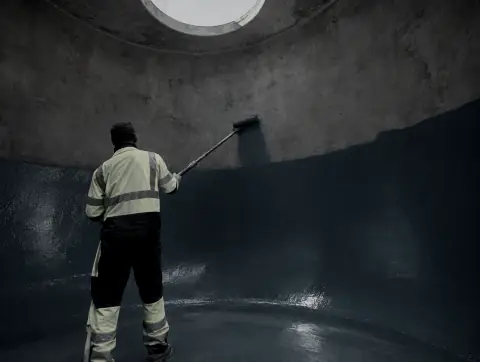
The concrete surface is checked inside: hairline cracks, pour joints, pipe entries and any spot where the render has flaked or separated. This check decides how the surface is prepared.
Clean the surface and treat the cracks
The walls and base are cleaned thoroughly, cracks are opened out and filled with a material that suits their movement, and pour joints and pipe entries are treated carefully before the next step.
Prepare the surface for the coating
After the cracks are treated, the surface is left to settle as the chosen coating requires, then it is profiled by roughening or smoothing as needed so the layer bonds and holds.
Why Abraj Al Azl?
The reinforcement stays protectedWater reaching the reinforcement causes rust that expands the concrete from inside. Treating the cracks early cuts off that path.
Industrial (near Hafar Al-Batin) is in our service areaWe work there and across the Eastern Province, from our base in Al Uwaymiriyah, Hofuf.
Your request from Industrial (near Hafar Al-Batin) comes to usCall or WhatsApp on one number, and we answer you ourselves.
Talk to us directlyCall or WhatsApp on the same number.
Some of our work

















What our customers said
ماشاء الله عملهم للعزل والتسريبات ممتاز وخبره ودقه في العمل انصح بالتعامل معهم موفقين يارب
ماشاء الله تبارك الرحمن عزل اسطح ممتاز
أفضل شركة عزل اسطح الفوم وخزانات المياه
Real Google reviews, shown exactly as their authors wrote them.
Before you book concrete tank waterproofing in Industrial (near Hafar Al-Batin)
Can an industrial tank be waterproofed while production continues?
It depends on the tank type and the process. If water can be temporarily diverted to a backup source, waterproofing may be possible without stopping. Send us photos and explain how the tank is used in your process and what options you have.
Can a leak from an industrial tank contaminate the soil around it or harm the environment?
If the tank holds only clean water, the leak wastes water; but if it holds other substances, the leak may affect soil and groundwater. Tell us what the tank contains so we choose a safe and proper waterproofing method.
Do you offer concrete tank waterproofing in Industrial (near Hafar Al-Batin)?
Yes. Industrial (near Hafar Al-Batin) is within our service area in the Eastern Province, and we also work in Ar Rawdah (near Hafar Al-Batin), Al Fayha (near Hafar Al-Batin) and Ar Rabie (near Hafar Al-Batin). Call us or send photos of the spot on WhatsApp.
What happens if a leaking tank is left untreated?
The leaking water gradually reaches the reinforcement inside the concrete. The steel rusts and expands, cracking the concrete from inside until pieces begin to fall. Water is also wasted continuously and accumulates in the surrounding soil. Early treatment is far simpler than repairing damaged concrete later.
Why do cracks form in new concrete tanks?
Concrete shrinks as it cures after pouring, and that shrinkage opens hairline cracks especially at joints between the wall and the base and between separate pours. High temperatures add to this effect. Cracks do not necessarily mean a building fault, but they need treatment before the tank is filled.
Can cracks in an old tank be treated rather than replacing the whole tank?
In most cases the cracks can be treated and the inside surface renewed with a suitable waterproof coating without demolishing the tank. Replacement only becomes the option if there is serious structural deformation. Photos help us assess the situation.
The same service in nearby areas
Nearby areas we also cover: Ar Rawdah (near Hafar Al-Batin), Al Fayha (near Hafar Al-Batin) and Ar Rabie (near Hafar Al-Batin).
More services in Industrial (near Hafar Al-Batin)