Ground tank waterproofing in Al Jishshah
Ground tank waterproofing in Al Jishshah begins with WhatsApp photos of the tank and its surroundings. The district has farms and small plots with scattered houses, and ground tanks here are exposed to groundwater seepage and high moisture that seeps through soil and cracks.
Al Jishshah has small farms and varied plot sizes, with ground tanks often in tight yards or beside crops. Soil here retains water longer than higher ground, and groundwater may be closer to the surface. A buried or semi-buried tank may suffer increased water pressure in rare rainy seasons, and its outer walls face constant moisture. Photos reveal whether the tank is cracked or water enters through steps and openings.
- Al Jishshah is a district in Al-Ahsa in the Eastern Province, near Al Markaz, Al Jafr and As Sabat, with farms and small plots.
- A buried tank on farmland faces water pressure from multiple sides, especially during rare rain, so external sealing is critical.
The scope of the work in Al Jishshah
- Rinsing the tank before refilling once the layer has dried and hardened
- Checking the walls, floor, joints and pipe entries
- Cleaning the inner surface of deposits and loose material
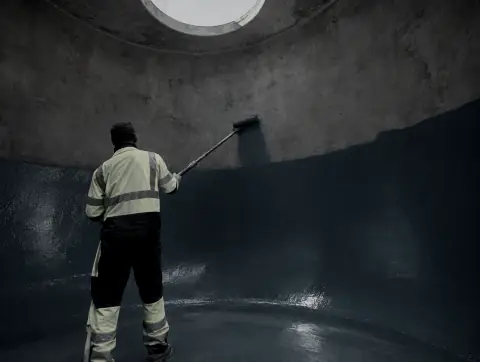
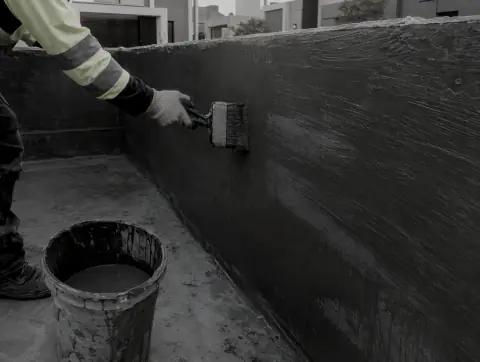
- Applying a waterproof layer over the inner walls, floor and joints
From first contact to the finished job in Al Jishshah
Send photos of the tank
On WhatsApp: photos of the inner walls, the joints, the pipe entries, the floor and any wet patches outside the tank, so we can read the leak and decide whether the work is inside, outside or both.
Empty and clean the tank
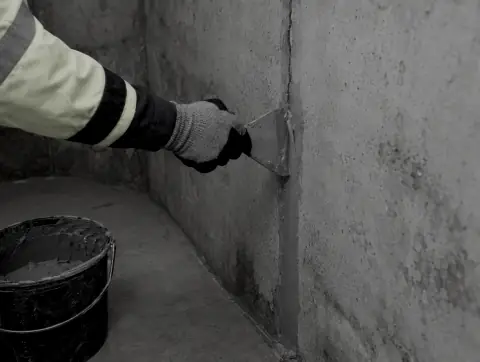
The tank is emptied completely, the inner surface is cleaned of deposits and loose material, then the wall, the floor, the joints and the pipe entries are checked for cracks and any open gaps.
Treat cracks and joints
Hairline cracks are opened slightly and filled, then the wall-to-floor joints and the pipe entries are treated with care, as these are the most common leak points in ground tanks.
Apply the layer and let it cure
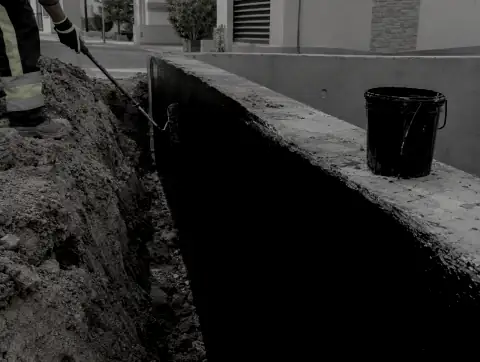
The inner waterproof layer is applied over the walls, the floor and the joints, then left to dry and harden. The tank is rinsed before it is refilled. Where external waterproofing is needed, the outer wall is treated before the trench is backfilled.
Why Abraj Al Azl?
Joints and pipe entries are closed firstTreating the most common entry points before the layer goes on reduces the chance of a new leak appearing after the work.
We serve Al Jishshah and around itIncluding Al Markaz, Al Jafr and As Sabat, as part of our work across the Eastern Province.
Al Jishshah is in our service areaWe work there and across the Eastern Province, from our base in Al Uwaymiriyah, Hofuf.
We reply 5 AM to 10 PMSaturday to Thursday, and Friday on its own hours.
Some of our work

















What our customers said
ماشاء الله عملهم للعزل والتسريبات ممتاز وخبره ودقه في العمل انصح بالتعامل معهم موفقين يارب
اتعاملت معاهم في العوازل عند كفيلي شغل يبيض الوجه انص التعامل معهم
ماشاء الله تبارك الرحمن عزل اسطح ممتاز
Real Google reviews, shown exactly as their authors wrote them.
Common questions on ground tank waterproofing in Al Jishshah
What is the difference between sealing a fully buried tank and a partly buried one?
A fully buried tank faces water pressure on all sides, so it needs strong external sealing. A partly buried one may need different waterproofing for the above-ground part. Photos show us how deep the tank is buried and we choose the method accordingly.
Is moisture around a ground tank normal in Al Jishshah?
Damp soil around a tank is common in agricultural and low-lying areas, but visible moisture or pooling water signals a leak. If the outer seal is sound, water should not enter the tank. Send photos of the damp and we will assess the severity of seepage.
How is a leak in a ground tank different from a leak in an overhead tank?
A ground tank faces two pressures: water leaving through cracks and joints, and soil water or groundwater pressing in from outside. An overhead tank has no external pressure and its leaks show on the roof or walls below. That difference changes both the materials and the method.
Does the ground have to be dug out around the tank to waterproof it?
It depends on the problem. If the leak is from the inside, internal waterproofing often works without digging. If groundwater is pressing in from outside or the outer wall is damaged, excavation is needed to apply an external layer. Photos help us decide before any work starts.
Where do ground tanks most often leak?
The joint between the wall and the floor is the most common point, then the pipe entries and service penetrations, then hairline cracks in porous concrete. The joints between rings matter too if the tank is built in sections. Treating these points comes before any coating is applied.
Do you offer ground tank waterproofing in Al Jishshah?
Yes. Al Jishshah is within our service area in the Eastern Province, and we also work in Al Markaz, Al Jafr and As Sabat. Call us or send photos of the spot on WhatsApp.
More services in Al Jishshah