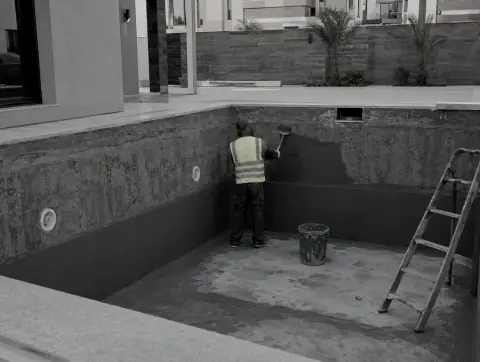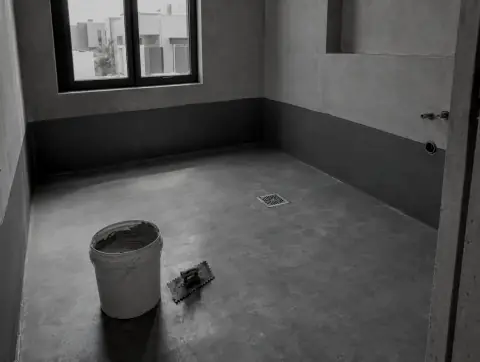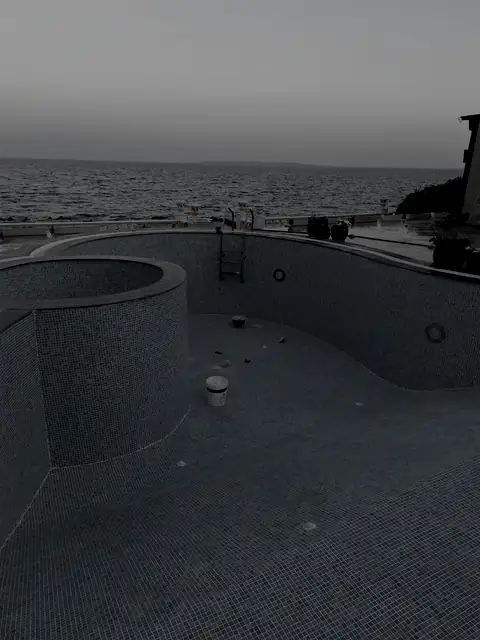
Pool waterproofing after tiling in Gharb An Nabiyah
Pool waterproofing after tiling in West An Nabiyah starts with photos of the pool, its floor and its edges, sent by call or WhatsApp. The district is largely villas and detached houses, where the pool often forms part of the back garden.
Detached houses in West An Nabiyah tend to have small and medium pools, usually tiled some time after construction. Leaks typically appear at tile grout lines, around filters, drains and fittings, and in cracks that widen as the floor moves. The photos identify the actual source of the leak before any repair method is chosen, because a correct repair starts at the source rather than the visible surface.
- West An Nabiyah is a district of Riyadh, next to Ar Rimal and Al Jish, with villas and detached houses.
- A tiled pool needs its joints and fittings checked before relining, since leaks usually start there rather than in the middle of the basin.
The pool waterproofing after tiling work in Gharb An Nabiyah
- Lifting damaged tiles and rebuilding the layer behind them where needed
- Closing pump, light and return fittings from inside
- Watching the water level after filling to confirm the leak is closed
- Injecting cracks with a compound suited to the concrete shell
From first contact to the finished job in Gharb An Nabiyah
Send photos of the pool
On WhatsApp: photos of the pool walls, floor, drain and skimmer, the pump connections, light and return fittings and any damp on the outside, so we read the situation before anything else.
Locate the source of the leak
A dye test is run at the joints, fittings and cracks to trace where the water moves, and the pump and drain lines are pressure-checked, so we know exactly where the water is leaving.
Treat the leak point
Depending on the source: cracks are injected, joints are resealed with a flexible compound, fittings are tightened from inside, or tiles in the affected area are lifted where the layer behind them has broken down.
Verify and cure
After treatment the surface is left to dry and cure, then the pool is filled and the level is watched again to confirm that the source has been closed.
Why Abraj Al Azl?
Concrete and reinforcement protectedClosing the leak early stops water reaching the reinforcement before corrosion begins.
We serve Gharb An Nabiyah and around itIncluding An Nabiyah, Ar Rimal and Al Jish (near Mallahah), as part of our work across the Eastern Province.
Gharb An Nabiyah is in our service areaWe work there and across the Eastern Province, from our base in Al Uwaymiriyah, Hofuf.
We reply 5 AM to 10 PMSaturday to Thursday, and Friday on its own hours.
Some of our work

















What our customers said
ماشاء الله تبارك الرحمن عزل اسطح ممتاز
اتعاملت معاهم في العوازل عند كفيلي شغل يبيض الوجه انص التعامل معهم
ماشاء الله عملهم للعزل والتسريبات ممتاز وخبره ودقه في العمل انصح بالتعامل معهم
Real Google reviews, shown exactly as their authors wrote them.
What customers ask in Gharb An Nabiyah
Can a pool leak in West An Nabiyah be treated without retiling?
In many cases yes, if the leak is confined to joints or fittings. Those spots are treated and sealed; if the tiles are loose over a wide area, the photos will show it.
What do you need from us to assess a pool in West An Nabiyah?
Clear photos of the pool's interior, edges and the filter and drain locations, plus a note on when the leak first appeared. Send them by call or WhatsApp and we will agree the next step with you.
Do you offer pool waterproofing after tiling in Gharb An Nabiyah?
Yes. Gharb An Nabiyah is within our service area in the Eastern Province, and we also work in An Nabiyah, Ar Rimal and Al Jish (near Mallahah). Call us or send photos of the spot on WhatsApp.
Can the pool be used straight after treatment?
No. The materials used need time to dry and cure before the pool is filled. After filling, the level is watched to confirm the leak is closed. We tell you the waiting period based on the materials and conditions when the work is agreed.
Does the pool have to be emptied before the leak is found?
Not always. A dye test is done with the pool full and shows water movement at joints and fittings. Emptying is needed when the pressure lines are tested or when the layer behind the tiles is being treated. After we see the photos we advise which step comes first.
What is the difference between resealing joints and injecting cracks in a pool?
A joint is the line between two tiles or between a tile and a fitting, and it is resealed with a flexible water-resistant compound that tolerates shell movement. A crack is a break in the concrete or render behind the tile, and it is injected with a compound that fills the void and stops it spreading. The source determines which treatment is used.
We also offer it in neighbouring areas
If the site is outside Gharb An Nabiyah, the same service is available in An Nabiyah, Ar Rimal and Al Jish (near Mallahah).
More services in Gharb An Nabiyah