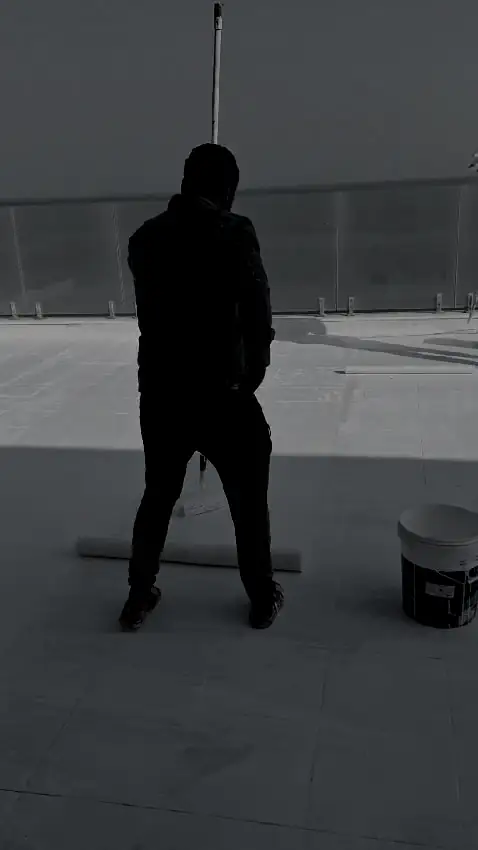
Bitumen & membrane insulation in Western Arabian Gulf
Bitumen and membrane insulation of roofs and tanks in the Western Arabian Gulf begins with WhatsApp photos of the site. This coastal district has diverse residential and commercial buildings, their roofs exposed to high humidity, salt spray and temperature swings.
The Western Arabian Gulf has residential compounds, commercial towers and hotels with large roofs. High coastal humidity and airborne salt accelerate old waterproofing breakdown and settle on surfaces. Above-ground and ground tanks corrode and leak in these conditions. The choice of insulation material depends on salt exposure, humidity and heat combined. Photos clarify the building type and current roof condition to select the right system.
- The Western Arabian Gulf is a coastal district in the Eastern Province, close to Al Muruj and Al Faisaliyah.
- Roofs and tanks near the sea face salt deposits and humidity that weaken old waterproofing adhesion.
What we do for you in Western Arabian Gulf
- Adding the right protective layer once the waterproofing has dried and cured
- Inspecting the surface and locating leak points, cracks and joints
- Closing the layer at all edges, walls and penetrations
- Treating cracks, the parapet, drain openings and AC bases
How we carry out bitumen & membrane insulation in Western Arabian Gulf
Send photos of the site
On WhatsApp: photos of the roof, wall or foundation with any cracks, stains or drain outlets, so we can read the condition and choose the right material and method.
Prepare the surface
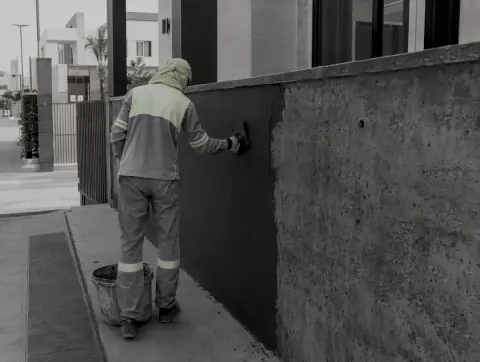
The surface is cleaned of dust and deposits, cracks and joints and any existing blisters are treated, and drain outlets and AC bases are prepared before anything is applied.
Apply the waterproof layers
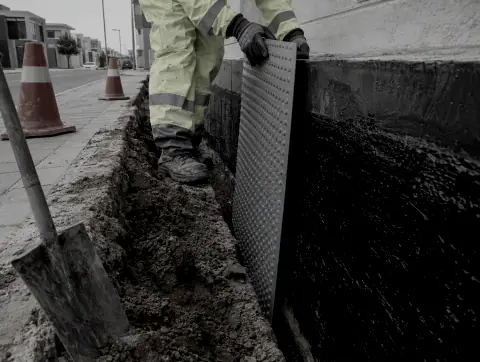
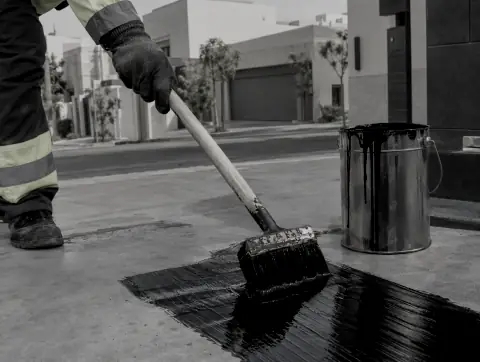
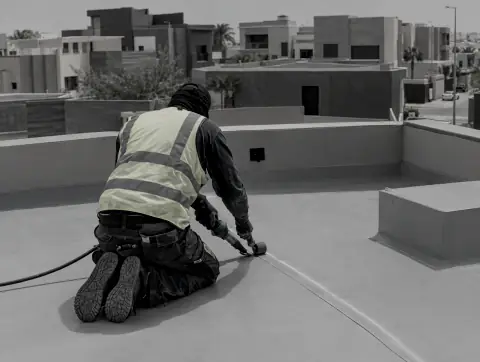
The layer goes on in the way that suits the chosen material: torch welding for bitumen rolls, adhesive fixing for cold rolls, brush application for cementitious coatings or heat welding for PVC sheets. It turns up at the walls and closes around every opening.
Protection and finishing
The layer is left to dry and cure, then the right protective layer goes over it: gravel, mortar or tiles depending on where it is, to protect the waterproofing from heat and wear.
Why Abraj Al Azl?
Material matched to the surface and water typeBitumen rolls, cementitious coatings and PVC sheets each perform best in different situations. The wrong choice shortens the life of the waterproofing.
We serve Western Arabian Gulf and around itIncluding Eastern Arabian Gulf, Al Muruj (near Al Khafji) and Al Faisaliyah (near Al Khafji), as part of our work across the Eastern Province.
Bitumen & membrane insulation in Western Arabian GulfWe choose the method and the materials once we know the condition of the spot.
We reply 5 AM to 10 PMSaturday to Thursday, and Friday on its own hours.
Some of our work

















What our customers said
ماشاء الله عملهم للعزل والتسريبات ممتاز وخبره ودقه في العمل انصح بالتعامل معهم موفقين يارب
أفضل شركة عزل اسطح الفوم وخزانات المياه
ماشاء الله تبارك الرحمن عزل اسطح ممتاز
Real Google reviews, shown exactly as their authors wrote them.
Questions about bitumen & membrane insulation in Western Arabian Gulf
Can bitumen and membranes withstand salt in the Western Arabian Gulf?
Yes, suitable bitumen and membranes protect well against salt and coastal humidity. But the initial inspection from photos determines whether existing corrosion needs treatment before the new waterproofing is applied.
How often must roof waterproofing be renewed in a damp coastal setting?
This depends on the quality of the insulation system chosen and direct exposure to salt and humidity. Periodic inspection through photos helps identify when leaking or material weakness appears.
Is Western Arabian Gulf within your service area?
Yes, Western Arabian Gulf is one of the areas we work in, as are Eastern Arabian Gulf, Al Muruj (near Al Khafji) and Al Faisaliyah (near Al Khafji). To start, call us or message us on WhatsApp.
What is the difference between torch-on and self-adhesive bitumen rolls?
Torch-on rolls are fixed with a flame, giving a strong bond to the surface, and they are the most common choice on open roofs. Self-adhesive rolls are fixed without flame and are used where a torch cannot safely go, such as basements and tank walls. The choice depends on the location and the conditions.
What is the difference between bitumen rolls and a cementitious coating?
Bitumen rolls are a ready-made sheet that is torched or adhered to the surface and suit large roofs and foundations. Cementitious coating is a mixed material brushed or sprayed on that bonds to damp concrete, making it right for tanks, bathrooms and surfaces where rolls cannot be easily applied. Each material has its own best use.
Does the surface need a levelling screed before bitumen rolls go on?
A clean, even surface free of blisters gives the waterproofing a better bond. If there are low spots where water ponds or the surface is uneven, those are corrected before the rolls go on. We read the surface condition from the photos and say what preparation is needed before the rolls are laid.
Areas near Western Arabian Gulf
We also offer bitumen & membrane insulation in Eastern Arabian Gulf, Al Muruj (near Al Khafji) and Al Faisaliyah (near Al Khafji), among the closest areas to Western Arabian Gulf.
More services in Western Arabian Gulf