Foundation waterproofing in Western Arabian Gulf
Foundation waterproofing in the Western Arabian Gulf district starts with WhatsApp photos of the foundation, lower walls and surrounding areas. Near the Gulf, high humidity and salinity in air and soil put pressure on building foundations.
Buildings and structures in the Western Arabian Gulf district face special challenges because intense coastal humidity makes foundations prone to corrosion and cracking. Underground walls tend to absorb water and salt from the soil, and dampness, mould and salt damage to concrete may appear early. Treating cracks and seepage first is necessary before a waterproof membrane is laid, and photos show whether the structure needs extra repair.
- The Western Arabian Gulf district lies on the Eastern Province coast, near Al Muruj and Al Faisaliyah, with diverse buildings and structures.
- Foundations in coastal areas are exposed to high humidity and salt in the soil, which quickens deterioration and cracking.
What we do for you in Western Arabian Gulf
- Checking layer continuity at corners, edges and critical points
- Cleaning the surface and removing loose material and oil
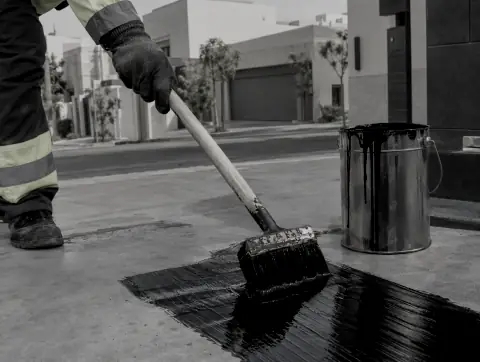
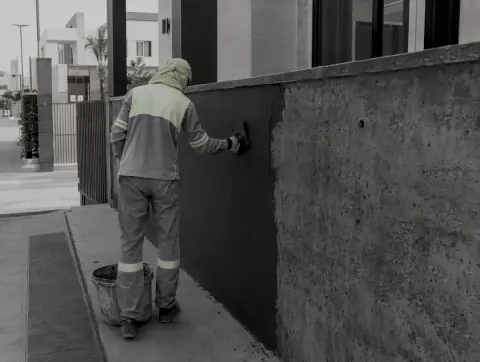
- Applying the waterproof layer in bitumen rolls or bitumen coating according to the surface
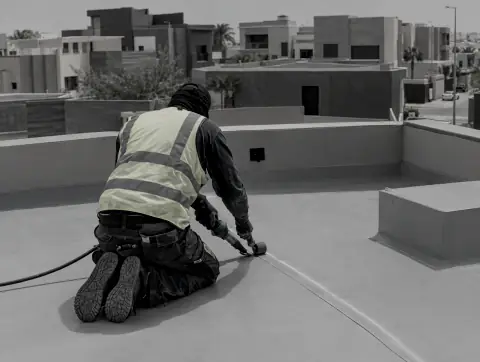
- Treating cracks, pipe openings and joints before waterproofing
The steps of foundation waterproofing in Western Arabian Gulf
Send site photos
On WhatsApp: photos of the exposed walls or the indoor damp patches and the base, so we can read the situation and decide the right treatment.
Prepare the surface
The concrete walls are cleaned of dust, oil and anything loose, and cracks, joints and pipe openings are treated before any waterproof layer, because these are where water enters first.
Apply the waterproof layer
Bitumen rolls, a bitumen coating or the appropriate membrane are applied to the wall and the footing in continuous layers that rise above the backfill level and extend to the base of the foundation, according to what the surface calls for.
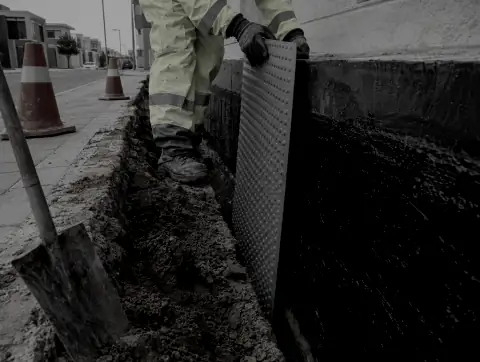
Protection boards then backfill
Protection boards are fixed over the waterproof layer to guard it from soil friction and backfill damage, then the site is backfilled once the layer has dried and set.
Why Abraj Al Azl?
The structure kept from moisture and saltsConstant moisture attacks the reinforcement and weakens the concrete over time, and the waterproof layer cuts that off from the start.
Foundation waterproofing in Western Arabian GulfWe choose the method and the materials once we know the condition of the spot.
We serve Western Arabian Gulf and around itIncluding Eastern Arabian Gulf, Al Muruj (near Al Khafji) and Al Faisaliyah (near Al Khafji), as part of our work across the Eastern Province.
We reply 5 AM to 10 PMSaturday to Thursday, and Friday on its own hours.
Some of our work

















What our customers said
ماشاء الله تبارك الرحمن عزل اسطح ممتاز
أفضل شركة عزل اسطح الفوم وخزانات المياه
ماشاء الله عملهم للعزل والتسريبات ممتاز وخبره ودقه في العمل انصح بالتعامل معهم
Real Google reviews, shown exactly as their authors wrote them.
Before you book foundation waterproofing in Western Arabian Gulf
Does salt in the soil near the Gulf harm the building foundation?
Yes, salt enters the soil and groundwater and attacks concrete and steel. Treatment begins with cleaning the surface and removing salt as much as possible, then laying a membrane that blocks both salt and water from reaching the concrete.
How often do we need to renew foundation waterproofing in a humid coastal area?
It depends on material quality, application, and moisture and salt in the surrounding area. Photos and inspection show the current condition of the waterproofing, then we advise you on what is needed.
What materials are used in foundation waterproofing?
Common materials include torch-on or self-adhesive bitumen rolls, cold bitumen coating, and composite membranes, together with protection boards that shield the layer from soil pressure and backfill. The material choice depends on the wall, the soil conditions and the depth of the foundation.
What do the protection boards do over the waterproof layer?
Backfill and soil movement rub against the waterproof layer and can tear it. Protection boards form a hard shield that takes that friction instead of the layer, keeping it sound and effective for longer. Fitting them is part of the correct sequence for this type of waterproofing.
How do I request foundation waterproofing in Western Arabian Gulf?
Call us, or send clear photos of the spot and its location in Western Arabian Gulf on WhatsApp, and we will work out the next step with you.
Is the waterproof layer affected by salty soil?
Soil contains salts and sulphates that attack unprotected concrete. The waterproof layer is therefore chosen to resist those salts, and protection boards are added to stop the soil reaching the layer directly. We confirm the right materials once we know the site conditions.
Foundation waterproofing near Western Arabian Gulf
If the site is outside Western Arabian Gulf, the same service is available in Eastern Arabian Gulf, Al Muruj (near Al Khafji) and Al Faisaliyah (near Al Khafji).
More services in Western Arabian Gulf