Bitumen & membrane insulation in Eastern Arabian Gulf
Bitumen and membrane insulation in the Eastern Arabian Gulf district starts with photos of the roof or tank sent via WhatsApp. The area has residential and commercial buildings of varying ages, with exterior walls facing direct Gulf humidity.
Buildings in this district face high Gulf humidity, and concrete roofs and foundations need advanced protection from seepage and salt damage. Bitumen and membrane create strong barriers against constant moisture and rapid heat changes. Older buildings may need full re-sealing, newer ones may only need spot repairs. Photos show the roof condition and the depth of protection needed.
- The Eastern Arabian Gulf is a district in the Eastern Province, close to Al Muruj and Al Faisaliyah, with multi-storey residential and commercial buildings.
- Foundations and exterior walls near the Gulf face constant moisture and salt, so they need regular sealing systems and maintenance.
What we do for you in Eastern Arabian Gulf
- Inspecting the surface and locating leak points, cracks and joints
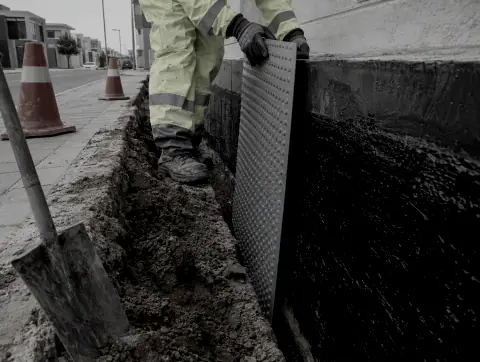
- Applying the waterproof layer in the material that suits the location: bitumen rolls, PVC sheet or cementitious coating
- Cleaning the surface and removing deteriorated layers where needed
- Closing the layer at all edges, walls and penetrations
The steps of bitumen & membrane insulation in Eastern Arabian Gulf
Send photos of the site
On WhatsApp: photos of the roof, wall or foundation with any cracks, stains or drain outlets, so we can read the condition and choose the right material and method.
Prepare the surface
The surface is cleaned of dust and deposits, cracks and joints and any existing blisters are treated, and drain outlets and AC bases are prepared before anything is applied.
Apply the waterproof layers
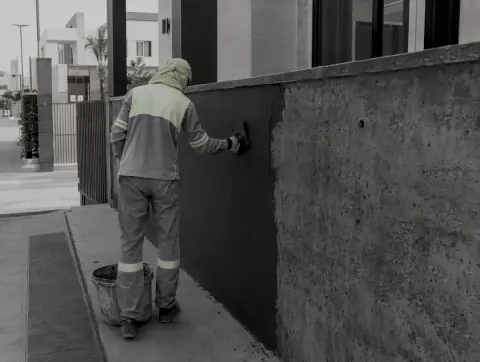
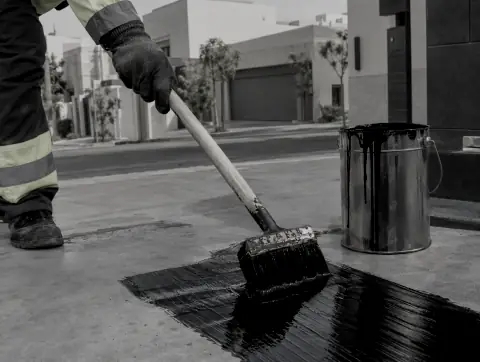
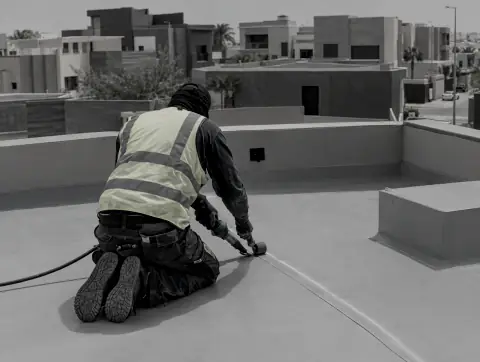
The layer goes on in the way that suits the chosen material: torch welding for bitumen rolls, adhesive fixing for cold rolls, brush application for cementitious coatings or heat welding for PVC sheets. It turns up at the walls and closes around every opening.
Protection and finishing
The layer is left to dry and cure, then the right protective layer goes over it: gravel, mortar or tiles depending on where it is, to protect the waterproofing from heat and wear.
Why Abraj Al Azl?
Material matched to the surface and water typeBitumen rolls, cementitious coatings and PVC sheets each perform best in different situations. The wrong choice shortens the life of the waterproofing.
Your request from Eastern Arabian Gulf comes to usCall or WhatsApp on one number, and we answer you ourselves.
We serve Eastern Arabian Gulf and around itIncluding Al Muruj (near Al Khafji), Western Arabian Gulf and Al Faisaliyah (near Al Khafji), as part of our work across the Eastern Province.
Talk to us directlyCall or WhatsApp on the same number.
Some of our work

















What our customers said
ماشاء الله عملهم للعزل والتسريبات ممتاز وخبره ودقه في العمل انصح بالتعامل معهم
أفضل شركة عزل اسطح الفوم وخزانات المياه
اتعاملت معاهم في العوازل عند كفيلي شغل يبيض الوجه انص التعامل معهم
Real Google reviews, shown exactly as their authors wrote them.
Your questions on bitumen & membrane insulation in Eastern Arabian Gulf
Do bitumen and membrane protect against Gulf salt?
Yes, these systems form a strong barrier against moisture and salt. Saltwater penetrates concrete easily, but bitumen and membrane repel both water and salt; your photos will show the current damage level.
Do coastal buildings need stronger sealing than inland ones?
Yes, buildings close to the Gulf face higher humidity and more salt, so they need thicker layers and higher-quality materials. Photos will help us decide the layer thickness and materials right for your location.
Do you cover Eastern Arabian Gulf?
Yes. We serve Eastern Arabian Gulf and nearby areas such as Al Muruj (near Al Khafji), Western Arabian Gulf and Al Faisaliyah (near Al Khafji), from our base in Al Uwaymiriyah, Hofuf. Start with a call or a WhatsApp message.
What is membrane roll waterproofing and where is it used?
Membrane roll is a general term covering bitumen rolls, PVC rolls and composite sheets. It is used on roofs, foundations, tanks and any horizontal or vertical surface that needs a continuous waterproof sheet. The roll type is decided by the location and the degree of exposure to water and heat.
What is the difference between torch-on and self-adhesive bitumen rolls?
Torch-on rolls are fixed with a flame, giving a strong bond to the surface, and they are the most common choice on open roofs. Self-adhesive rolls are fixed without flame and are used where a torch cannot safely go, such as basements and tank walls. The choice depends on the location and the conditions.
What is the difference between bitumen rolls and a cementitious coating?
Bitumen rolls are a ready-made sheet that is torched or adhered to the surface and suit large roofs and foundations. Cementitious coating is a mixed material brushed or sprayed on that bonds to damp concrete, making it right for tanks, bathrooms and surfaces where rolls cannot be easily applied. Each material has its own best use.
The same service in nearby areas
Nearby areas we also cover: Al Muruj (near Al Khafji), Western Arabian Gulf and Al Faisaliyah (near Al Khafji).
More services in Eastern Arabian Gulf