Foundation waterproofing in Muraytibah
Foundation waterproofing in Muraytibah begins with photos of the foundation and below-ground walls, sent by call or WhatsApp. The hamlet has houses and villas spread across wide plots, and foundations here are exposed to moisture from soil and groundwater due to the area's nature.
Muraytibah has wide plots and detached villas with large gardens, so foundations are surrounded by damp soil. Dampness and leaks show around foundation walls, especially after rare but heavy rain and when soil stays wet. Bitumen and membrane linings stop the leaks and protect walls and columns from damage. Photos tell us the state of the walls, cracks and damp areas so we choose the right material and method.
- Muraytibah is a hamlet in the Eastern Province, close to Sudah, Al Ghuwaybah and At Taraf, with houses and villas spread across wide plots.
- Foundations in detached villas need waterproofing on all sides because soil surrounds them on every side.
The scope of the work in Muraytibah
- Treating cracks, pipe openings and joints before waterproofing
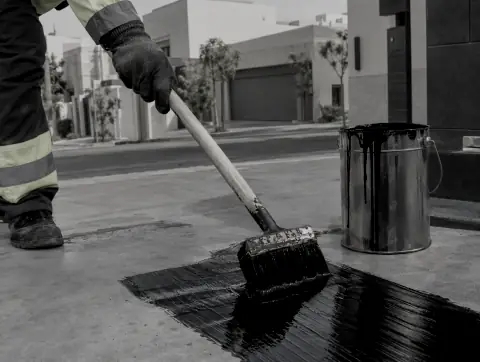
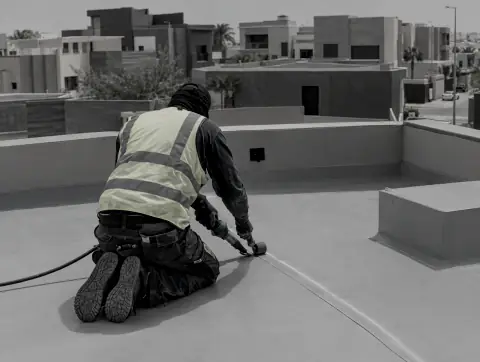
- Applying the waterproof layer in bitumen rolls or bitumen coating according to the surface
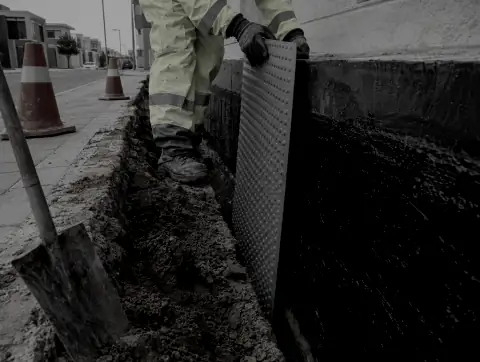
- Fixing protection boards over the waterproof layer before backfill
- Checking layer continuity at corners, edges and critical points
The steps of foundation waterproofing in Muraytibah
Send site photos
On WhatsApp: photos of the exposed walls or the indoor damp patches and the base, so we can read the situation and decide the right treatment.
Prepare the surface
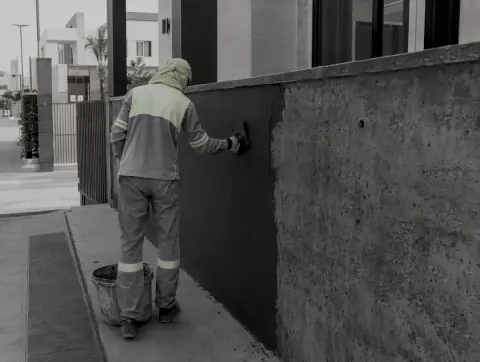
The concrete walls are cleaned of dust, oil and anything loose, and cracks, joints and pipe openings are treated before any waterproof layer, because these are where water enters first.
Apply the waterproof layer
Bitumen rolls, a bitumen coating or the appropriate membrane are applied to the wall and the footing in continuous layers that rise above the backfill level and extend to the base of the foundation, according to what the surface calls for.
Protection boards then backfill
Protection boards are fixed over the waterproof layer to guard it from soil friction and backfill damage, then the site is backfilled once the layer has dried and set.
Why Abraj Al Azl?
No excavation after the buildProper waterproofing during construction avoids costly later excavation to reach the wall from outside.
Muraytibah is in our service areaWe work there and across the Eastern Province, from our base in Al Uwaymiriyah, Hofuf.
Foundation waterproofing in MuraytibahWe choose the method and the materials once we know the condition of the spot.
We reply 5 AM to 10 PMSaturday to Thursday, and Friday on its own hours.
Some of our work

















What our customers said
ماشاء الله عملهم للعزل والتسريبات ممتاز وخبره ودقه في العمل انصح بالتعامل معهم
اتعاملت معاهم في العوازل عند كفيلي شغل يبيض الوجه انص التعامل معهم
أفضل شركة عزل اسطح الفوم وخزانات المياه
Real Google reviews, shown exactly as their authors wrote them.
Common questions on foundation waterproofing in Muraytibah
When does dampness show in villa foundation walls in Muraytibah?
Usually right after rain or when soil stays damp for a time. If you see wet patches or colour changes on walls, send photos, as early waterproofing stops deeper damage.
Can an existing foundation in an old villa in Muraytibah be waterproofed?
Yes, we waterproof existing foundations. Send photos of the walls and damp areas and tell us roughly how old the house is, and we will choose the method based on the concrete condition and any cracks.
Do you offer foundation waterproofing in Muraytibah?
Yes. Muraytibah is within our service area in the Eastern Province, and we also work in Sudah, Al Ghuwaybah and At Taraf. Call us or send photos of the spot on WhatsApp.
Why do cracks and joints need special treatment before waterproofing?
Cracks, joints and pipe openings are the weakest points in a concrete wall against water. If the waterproof layer is applied over them without treatment it will crack in time and let water through. They are filled and treated first so the waterproof layer has a sound base.
What materials are used in foundation waterproofing?
Common materials include torch-on or self-adhesive bitumen rolls, cold bitumen coating, and composite membranes, together with protection boards that shield the layer from soil pressure and backfill. The material choice depends on the wall, the soil conditions and the depth of the foundation.
What is the difference between waterproofing foundations in a new build and in an existing building?
In a new build the walls are exposed, so the waterproof layer goes straight onto clean concrete and is protected with boards before backfill. In an existing building the ground has to be excavated to reach the wall from outside, or an internal treatment is used depending on the situation. Send site photos on WhatsApp and we will advise.
The same service in nearby areas
We also offer foundation waterproofing in Sudah, Al Ghuwaybah and At Taraf, among the closest areas to Muraytibah.
More services in Muraytibah