Cementitious waterproofing in Muraytibah
Cementitious waterproofing in Muraytibah starts with photos sent by call or WhatsApp. The hamlet has scattered houses and villas on wide plots, and their internal walls, tanks and foundations often suffer damp and seepage, especially around bathrooms.
Muraytibah lies among agricultural land and wide yards, so water pools around foundations after rare but heavy rain. Internal walls in bathrooms and kitchens face constant damp from use and poor ventilation, and both underground and roof tanks need leak protection. Cementitious waterproofing is applied directly to the inner surface and hardens into a protective layer, but results depend on the surface condition and cracks the photos reveal.
- Muraytibah is a hamlet in the Eastern Province, close to Sudah, Al Ghuwaybah and At Taraf, with scattered houses and villas on wide plots.
- Underground tanks in rural areas face varying water pressure, and the application surface must be clean and crack-free.
What we do for you in Muraytibah
- Inspecting the surface and identifying cracks and weak points
- Treating cracks, corners, drain openings and pipe runs
- Cleaning the surface and removing loose or flaking layers
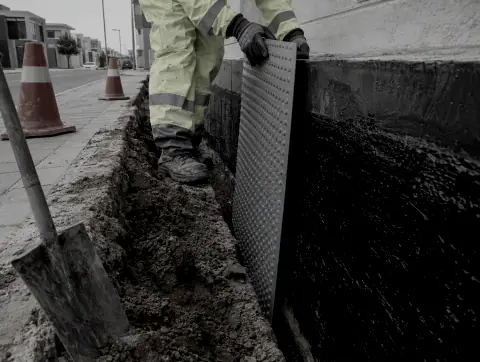
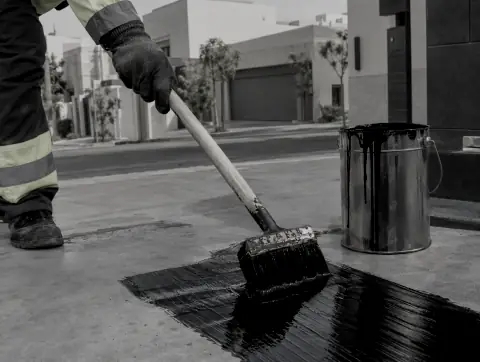
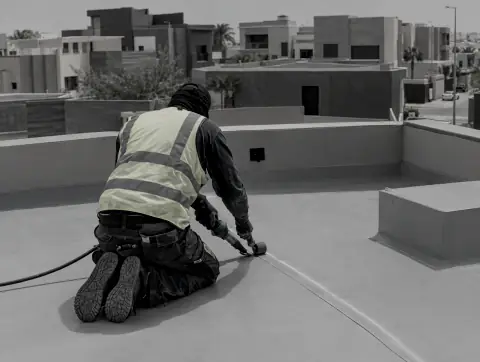
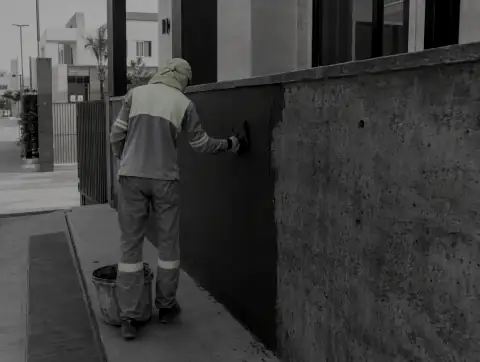
- Mixing and applying the cementitious material by brush or spray to suit the surface
The stages of the work in Muraytibah
Send photos of the area
Call us or send photos of the wall, tank or bathroom on WhatsApp, so we can read the surface and decide whether a rigid or flexible cementitious type suits best.
Prepare and clean the surface
The surface is cleaned of dust, grease and loose layers, and cracks, joints and voids are treated with a suitable filler so the coating bonds firmly.
Mix and apply the coating
The cementitious material is mixed to the right consistency, then brushed or sprayed depending on the surface, and turned up at corners and joints to close every weak point.
Cure and protect
The layer is left to dry and harden, and is not exposed to water or load before it is fully set. The final finish above it is decided by the location.
Why Abraj Al Azl?
A surface ready for finishingThe coating accepts tiles, render and paint directly on top, so it adds no visible build-up and does not change how the surface looks.
Start from Muraytibah with one messageSend us photos of the spot on WhatsApp and we will work out the next step with you.
Cementitious waterproofing in MuraytibahWe choose the method and the materials once we know the condition of the spot.
Talk to us directlyCall or WhatsApp on the same number.
Some of our work

















What our customers said
اتعاملت معاهم في العوازل عند كفيلي شغل يبيض الوجه انص التعامل معهم
ماشاء الله عملهم للعزل والتسريبات ممتاز وخبره ودقه في العمل انصح بالتعامل معهم
أفضل شركة عزل اسطح الفوم وخزانات المياه
Real Google reviews, shown exactly as their authors wrote them.
What customers ask in Muraytibah
Does cementitious waterproofing work on damp bathroom walls in Muraytibah?
Yes, it suits damp internal walls. The area must first be treated and dried, then the coating applied; photos will show whether there is cracking or damage needing repair first.
Can an old underground tank in the hamlet be waterproofed with cementitious coating?
Possibly, if the concrete tank walls are sound and not severely cracked. Send us photos of inside and outside so we can assess its condition and advise you on the best approach.
Do you cover Muraytibah?
Yes. We serve Muraytibah and nearby areas such as Sudah, Al Ghuwaybah and At Taraf, from our base in Al Uwaymiriyah, Hofuf. Start with a call or a WhatsApp message.
Does the surface have to be dry before application?
This is one advantage of cementitious waterproofing: it tolerates a damp surface and sometimes needs it for good adhesion. However, standing water or an active leak means the source must be treated first. Send photos of the leak or the stains and we will say whether the coating can go on directly or needs a prior stage.
Can tiles be laid directly over cementitious waterproofing?
Yes, and this is one reason it is chosen for bathrooms and floors: it accepts render, tiles and adhesive directly over it once set, with no intermediate layer needed. The right time to start tiling is after the coating is fully cured.
What is the difference between rigid and flexible cementitious waterproofing?
The rigid type sets like concrete and suits stable surfaces such as tank walls and basements that do not move. The flexible type contains polymer additives that let it absorb slight surface movement, making it suitable for bathrooms and areas that may take minor vibration. The surface type and its condition decide which is used.
Cementitious waterproofing near Muraytibah
Nearby areas we also cover: Sudah, Al Ghuwaybah and At Taraf.
More services in Muraytibah