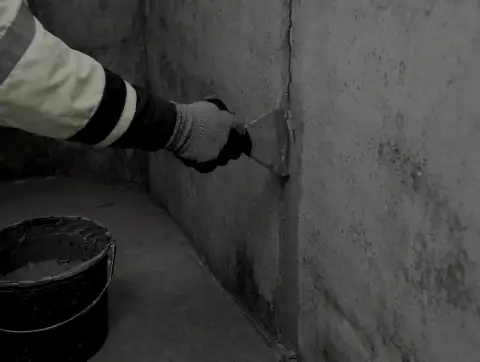
Concrete tank waterproofing in Al Jafr
Concrete tank waterproofing in Al Jafr begins with photos sent by call or WhatsApp showing the tank, where it stands and how it is reached. The district is known for houses with wide yards, where the tank usually sits on the ground, and the next step depends on what the photos show.
Al Jafr is made up of houses on wide plots with yards large enough for big ground tanks, and some buildings may be small farms or rural homes. A ground tank is exposed to moisture gathering at its base and where it meets the wall, and these points are only clear once they are inspected directly. The method for each tank is therefore set by its condition, which the photos help to show.
- Al Jafr is a district in the Eastern Province, lying close to As Sabat, At Taraf and Al Markaz.
- A ground tank usually needs more care at its base than at its upper walls.
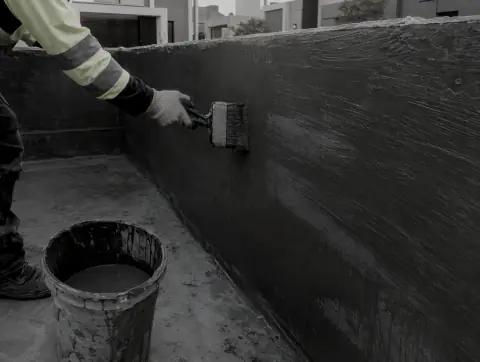
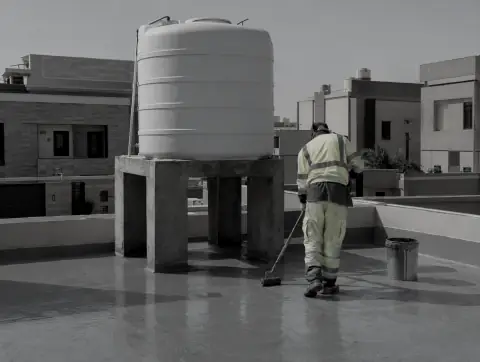
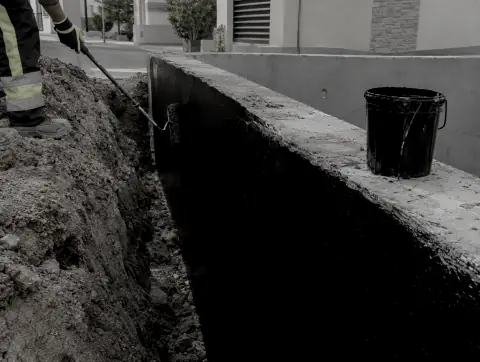
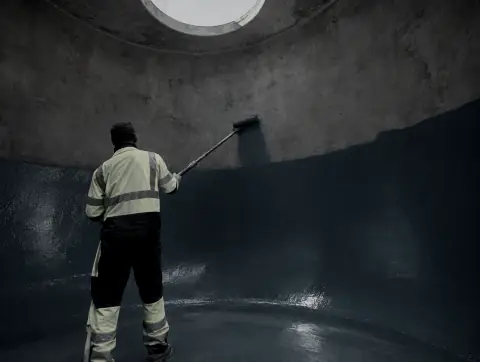
The concrete tank waterproofing work in Al Jafr
- Checking the inside and outside walls and the tank base
- Cleaning the surface and removing any flaking or loose render
- Treating pour joints and pipe entries with care
- Finishing the surface so it is ready to receive the waterproof coating
From first contact to the finished job in Al Jafr
Send photos of the tank
On WhatsApp: photos of the inside and outside walls, the base, any damp spots and the pipe entries, so we can read the problem and decide what the tank needs.
Inspect the internal surface
The concrete surface is checked inside: hairline cracks, pour joints, pipe entries and any spot where the render has flaked or separated. This check decides how the surface is prepared.
Clean the surface and treat the cracks
The walls and base are cleaned thoroughly, cracks are opened out and filled with a material that suits their movement, and pour joints and pipe entries are treated carefully before the next step.
Prepare the surface for the coating
After the cracks are treated, the surface is left to settle as the chosen coating requires, then it is profiled by roughening or smoothing as needed so the layer bonds and holds.
Why Abraj Al Azl?
The coating stays where it is placedA prepared surface with no open cracks and no flaking areas is what a coating bonds to and stays effective on.
Al Jafr is in our service areaWe work there and across the Eastern Province, from our base in Al Uwaymiriyah, Hofuf.
We serve Al Jafr and around itIncluding As Sabat, At Taraf and Al Markaz, as part of our work across the Eastern Province.
Talk to us directlyCall or WhatsApp on the same number.
Some of our work

















What our customers said
أفضل شركة عزل اسطح الفوم وخزانات المياه
اتعاملت معاهم في العوازل عند كفيلي شغل يبيض الوجه انص التعامل معهم
ماشاء الله عملهم للعزل والتسريبات ممتاز وخبره ودقه في العمل انصح بالتعامل معهم
Real Google reviews, shown exactly as their authors wrote them.
Your questions on concrete tank waterproofing in Al Jafr
Can a large ground tank in a wide Al Jafr yard be waterproofed?
Often it can, but the tank size and how easily it can be reached both affect the method. Send photos from several sides and of the entrance, and the images will show whether the work can be done in place.
Do you treat damp at the base of ground tanks in Al Jafr?
Yes, where damp shows at the base or at the wall joint. We first work out the cause from the photos, then decide whether treatment is enough or wider work is needed.
Do you offer concrete tank waterproofing in Al Jafr?
Yes. Al Jafr is within our service area in the Eastern Province, and we also work in As Sabat, At Taraf and Al Markaz. Call us or send photos of the spot on WhatsApp.
What decides the cost of treating a concrete tank?
The size of the tank and its internal surface area, how many cracks there are and how deep, whether the render needs removing, what pipe entries there are and how easy the tank is to reach. Send photos and rough dimensions on WhatsApp and we will advise on the right treatment and what it involves.
What is the difference between a hairline crack and a structural crack in a tank?
A hairline crack is narrow and shallow, usually from shrinkage during curing or from thermal movement. A structural crack is deeper and wider, often from foundation movement or external pressure. Both are treated before the waterproof coating goes on, but the treatment method differs. Send clear photos and we will tell you which it is.
Why do cracks form in new concrete tanks?
Concrete shrinks as it cures after pouring, and that shrinkage opens hairline cracks especially at joints between the wall and the base and between separate pours. High temperatures add to this effect. Cracks do not necessarily mean a building fault, but they need treatment before the tank is filled.
More services in Al Jafr