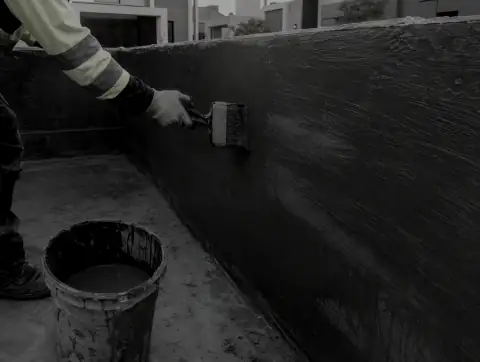
Cementitious tank waterproofing in Western Arabian Gulf
Cementitious tank waterproofing in the Western Arabian Gulf begins with WhatsApp photos of seepage or damp. This humid coastal district faces unique challenges: saltiness and high moisture constantly stress concrete tanks.
The coastal western side of the Arabian Gulf has high humidity and constant salt and moisture exposure on concrete structures. Tanks here face faster metal corrosion than inland areas, and cracks widen from repeated expansion and contraction cycles. Cementitious lining provides a dense barrier protecting concrete from moisture and salt intrusion. The photos you send determine the extent of damage and the coating thickness needed.
- The Western Arabian Gulf is a coastal district in the Eastern Province, close to Al Muruj and Al Faisaliyah, marked by high humidity year-round.
- Coastal tanks face ongoing salt and moisture, accelerating concrete and metal deterioration.
The scope of the work in Western Arabian Gulf
- Emptying the tank, cleaning the surface and removing any crumbling old layer
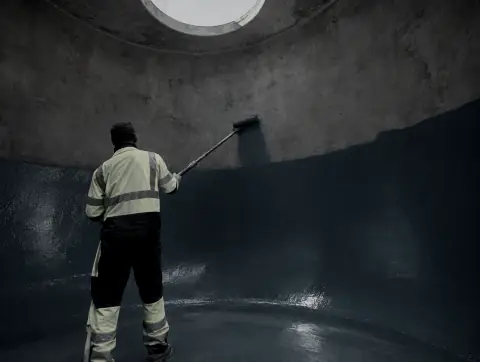
- Applying the cementitious coating to the walls, the floor and all corners
- Checking the inside walls, the floor, the joints and the pipe entries
- Letting the layer cure with the right moisture before the tank is refilled
This is how we work in Western Arabian Gulf
Send photos of the tank
On WhatsApp: photos of the inside and outside walls, the tank base, the pipe entries and the joints, so we can read its condition and decide the right treatment.
Empty and prepare the surface
The tank is emptied and cleaned, the old or crumbling layer is cut back, then cracks, joints and pipe entries are treated with compatible materials before the coating goes on.
Apply the cementitious coating
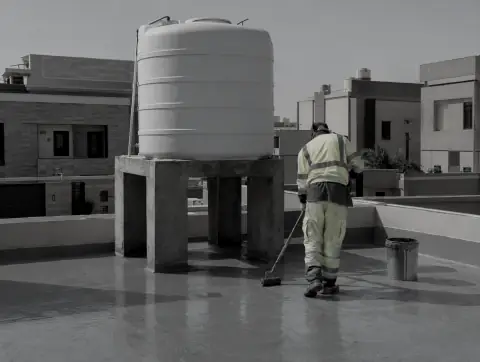
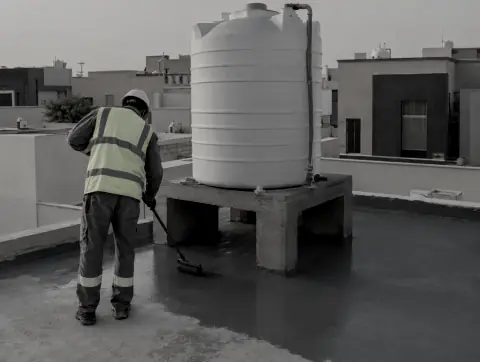
The coating is brushed or trowelled onto the walls and floor in layers, with care at corners, joint edges and pipe entries, depending on the surface condition and the depth of the porosity.
Cure with moisture
The coating is left to cure, and a little ambient moisture is kept around it, because the chemical reaction that bonds it to the concrete needs moisture rather than complete dryness.
Why Abraj Al Azl?
It bonds on a damp surfaceUnlike coatings that need a fully dry base, the cementitious layer works with the moisture already in the concrete and bonds through it.
Start from Western Arabian Gulf with one messageSend us photos of the spot on WhatsApp and we will work out the next step with you.
Western Arabian Gulf is in our service areaWe work there and across the Eastern Province, from our base in Al Uwaymiriyah, Hofuf.
We reply 5 AM to 10 PMSaturday to Thursday, and Friday on its own hours.
Some of our work

















What our customers said
ماشاء الله عملهم للعزل والتسريبات ممتاز وخبره ودقه في العمل انصح بالتعامل معهم
أفضل شركة عزل اسطح الفوم وخزانات المياه
اتعاملت معاهم في العوازل عند كفيلي شغل يبيض الوجه انص التعامل معهم
Real Google reviews, shown exactly as their authors wrote them.
Your questions on cementitious tank waterproofing in Western Arabian Gulf
Does cementitious lining protect from coastal salt and moisture?
Yes, cementitious lining creates a dense barrier against moisture and salt penetration into concrete. Its effectiveness depends on the concrete's condition and coating thickness, which the photos determine.
Is one coat enough for a tank in the coastal district or do we need multiple applications?
It depends on the concrete's age and damage extent. An old damaged tank may need multiple coats; photos help determine this before starting.
What should I send you from Western Arabian Gulf?
Send clear photos of the spot and a short description of the problem on WhatsApp, mention that you are in Western Arabian Gulf, and we will work out the next step with you.
Can the coating be applied without fully emptying the tank?
No. The tank must be emptied, cleaned and its surface prepared before anything is applied. A little moisture inside the concrete structure does not stop the coating bonding, but water standing on the surface will. Emptying the tank is a basic condition for the layer to work.
Is the cementitious coating right for both roof tanks and ground tanks?
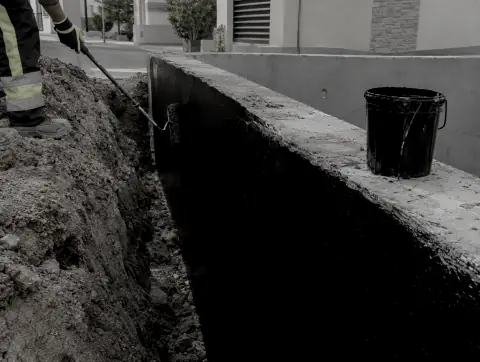
It works inside both. For a ground tank there may also be a need for external waterproofing if outside pressure from wet soil is high, and that is assessed from photos and the site. For a roof tank the effect of sun and heat on the outside is a separate consideration.
What is the difference between a cementitious coating and an epoxy lining for tanks?
The cementitious coating reacts with damp concrete and is chemically compatible with it, and it is flexible enough to take hairline cracks. Epoxy needs a dry, profiled surface and gives a hard smooth finish. When the tank is damp, below ground or highly porous, a cementitious coat may suit better. Send photos and we will advise which fits.
We also offer it in neighbouring areas
We also work near Western Arabian Gulf, in Eastern Arabian Gulf, Al Muruj (near Al Khafji) and Al Faisaliyah (near Al Khafji).
More services in Western Arabian Gulf