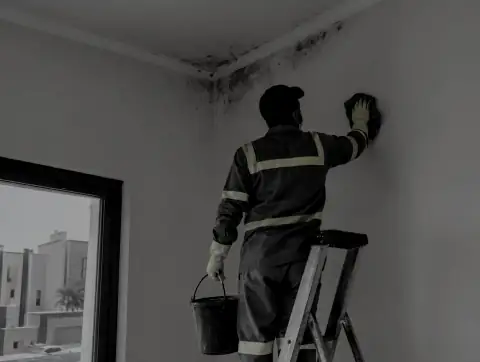
Mould & damp treatment in Al Iskan (near Hafar Al-Batin)
Mould and damp treatment in Al Iskan starts with a photo sent by WhatsApp or a call. Houses and villas in this district often face damp on internal and external walls and ceilings, and the cause must be identified accurately before treatment begins.
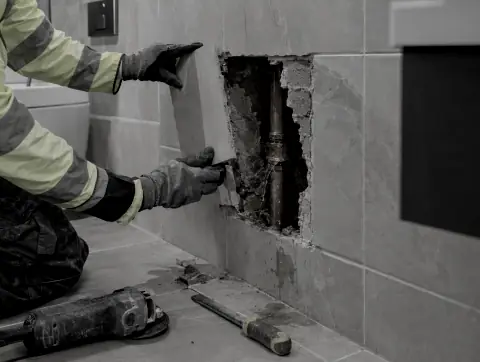
Al Iskan comprises homes and villas of varying sizes and ages, both old and new. Damp in ceilings occurs when roof waterproofing is weak or damaged, and in walls when water leaks from outside or from pipes inside. In kitchens and bathrooms, humidity can be high due to poor ventilation and lead to rapid mould growth. Photos help us see the condition and determine whether the source is the roof, walls or pipes.
- Al Iskan is a district in the Eastern Province, near Al Wurud, Ar Rayan and Qurtubah, with housing of mixed age.
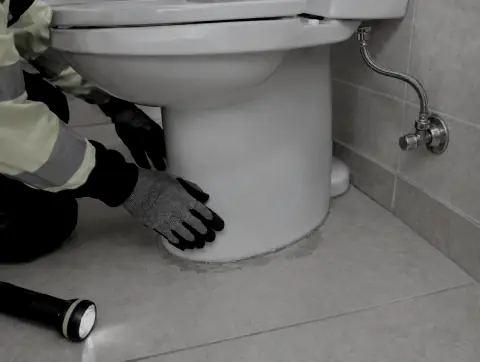
- Bathrooms and kitchens in residential homes accumulate moisture easily if ventilation is insufficient.
What the service covers in Al Iskan (near Hafar Al-Batin)
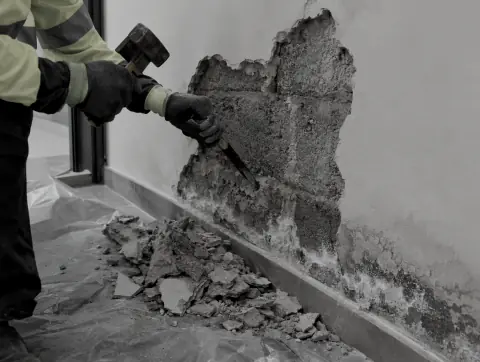
- Removing the affected render or paint layer in the damaged area
- Telling condensation from a leak to choose the right treatment
- Treating the surface with anti-mould material that penetrates the pores
- Reinstating the finish after the surface has dried fully
The stages of the work in Al Iskan (near Hafar Al-Batin)
Send photos of the wall or ceiling
On WhatsApp: photos of the patches, the area around them and any nearby cracks or peeling, so we can read the situation and plan the treatment.
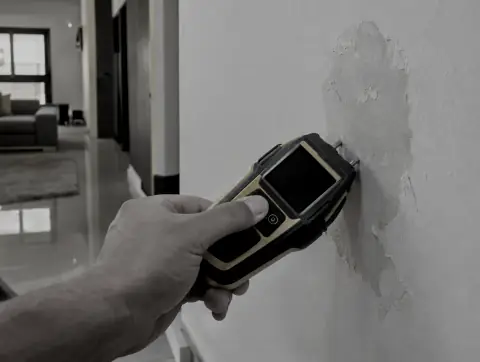
Identify the moisture source
The wall and ceiling are checked to tell whether the moisture is coming from a leak outside, from condensation caused by a temperature difference or from poor ventilation, because the treatment depends on the cause.
Remove the mould and treat the surface
The affected render or paint layer is removed and the surface is treated with anti-mould material that penetrates the pores, then left to dry before any finishing coat. Where the moisture source is a leak, the leak is treated first.
Close the moisture path
The moisture path is closed with a barrier layer or appropriate treatment depending on the cause, then the finish is reinstated. Where the cause is condensation, we advise on improving ventilation because a barrier alone is not enough.
Why Abraj Al Azl?
Treatment at the source, not the surfaceRemoving mould without cutting off what feeds it repeats the problem. The right treatment cuts the moisture first.
Start from Al Iskan (near Hafar Al-Batin) with one messageSend us photos of the spot on WhatsApp and we will work out the next step with you.
Mould & damp treatment in Al Iskan (near Hafar Al-Batin)We choose the method and the materials once we know the condition of the spot.
Talk to us directlyCall or WhatsApp on the same number.
Some of our work

















What our customers said
ماشاء الله عملهم للعزل والتسريبات ممتاز وخبره ودقه في العمل انصح بالتعامل معهم موفقين يارب
أفضل شركة عزل اسطح الفوم وخزانات المياه
ماشاء الله تبارك الرحمن عزل اسطح ممتاز
Real Google reviews, shown exactly as their authors wrote them.
Your questions on mould & damp treatment in Al Iskan (near Hafar Al-Batin)
What is the difference between damp from the roof and damp from external walls?
Damp from the roof usually shows in the middle or under exposed areas, while damp from walls is concentrated on the external side. Photos clarify the location and pattern so we know the source.
Does damp in a bathroom need special treatment?
Yes, bathrooms need better ventilation and treatment of the source, such as leaking pipes or poor sealing. This is completed by removing existing mould.
How do I request mould & damp treatment in Al Iskan (near Hafar Al-Batin)?
Call us, or send clear photos of the spot and its location in Al Iskan (near Hafar Al-Batin) on WhatsApp, and we will work out the next step with you.
Can mould be treated without removing all the tiles or render?
It depends on how deep the mould has gone. If it is surface only and the render beneath is sound, removing the outer layer and treating is enough. If it has reached the render or the render is separating from the wall, the affected area needs to be taken off. Photos help us assess this before we start.
Is ventilation alone enough to clear condensation mould?
Better ventilation reduces future condensation but does not remove the mould already there. The affected surface needs treatment first to clear the mould and clean the pores, then good ventilation limits its return. Combining both is the right approach for condensation mould.
Why does mould come back shortly after painting?
Paint covers the visible mould but does not remove the fine threads rooted in the pores, and it does not stop the moisture coming from behind. Within weeks the moisture breaks through the new coat and the mould grows again. The right treatment starts by removing the affected surface, then treating the pores, then closing the source.
The same service in nearby areas
If the site is outside Al Iskan (near Hafar Al-Batin), the same service is available in Al Wurud (near Hafar Al-Batin), Ar Rayan (near Hafar Al-Batin) and Qurtubah (near Hafar Al-Batin).
More services in Al Iskan (near Hafar Al-Batin)