Damp & moisture detection and treatment in Al Iskan (near Hafar Al-Batin)
Damp detection and treatment in Al Iskan starts with a WhatsApp message containing photos of moisture in walls, floors and roofs. The district is characterised by multi-storey residential buildings that are relatively older, where damp and leakage problems are common.
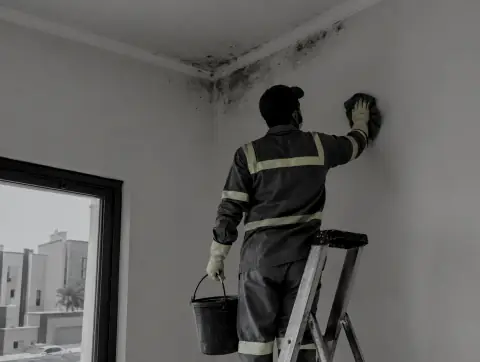
Al Iskan contains older residential blocks exposed to continuous coastal humidity and may suffer cracks and leaks around joints, balconies and foundations. Interior and external walls may show damp stains or mould, and floors and ceilings may absorb water from rain or slow seepage. Hairline cracks in the concrete widen over time and allow water in easily. Photos show how the damp is distributed and what caused it, guiding the choice between targeted or comprehensive treatment.
- Al Iskan is a district in the Eastern Province, near Al Wurud, Ar Rayan and Qurtubah, comprising multi-storey residential buildings.
- Multi-storey buildings experience damp through several points: roofs, balconies and seams between flats.
The scope of the work in Al Iskan (near Hafar Al-Batin)
- Reinstating the render and finish after the surface has dried
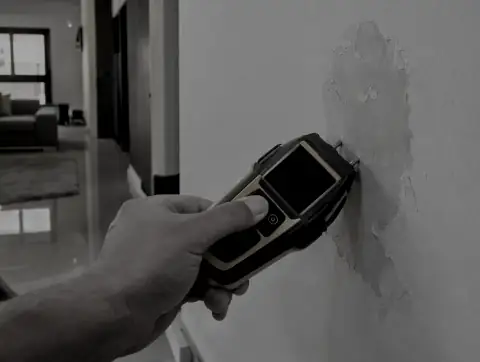
- Measuring moisture levels in walls, ceilings and floors
- Treating cracks and applying the right barrier for the moisture source
- Identifying the type of damp: rising, penetrating, condensation or a pipe leak
The steps of damp & moisture detection and treatment in Al Iskan (near Hafar Al-Batin)
Send photos on WhatsApp
Photos of the patches, the salts, the peeling paint and where the smell is strongest help us read the type of damp and decide what instruments and treatment are needed.
Measure and locate the moisture
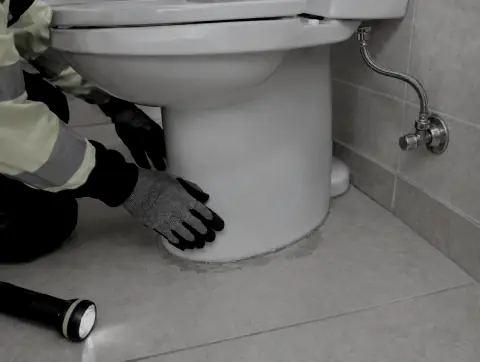
Moisture levels in the wall or ceiling are measured with instruments. The source is identified: rising damp, penetrating damp, condensation or a pipe leak. The treatment follows the source, not the surface sign.
Treat the real cause
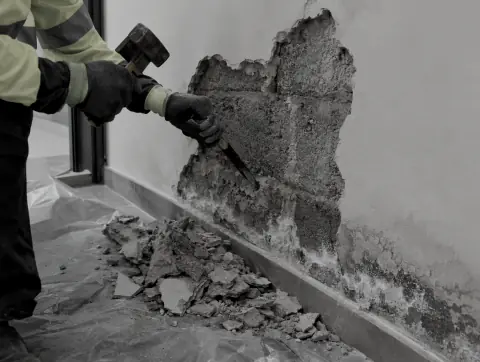
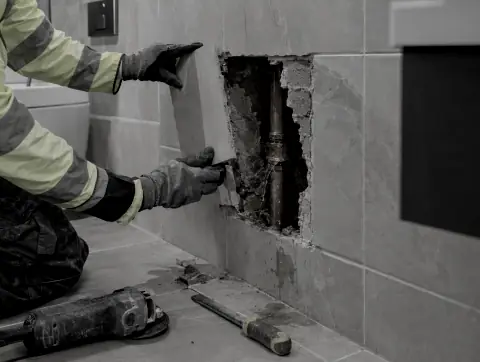
Depending on the source: damaged render is removed and cracks are treated, or the pipe fault is repaired, or the wall and ceiling are sealed. The render and paint are reinstated once the cause is gone.
Finish the surface after drying
The area is left to dry and set before the final render and paint, because coating a surface that is still damp only brings back the peeling.
Why Abraj Al Azl?
A protected surface after treatmentWhen the cause is treated, the surface is sealed with the right material and the render and paint are reinstated, less water vapour and external moisture reaches it.
We serve Al Iskan (near Hafar Al-Batin) and around itIncluding Al Wurud (near Hafar Al-Batin), Ar Rayan (near Hafar Al-Batin) and Qurtubah (near Hafar Al-Batin), as part of our work across the Eastern Province.
Al Iskan (near Hafar Al-Batin) is in our service areaWe work there and across the Eastern Province, from our base in Al Uwaymiriyah, Hofuf.
Talk to us directlyCall or WhatsApp on the same number.
Some of our work

















What our customers said
ماشاء الله عملهم للعزل والتسريبات ممتاز وخبره ودقه في العمل انصح بالتعامل معهم
أفضل شركة عزل اسطح الفوم وخزانات المياه
ماشاء الله تبارك الرحمن عزل اسطح ممتاز
Real Google reviews, shown exactly as their authors wrote them.
Your questions on damp & moisture detection and treatment in Al Iskan (near Hafar Al-Batin)
Why does damp keep appearing in our flat in Al Iskan despite previous treatment?
If damp reappears, the previous treatment may not have addressed the real cause, or the source is different. Send new photos and roughly when the previous treatment was done, and we will assess the site to determine whether the leak is from the roof, foundation or external walls.
Can we treat damp in a flat without disturbing residents in neighbouring units?
Yes, most treatment methods are targeted and focus on the specific damaged walls, ceilings and floors. However, if the cause is shared in the building, such as a leak from the block's roof or a seam between units, we may need to coordinate with other residents.
What is the difference between rising damp and penetrating damp?
Rising damp comes from the ground and climbs the wall from below. Its signs are white salts and peeling paint in the lower third of the wall. Penetrating damp enters from outside through the facade, the roof or cracks, and appears near the water source such as below a window or on the wall that faces the rain. Each needs a different treatment material.
Is condensation treated the same way as rising damp?
No. Condensation is water vapour in the air that turns to drops on cold surfaces. Treating it means improving ventilation and insulating the surface to raise its temperature, not putting a barrier in the wall. Rising damp needs a barrier that stops water climbing from the ground. Confusing the two leads to the wrong treatment and the problem returns.
Can damp be treated without removing the tiles or the render?
Sometimes a barrier material can be injected into the wall without removing all the render, or the surface can be treated from outside if the source is penetrating damp. But if the render is salt-damaged and crumbling, removing it is necessary because a sealing material cannot bond to a friable surface. Photos of the surface show whether removal is needed.
Is Al Iskan (near Hafar Al-Batin) within your service area?
Yes, Al Iskan (near Hafar Al-Batin) is one of the areas we work in, as are Al Wurud (near Hafar Al-Batin), Ar Rayan (near Hafar Al-Batin) and Qurtubah (near Hafar Al-Batin). To start, call us or message us on WhatsApp.
The same service in nearby areas
If the site is outside Al Iskan (near Hafar Al-Batin), the same service is available in Al Wurud (near Hafar Al-Batin), Ar Rayan (near Hafar Al-Batin) and Qurtubah (near Hafar Al-Batin).
More services in Al Iskan (near Hafar Al-Batin)