Cementitious waterproofing in Industrial Area
Cementitious waterproofing in the Industrial Area begins with a photo of the surface or tank to be protected, sent by call or WhatsApp. The area houses factories, sheds and warehouses where roofs and tanks are exposed to leaks and damp.
Industrial buildings and sheds differ from residential ones in roof and tank design. Wide exposed roofs collect rainwater, and tanks on roofs or underground may face high pressure or damp soil. Old walls may show signs of damp from ongoing seepage, and cementitious sealing provides lasting protection on sound concrete. Photos show whether the surface needs cleaning and repair first or is ready for treatment.
- The Industrial Area is an industrial district in the Eastern Province, lying close to the Second Industrial Area, the First Industrial Area and Yanbu.
- Large industrial roofs collect substantial rainfall, so cementitious sealing must withstand the constant pressure of pooled water.
The scope of the work in Industrial Area
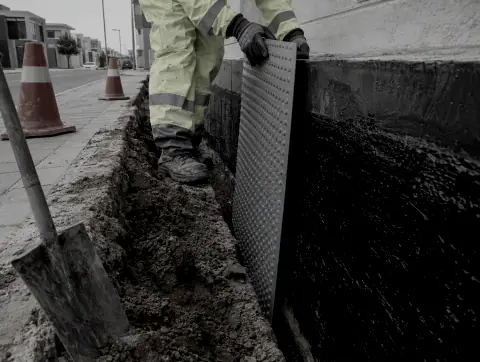
- Treating cracks, corners, drain openings and pipe runs
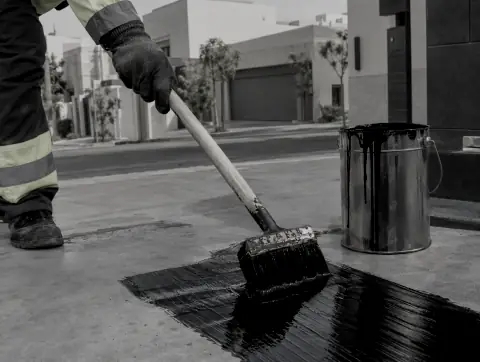
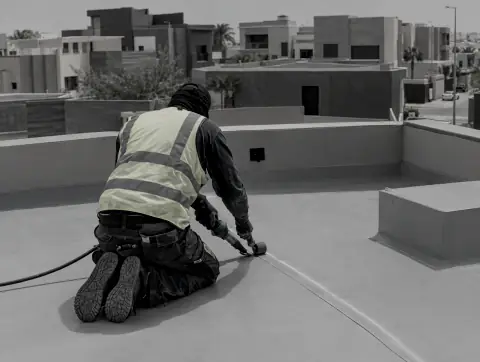
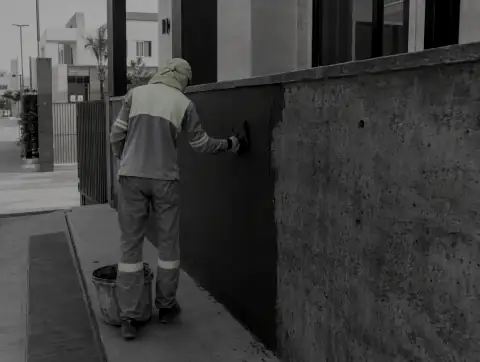
- Mixing and applying the cementitious material by brush or spray to suit the surface
- Turning the coat up at corners and fixture openings to close every weak point
- Inspecting the surface and identifying cracks and weak points
The steps of cementitious waterproofing in Industrial Area
Send photos of the area
Call us or send photos of the wall, tank or bathroom on WhatsApp, so we can read the surface and decide whether a rigid or flexible cementitious type suits best.
Prepare and clean the surface
The surface is cleaned of dust, grease and loose layers, and cracks, joints and voids are treated with a suitable filler so the coating bonds firmly.
Mix and apply the coating
The cementitious material is mixed to the right consistency, then brushed or sprayed depending on the surface, and turned up at corners and joints to close every weak point.
Cure and protect
The layer is left to dry and harden, and is not exposed to water or load before it is fully set. The final finish above it is decided by the location.
Why Abraj Al Azl?
A surface ready for finishingThe coating accepts tiles, render and paint directly on top, so it adds no visible build-up and does not change how the surface looks.
Your request from Industrial Area comes to usCall or WhatsApp on one number, and we answer you ourselves.
Start from Industrial Area with one messageSend us photos of the spot on WhatsApp and we will work out the next step with you.
We reply 5 AM to 10 PMSaturday to Thursday, and Friday on its own hours.
Some of our work

















What our customers said
أفضل شركة عزل اسطح الفوم وخزانات المياه
اتعاملت معاهم في العوازل عند كفيلي شغل يبيض الوجه انص التعامل معهم
ماشاء الله عملهم للعزل والتسريبات ممتاز وخبره ودقه في العمل انصح بالتعامل معهم موفقين يارب
Real Google reviews, shown exactly as their authors wrote them.
Common questions on cementitious waterproofing in Industrial Area
Is cementitious sealing suitable for large roofs in the Industrial Area?
Yes, if the concrete is sound and free of deep cracks. Cracks and joints are treated first with filler, then cementitious sealing is applied at the right thickness. Photos show if the roof needs repairs before sealing.
Do you treat damp in warehouse and shed walls in the Industrial Area?
Yes, we serve the Industrial Area. Send photos of the damp wall from inside and out and tell us if the damp is from soil or leakage from above so we can choose the right method.
Do you offer cementitious waterproofing in Industrial Area?
Yes. Industrial Area is within our service area in the Eastern Province, and we also work in Second Industrial Area, First Industrial Area and Yanbu. Call us or send photos of the spot on WhatsApp.
What decides the cost of cementitious waterproofing?
The size of the surface to be treated, its condition in terms of cracks and damage, how many corners and openings need extra treatment, how easily the site can be reached, and whether tiles must be lifted or prior preparation is needed. Send photos and rough dimensions of the tank, bathroom or wall on WhatsApp and we will advise on the treatment and the cost.
What is the difference between rigid and flexible cementitious waterproofing?
The rigid type sets like concrete and suits stable surfaces such as tank walls and basements that do not move. The flexible type contains polymer additives that let it absorb slight surface movement, making it suitable for bathrooms and areas that may take minor vibration. The surface type and its condition decide which is used.
Is cementitious waterproofing safe for drinking water tanks?
Yes. The material is mineral-based and contains no solvents or chemicals that migrate into the water, so it is widely used to line drinking water tanks. It must be fully cured and set before the tank is filled. Send a photo of the tank on WhatsApp and we will advise the right treatment.
Cementitious waterproofing near Industrial Area
If the site is outside Industrial Area, the same service is available in Second Industrial Area, First Industrial Area and Yanbu.
More services in Industrial Area