Waterproofing in Julayjilah
Waterproofing in Julayjilah starts with photos of the affected roof, tank, bathroom or wall, sent to us by call or on WhatsApp. The district is made up mainly of houses on small residential plots, where flat roofs and rooftop tanks are common. The photos will show whether the work is a targeted repair or a full new layer.
Julayjilah is mostly houses on small and medium plots, with flat roofs that take the full sun through the year. Many of these homes keep their water tanks on the roof, so leaks often begin at the tank base, the pipe entries or the parapet joints. Bathrooms on upper floors can also let water through into the rooms below. Because the homes differ widely in age, the method is chosen from the photos rather than from the district name alone.
- Julayjilah is a district in the Eastern Province, lying close to Al Qarn, Al Qurayn and Al Jarn.
- Flat roofs need their drainage points kept clear, because ponding water is what pushes leaks through old joints.
What the service covers in Julayjilah
- Checking the surface and finding the entry points: cracks, joints and openings
- Respecting the correct curing time for each material before the finish goes on
- Laying a continuous layer that turns up at the walls and closes at every opening
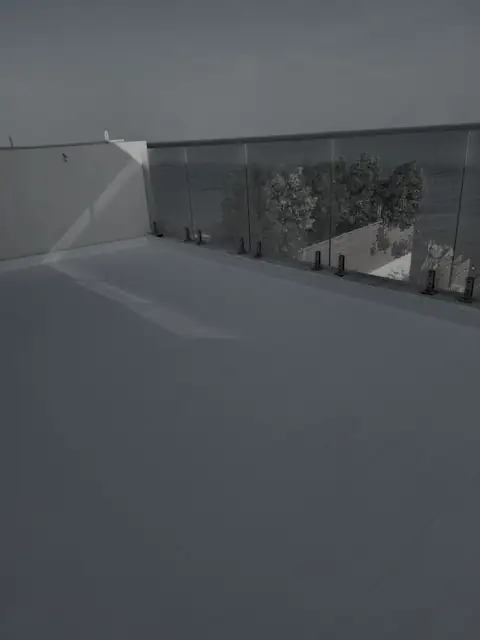
- Covering the waterproof layer with tiles or a protective coat to shield it from sun and wear
From first contact to the finished job in Julayjilah
Send photos of the problem
On WhatsApp: photos of the roof, wall, tank or bathroom with any visible stain or crack, so we can read the surface and point to the right material family.
Prepare the surface
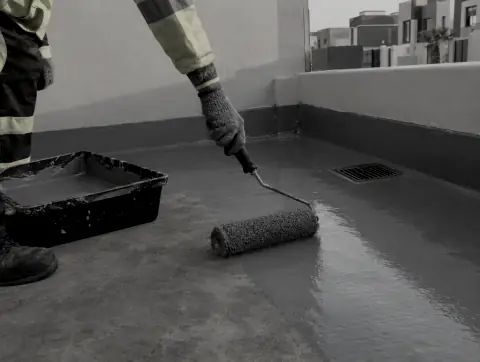
The surface is cleaned of dust, oil and any old coating, and cracks, joints, drain openings and AC bases are treated, because any point left untreated becomes a future entry point for water.
Apply the waterproof layer
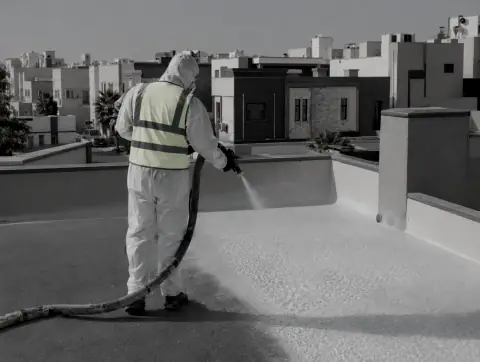
The chosen material goes on according to the surface type, whether liquid, membrane rolls, cementitious coating or epoxy, and is turned up at the walls and closed at every opening, joint and edge.
Cure, then finish
The layer is left to cure according to its type, then tiles or a protective coating go over it to shield it from sun and wear, and each material has its own curing requirement which we follow.
Why Abraj Al Azl?
The material fits the settingA tank needs a cementitious coat or epoxy, an exposed roof needs bitumen rolls or polyurethane, and using the wrong material undoes the work.
Julayjilah is in our service areaWe work there and across the Eastern Province, from our base in Al Uwaymiriyah, Hofuf.
Your request from Julayjilah comes to usCall or WhatsApp on one number, and we answer you ourselves.
We reply 5 AM to 10 PMSaturday to Thursday, and Friday on its own hours.
Some of our work

















What our customers said
ماشاء الله تبارك الرحمن عزل اسطح ممتاز
ماشاء الله عملهم للعزل والتسريبات ممتاز وخبره ودقه في العمل انصح بالتعامل معهم
أفضل شركة عزل اسطح الفوم وخزانات المياه
Real Google reviews, shown exactly as their authors wrote them.
What customers ask in Julayjilah
Can a rooftop tank in Julayjilah be waterproofed in place?
In many cases yes, provided the tank walls and base are sound. We check the photos first to see whether the tank can stay where it is, since access to a rooftop tank is the main factor in choosing the method.
Do you treat damp on ground floor walls in Julayjilah?
Yes, we serve Julayjilah. Send photos of the damp patch and tell us which face of the wall faces outside, because damp from outside and damp from a pipe behind the wall need different treatment.
What decides the cost of waterproofing a building?
The total area of each location to be treated, the condition and depth of any damage, the material type each surface needs, the number of cracks and joints requiring prior treatment, and ease of access. Send photos of every location on WhatsApp and the scope of the work becomes clear.
Do you cover Julayjilah?
Yes. We serve Julayjilah and nearby areas such as Al Qarn, Al Qurayn and Al Jarn, from our base in Al Uwaymiriyah, Hofuf. Start with a call or a WhatsApp message.
Which signs of a leak call for waterproofing assessment?
A damp patch spreading on the ceiling or the wall, white salt appearing on the concrete, tiles or render peeling away, blistering in an old waterproof layer, and a damp smell in a closed room: all of these mean water is moving inside the wall or the slab and needs attention before it reaches the reinforcement.
Is waterproofing different from treating damp inside a wall?
Yes. Waterproofing is applied to the surface to stop water pushing through in the first place. Treating damp deals with water that has already entered the wall: the area is dried, salts are treated and the render is restored before a waterproof layer goes on to prevent it returning. Photos show which approach the situation needs.
More services in Julayjilah