Waterproofing in Industrial (near Hafar Al-Batin)
Waterproofing industrial structures in the Industrial district begins with photos of roofs, tanks, pools or bathrooms sent by WhatsApp or call. The area comprises factories, workshops and storage buildings of various sizes, many with wide roofs exposed to leaks and damp. We protect roofs, tanks and foundations from damp and leaks using methods suited to large areas and industrial use.
The Industrial district mixes modern factories with complex roofs and older facilities with simple ones, many needing waterproofing and thermal insulation. Wide roofs face sun pressure and rare but heavy rains, and large tanks may retain water in joints and corners. Bathrooms and toilets in industrial buildings suffer continuous damp, and foundations may be affected by water and salts from the soil. Photos clearly show the condition of each roof and the leak location.
- The Industrial district is an industrial zone in the Eastern Province, close to Ar Rawdah, Al Fayha and Ar Rabie, with factories, workshops and large tanks.
- Wide industrial roofs require lining that tolerates seasonal expansion and contraction plus pressure from heavy equipment.
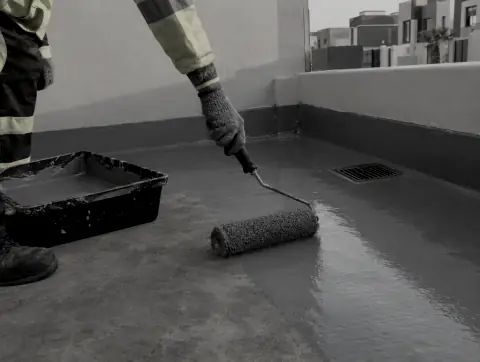
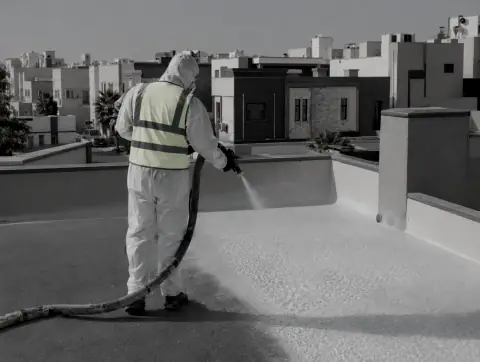
The waterproofing work in Industrial (near Hafar Al-Batin)
- Cleaning the surface and treating cracks, edges and AC bases
- Laying a continuous layer that turns up at the walls and closes at every opening
- Choosing the right material for each location from cementitious coat, bitumen rolls, liquid membrane and epoxy
- Checking the surface and finding the entry points: cracks, joints and openings
The steps of waterproofing in Industrial (near Hafar Al-Batin)
Send photos of the problem
On WhatsApp: photos of the roof, wall, tank or bathroom with any visible stain or crack, so we can read the surface and point to the right material family.
Prepare the surface
The surface is cleaned of dust, oil and any old coating, and cracks, joints, drain openings and AC bases are treated, because any point left untreated becomes a future entry point for water.
Apply the waterproof layer
The chosen material goes on according to the surface type, whether liquid, membrane rolls, cementitious coating or epoxy, and is turned up at the walls and closed at every opening, joint and edge.
Cure, then finish
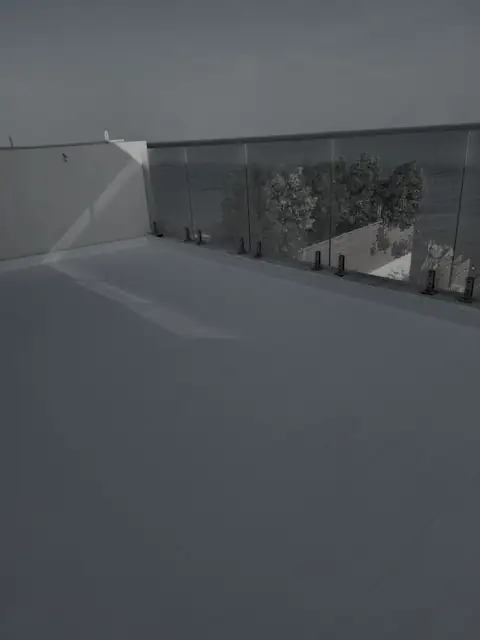
The layer is left to cure according to its type, then tiles or a protective coating go over it to shield it from sun and wear, and each material has its own curing requirement which we follow.
Why Abraj Al Azl?
Treatment at the source, not the symptomPainting over the stain does not stop the water; treating the entry points is what stops it.
Start from Industrial (near Hafar Al-Batin) with one messageSend us photos of the spot on WhatsApp and we will work out the next step with you.
Your request from Industrial (near Hafar Al-Batin) comes to usCall or WhatsApp on one number, and we answer you ourselves.
Talk to us directlyCall or WhatsApp on the same number.
Some of our work

















What our customers said
اتعاملت معاهم في العوازل عند كفيلي شغل يبيض الوجه انص التعامل معهم
ماشاء الله تبارك الرحمن عزل اسطح ممتاز
ماشاء الله عملهم للعزل والتسريبات ممتاز وخبره ودقه في العمل انصح بالتعامل معهم
Real Google reviews, shown exactly as their authors wrote them.
What customers ask in Industrial (near Hafar Al-Batin)
Can a large factory roof be waterproofed without stopping production?
Yes, the work can be done in phases to suit your needs. Send roof photos and tell us your production schedule so we can plan the timing to avoid disrupting your operations.
What type of waterproofing suits a large industrial water tank?
It depends on the tank's condition, the water stored and its age. Photos show us whether it is concrete or metal, and whether it leaks now or needs preventive care to ensure long-term protection.
How do I request waterproofing in Industrial (near Hafar Al-Batin)?
Call us, or send clear photos of the spot and its location in Industrial (near Hafar Al-Batin) on WhatsApp, and we will work out the next step with you.
When is epoxy the right choice and not the others?
Epoxy suits settings that stay wet or carry chemicals, such as pool basins, water tanks and wet-room floors. It cures hard and bonds to concrete, but it is not flexible, so it does not suit surfaces that expand and contract with heat or that face direct sun.
Which signs of a leak call for waterproofing assessment?
A damp patch spreading on the ceiling or the wall, white salt appearing on the concrete, tiles or render peeling away, blistering in an old waterproof layer, and a damp smell in a closed room: all of these mean water is moving inside the wall or the slab and needs attention before it reaches the reinforcement.
Is waterproofing different from treating damp inside a wall?
Yes. Waterproofing is applied to the surface to stop water pushing through in the first place. Treating damp deals with water that has already entered the wall: the area is dried, salts are treated and the render is restored before a waterproof layer goes on to prevent it returning. Photos show which approach the situation needs.
The same service in nearby areas
We also work near Industrial (near Hafar Al-Batin), in Ar Rawdah (near Hafar Al-Batin), Al Fayha (near Hafar Al-Batin) and Ar Rabie (near Hafar Al-Batin).
More services in Industrial (near Hafar Al-Batin)