Epoxy waterproofing in Eastern Arabian Gulf
Epoxy waterproofing in the Eastern Arabian Gulf district starts with photos of the tank or wet floor sent by call or WhatsApp. The area has mixed residential and commercial buildings with pressurised tanks and floors in restaurants and laboratories facing daily water and high moisture exposure.
The eastern coastal area has very high humidity and sometimes saline spray exposure, with diverse buildings from villas and apartment blocks to offices, utility facilities and commercial units. Floors and tanks in these buildings face moisture, salinity and concrete deterioration; epoxy provides a strong barrier against such conditions. Its use goes beyond tanks to wet floors and walls, and photos plus information about usage and environment determine the treatment best suited.
- The Eastern Arabian Gulf is a district in the Eastern Province, close to Al Muruj and Al Faisaliyah, on the Gulf coast.
- High coastal humidity and salts accelerate unprotected concrete deterioration; continuous epoxy layers slow this process.
The epoxy waterproofing work in Eastern Arabian Gulf
- Emptying the tank or pool and waiting for the surface to dry fully
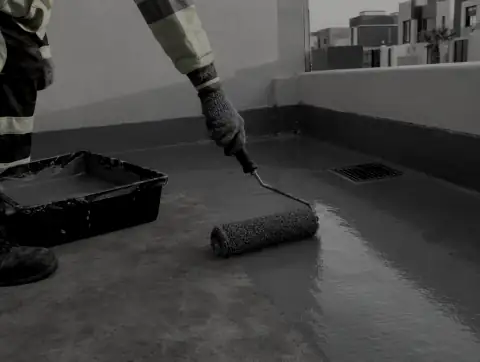
- Applying epoxy layers with particular care at corners, joints and drain outlets
- Leaving the layer to cure fully before the tank or pool is returned to use
- Cleaning the surface, removing old coatings and roughening it
From first contact to the finished job in Eastern Arabian Gulf
Send photos of the surface
On WhatsApp: photos inside the tank, the pool or on the floor, showing the cracks, joints and anywhere the leak shows, so we can decide the right treatment.
Dry and prepare the surface
The tank or pool is emptied completely and the surface is left to dry, because epoxy does not bond to damp concrete. The surface is cleaned of dirt and old coatings, then roughened or treated to open the concrete pores.
Treat cracks and joints
Hairline cracks are opened slightly and cleaned, then filled with a suitable material before the resin goes on, because the layer alone does not bridge moving or wide cracks.
Apply the resin layers and let them cure
The two epoxy parts are mixed and successive layers are applied, each left to cure before the next, with particular care at corners, joints and drain outlets.
Why Abraj Al Azl?
Bonded, not floatingEpoxy bonds into the concrete rather than sitting on top, which makes it hard for water pressure from inside to push it off.
Your request from Eastern Arabian Gulf comes to usCall or WhatsApp on one number, and we answer you ourselves.
Start from Eastern Arabian Gulf with one messageSend us photos of the spot on WhatsApp and we will work out the next step with you.
Talk to us directlyCall or WhatsApp on the same number.
Some of our work

















What our customers said
ماشاء الله تبارك الرحمن عزل اسطح ممتاز
ماشاء الله عملهم للعزل والتسريبات ممتاز وخبره ودقه في العمل انصح بالتعامل معهم
اتعاملت معاهم في العوازل عند كفيلي شغل يبيض الوجه انص التعامل معهم
Real Google reviews, shown exactly as their authors wrote them.
Questions about epoxy waterproofing in Eastern Arabian Gulf
Does epoxy waterproofing on the coast need special consideration for salt exposure?
Yes, surface preparation is more thorough in coastal environments to remove accumulated salts from concrete before epoxy application. Photos help us assess the degree of salt attack and what surface treatment is needed.
What epoxy types suit restaurant and laboratory floors in the coastal area?
The choice depends on what liquids the floor is exposed to and its load. A restaurant floor may need resistance to oils and salts, while a laboratory may need resistance to other chemicals. Send photos and usage details so we can determine the right type with you.
Is epoxy safe for drinking-water tanks?
There are epoxy grades rated for drinking-water contact. When applied in drinking-water tanks, the layer must cure fully before the tank is refilled. Send photos and tell us whether the tank is for drinking or service water, so we can choose the right material.
What is the difference between epoxy and a cementitious coating for tank waterproofing?
A cementitious coating is relatively flexible, suits most tanks and tolerates some surface moisture during application. Epoxy bonds harder and resists chemicals better, but needs a fully dry surface. The choice between the two depends on the condition of the tank and what it holds. Send photos and we will advise.
How do I know if an old epoxy layer needs renewing?
Signs that renewal is due include blisters or bubbles on the surface, sections that have separated or are lifting, leaks returning through the layer, and unusual discolouration or roughness. If you notice any of these, send photos on WhatsApp and we will assess the condition.
Is Eastern Arabian Gulf within your service area?
Yes, Eastern Arabian Gulf is one of the areas we work in, as are Al Muruj (near Al Khafji), Western Arabian Gulf and Al Faisaliyah (near Al Khafji). To start, call us or message us on WhatsApp.
We also offer it in neighbouring areas
We also work near Eastern Arabian Gulf, in Al Muruj (near Al Khafji), Western Arabian Gulf and Al Faisaliyah (near Al Khafji).
More services in Eastern Arabian Gulf