Epoxy waterproofing in Ar Rabiyah District
Epoxy waterproofing in Ar Rabiyah District begins with photos sent by call or WhatsApp. The district has villas and residential buildings with pools, tanks and floors that all need continuous epoxy layers to prevent damp and seepage.
Ar Rabiyah has villas and residential buildings of varied age and size, many with pools, water tanks and floors exposed to damp. Pools here need epoxy that resists chlorine, salt and constant sun, and tanks suffer seepage depending on concrete age and crack depth. Floors, especially near pools and bathrooms, face wetness and slipping, while continuous epoxy layers provide both water protection and safe footing. Conditions vary from building to building, and photos determine the best approach.
- Ar Rabiyah District is a residential district in the Eastern Province, close to Al Iskan Second, Mansubi Al Taleem Second and Al Wurud Second.
- Chlorinated pool water damages concrete, so epoxy must offer strong chemical resistance.
The scope of the work in Ar Rabiyah District
- Cleaning the surface, removing old coatings and roughening it
- Leaving the layer to cure fully before the tank or pool is returned to use
- Treating hairline cracks and joints before the resin is applied
- Inspecting the internal surface and locating leak points and cracks
How we carry out epoxy waterproofing in Ar Rabiyah District
Send photos of the surface
On WhatsApp: photos inside the tank, the pool or on the floor, showing the cracks, joints and anywhere the leak shows, so we can decide the right treatment.
Dry and prepare the surface
The tank or pool is emptied completely and the surface is left to dry, because epoxy does not bond to damp concrete. The surface is cleaned of dirt and old coatings, then roughened or treated to open the concrete pores.
Treat cracks and joints
Hairline cracks are opened slightly and cleaned, then filled with a suitable material before the resin goes on, because the layer alone does not bridge moving or wide cracks.
Apply the resin layers and let them cure
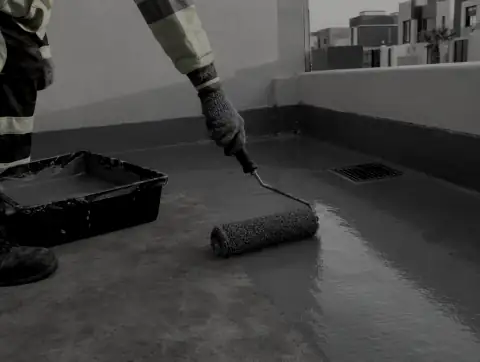
The two epoxy parts are mixed and successive layers are applied, each left to cure before the next, with particular care at corners, joints and drain outlets.
Why Abraj Al Azl?
A hard surface that resists standing waterOnce cured, the resin is hard and resists standing water and cleaning agents, making it suitable for tanks, basins and wet floors.
Your request from Ar Rabiyah District comes to usCall or WhatsApp on one number, and we answer you ourselves.
Epoxy waterproofing in Ar Rabiyah DistrictWe choose the method and the materials once we know the condition of the spot.
We reply 5 AM to 10 PMSaturday to Thursday, and Friday on its own hours.
Some of our work

















What our customers said
ماشاء الله تبارك الرحمن عزل اسطح ممتاز
ماشاء الله عملهم للعزل والتسريبات ممتاز وخبره ودقه في العمل انصح بالتعامل معهم
اتعاملت معاهم في العوازل عند كفيلي شغل يبيض الوجه انص التعامل معهم
Real Google reviews, shown exactly as their authors wrote them.
Common questions on epoxy waterproofing in Ar Rabiyah District
Can an old pool in Ar Rabiyah be waterproofed with epoxy?
Yes, if the underlying concrete is sound. Pool walls and floor are cleaned, cracks treated, then epoxy layers applied. If the structure is badly damaged, the photos will reveal it.
Does epoxy protect pool floors from chlorine and salt?
Yes, epoxy resists chlorine, salt and saline water. But the surface must be carefully prepared and cracks treated before application to achieve full protection.
What is the difference between epoxy and a cementitious coating for tank waterproofing?
A cementitious coating is relatively flexible, suits most tanks and tolerates some surface moisture during application. Epoxy bonds harder and resists chemicals better, but needs a fully dry surface. The choice between the two depends on the condition of the tank and what it holds. Send photos and we will advise.
Why must the surface be completely dry before epoxy is applied?
Epoxy is a chemical resin that needs to react with the concrete, not with water. Moisture in the concrete prevents full adhesion and can cause the layer to blister or separate later. That is why tanks are emptied and the surface is left to dry before work begins.
How do I know if an old epoxy layer needs renewing?
Signs that renewal is due include blisters or bubbles on the surface, sections that have separated or are lifting, leaks returning through the layer, and unusual discolouration or roughness. If you notice any of these, send photos on WhatsApp and we will assess the condition.
Do you offer epoxy waterproofing in Ar Rabiyah District?
Yes. Ar Rabiyah District is within our service area in the Eastern Province, and we also work in Al Iskan Second District, Mansubi Al Taleem Second District and Al Wurud Second District. Call us or send photos of the spot on WhatsApp.
Areas near Ar Rabiyah District
We also offer epoxy waterproofing in Al Iskan Second District, Mansubi Al Taleem Second District and Al Wurud Second District, among the closest areas to Ar Rabiyah District.
More services in Ar Rabiyah District