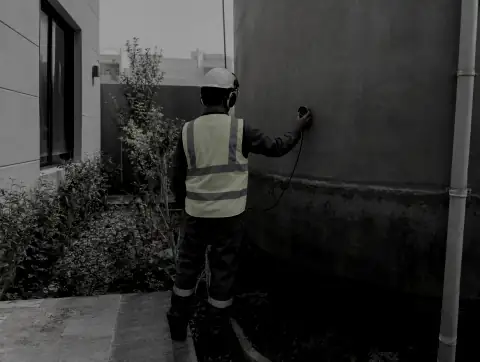
Ground tank leak detection in Yakrub
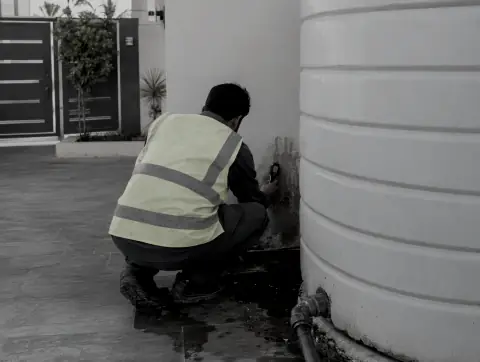
Ground tank leak detection in Yakrub starts with photos of the tank and its surroundings, sent by call or WhatsApp. The hamlet has a small number of houses and villas, each relying on its own ground tank. A leak usually shows as persistent damp in the yard or cracking soil.
Ground tanks in Yakrub need special care because houses are spread out and plots are wide, with the tank sometimes far from the main building. A slow leak may go unnoticed for weeks until damp appears in one spot or vegetation grows around the tank. Clear photos of the area around the tank help us determine whether the leak is from the structure itself or from buried pipes. We then tell you precisely where the problem is.
- Yakrub is a hamlet in the Eastern Province, near Al Kidadiyah and Fudah, with a few houses and villas on wide plots.
- A ground tank in a remote hamlet may leak without anyone noticing, but steady soil moisture signals a problem needing to be traced.
The scope of the work in Yakrub
- Checking the inlet, outlet and overflow pipe connections
- Level test with pumping and use shut off
- Identifying the leak source and presenting the suggested repair
- Internal inspection of the walls and floor for cracks and seepage
How we carry out ground tank leak detection in Yakrub
Send a description and photos
Call us or send on WhatsApp: photos of the tank if it is accessible, and a description of what you are seeing, such as the level drop or the damp ground, so we can plan where to start.
Level test with supply shut off
The water supply is shut off and the level is recorded, then read again after a set period. This confirms whether there is real loss and separates it from normal use or groundwater entering from outside.
Check the connections and pipes
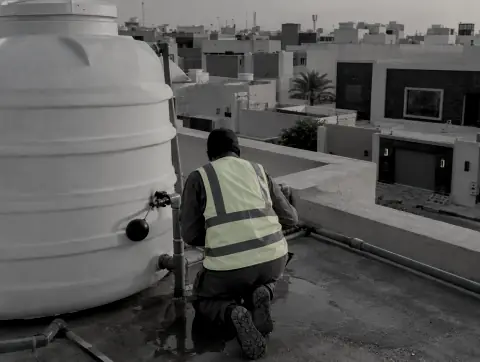
The inlet, outlet and overflow connections and the points where pipes pass through the wall are checked, as these are the spots most likely to leak in a ground tank, under movement and pressure.
Inspect the walls and floor inside
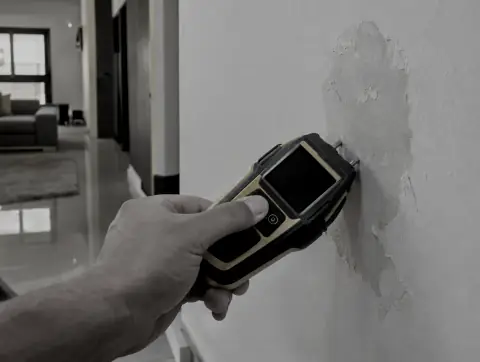
The interior is inspected for cracks, hairline cracks and seeping spots. Each point is assessed by its size and position to decide whether it is a source of loss or an entry point for outside water.
Why Abraj Al Azl?
Telling a leak from groundwater entryBoth look similar but need different treatments: one loses water, the other gains it. Detection tells you which one you are dealing with.
Your request from Yakrub comes to usCall or WhatsApp on one number, and we answer you ourselves.
Yakrub is in our service areaWe work there and across the Eastern Province, from our base in Al Uwaymiriyah, Hofuf.
We reply 5 AM to 10 PMSaturday to Thursday, and Friday on its own hours.
Some of our work

















What our customers said
ماشاء الله عملهم للعزل والتسريبات ممتاز وخبره ودقه في العمل انصح بالتعامل معهم
أفضل شركة عزل اسطح الفوم وخزانات المياه
ماشاء الله تبارك الرحمن عزل اسطح ممتاز
Real Google reviews, shown exactly as their authors wrote them.
Before you book ground tank leak detection in Yakrub
Can you trace a leak in a tank buried under a wide yard?
Yes. We ask for clear photos of the tank location and the area around it, then examine where damp appears or the ground sinks. This gives us a strong sense of where the leak is and what kind it is.
When should you call about damp appearing around a ground tank?
As soon as you notice persistent damp in one spot or see it spreading. A slow leak may not seem urgent at first, but leaving it allows more damage. Send us photos and note the location and symptoms.
Do you offer ground tank leak detection in Yakrub?
Yes. Yakrub is within our service area in the Eastern Province, and we also work in Al Kidadiyah (near Ayn Dar), Fudah and Qusayba'. Call us or send photos of the spot on WhatsApp.
What decides the cost of ground tank leak detection?
The size of the tank, how easily the access point can be reached, whether it is fully or partly buried, whether the level can be lowered for an internal inspection, and how many connections need to be checked. Send us a description and photos if possible on WhatsApp.
How does a fully buried tank differ from a partly exposed ground tank when it comes to detection?
A fully buried tank cannot have its outer walls checked directly, so detection rests on the level test and an internal check of the walls and connections. A partly exposed tank lets the outer wall be read for damp marks, which narrows the search. Tell us the type and burial depth when you get in touch.
Is leak detection different for a buried tank and an above-ground tank?
A buried tank cannot have its outer walls checked directly, so detection relies more on the level test and an internal check of the walls and connections. An above-ground ground tank allows the outer wall to be read for damp marks. Tell us which type you have when you get in touch.
We also offer it in neighbouring areas
Nearby areas we also cover: Al Kidadiyah (near Ayn Dar), Fudah and Qusayba'.
More services in Yakrub