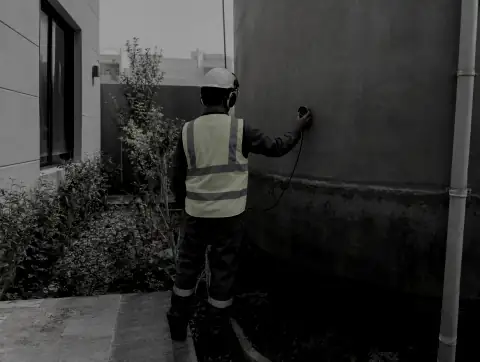
Ground tank leak detection in Al Jud
Ground tank leak detection in Al Jud begins with photos and descriptions sent by WhatsApp or phone. The area has houses and villas of varied ages, and ground tanks here are exposed to damp and leaks from walls, floors or pipe joints.
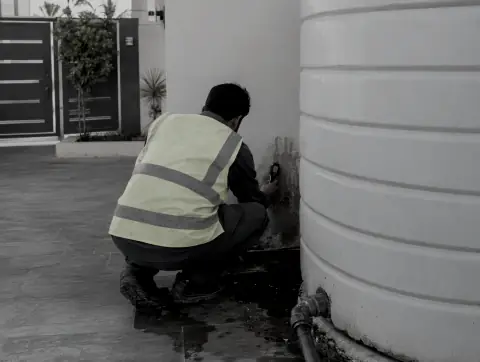
Houses and villas in Al Jud vary greatly in age, each holding a ground tank in its own condition. A submerged tank absorbs moisture from surrounding soil, and damp patches often appear around the yard or on the ground floor inside. Leaks come from cracks in the tank walls, from the floor slab, or from incoming and outgoing pipe joints. Photos show where the damp and damage are, and from them we identify the true source of the leak before treatment begins.
- Al Jud is a district in the Eastern Province with varied residential buildings, located near Al Iskan Al Janubi, Al Amal and Al Urubah.
- Ground tanks absorb moisture from soil year-round, especially after rare but heavy rains.
The main items of ground tank leak detection in Al Jud
- Identifying the leak source and presenting the suggested repair
- Checking the inlet, outlet and overflow pipe connections
- Telling outward water loss from inward groundwater entry
- Internal inspection of the walls and floor for cracks and seepage
The stages of the work in Al Jud
Send a description and photos
Call us or send on WhatsApp: photos of the tank if it is accessible, and a description of what you are seeing, such as the level drop or the damp ground, so we can plan where to start.
Level test with supply shut off
The water supply is shut off and the level is recorded, then read again after a set period. This confirms whether there is real loss and separates it from normal use or groundwater entering from outside.
Check the connections and pipes
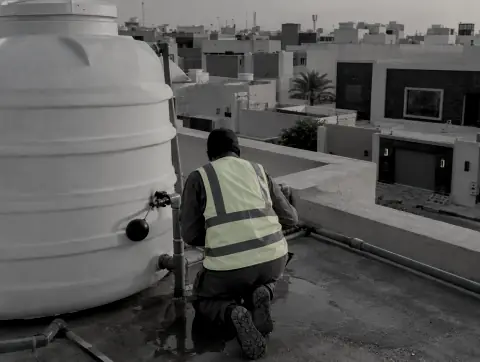
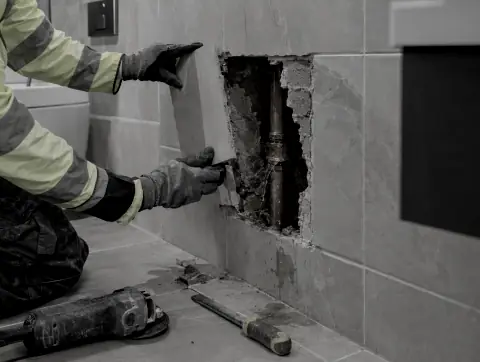
The inlet, outlet and overflow connections and the points where pipes pass through the wall are checked, as these are the spots most likely to leak in a ground tank, under movement and pressure.
Inspect the walls and floor inside
The interior is inspected for cracks, hairline cracks and seeping spots. Each point is assessed by its size and position to decide whether it is a source of loss or an entry point for outside water.
Why Abraj Al Azl?
Telling a leak from groundwater entryBoth look similar but need different treatments: one loses water, the other gains it. Detection tells you which one you are dealing with.
Your request from Al Jud comes to usCall or WhatsApp on one number, and we answer you ourselves.
Start from Al Jud with one messageSend us photos of the spot on WhatsApp and we will work out the next step with you.
Talk to us directlyCall or WhatsApp on the same number.
Some of our work

















What our customers said
ماشاء الله عملهم للعزل والتسريبات ممتاز وخبره ودقه في العمل انصح بالتعامل معهم
أفضل شركة عزل اسطح الفوم وخزانات المياه
اتعاملت معاهم في العوازل عند كفيلي شغل يبيض الوجه انص التعامل معهم
Real Google reviews, shown exactly as their authors wrote them.
Common questions on ground tank leak detection in Al Jud
How can we tell a leak comes from the ground tank and not elsewhere?
Damp patches around the tank and under floor slabs point to it. Send photos of the wet area and the tank if visible, and tell us when the problem started. From the photos and the location of dampness we determine whether the source is the tank itself.
Can a leaking ground tank in Al Jud be repaired?
Yes, but it depends on where the leak is and the tank's concrete condition. If it is from pipe joints we treat it directly; if from the tank walls or floor, the photos show whether repair is feasible before we start.
How does a fully buried tank differ from a partly exposed ground tank when it comes to detection?
A fully buried tank cannot have its outer walls checked directly, so detection rests on the level test and an internal check of the walls and connections. A partly exposed tank lets the outer wall be read for damp marks, which narrows the search. Tell us the type and burial depth when you get in touch.
Why are pipe entry points through the tank wall among the most likely places to leak?
A ground tank is subject to soil movement and external pressure changes, so the concrete wall shifts slightly around the rigid pipe. That repeated movement breaks the seal at the entry point and opens a path for leakage over time, unlike an overhead tank where soil movement has no comparable effect.
Is leak detection different for a buried tank and an above-ground tank?
A buried tank cannot have its outer walls checked directly, so detection relies more on the level test and an internal check of the walls and connections. An above-ground ground tank allows the outer wall to be read for damp marks. Tell us which type you have when you get in touch.
How do I request ground tank leak detection in Al Jud?
Call us, or send clear photos of the spot and its location in Al Jud on WhatsApp, and we will work out the next step with you.
The same service in nearby areas
Nearby areas we also cover: Al Iskan Al Janubi, Al Amal (near Dhahran) and Al Urubah (near Dhahran).
More services in Al Jud