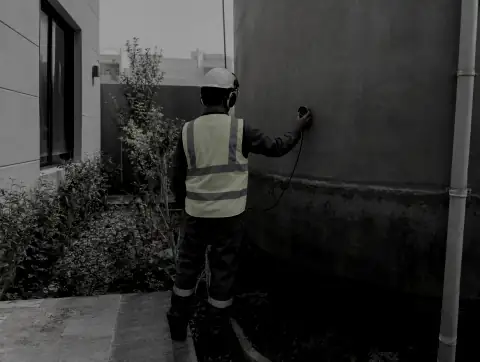
Ground tank leak detection in Al Bahr (near Qatif)
Ground tank leak detection in Al Bahr begins with WhatsApp photos of the tank and its surroundings, plus description of leak signs. The district has houses and villas around relatively older ground tanks, and coastal humidity accelerates material degradation around them.
Ground tanks in Al Bahr suffer from combined soil pressure and high coastal moisture. Rust and corrosion appear on metals and joints, and concrete cracks under salt and humidity. Leaks usually show clear signs such as persistent dampness around the tank or subsidence in the surrounding soil. Clear photos of the tank condition and location help us determine whether the leak is from the walls, floor or pipe joints.
- Al Bahr is a district in the Eastern Province close to Ash Shamasiyyah, Al Qalah and Al Bustan Two, made up of houses and villas on varied residential plots.
- Ground tanks in coastal areas face salt and high humidity, speeding up corrosion and leaks from joints.
What the service covers in Al Bahr (near Qatif)
- Identifying the leak source and presenting the suggested repair
- Internal inspection of the walls and floor for cracks and seepage
- Level test with pumping and use shut off
- Checking the inlet, outlet and overflow pipe connections
The stages of the work in Al Bahr (near Qatif)
Send a description and photos
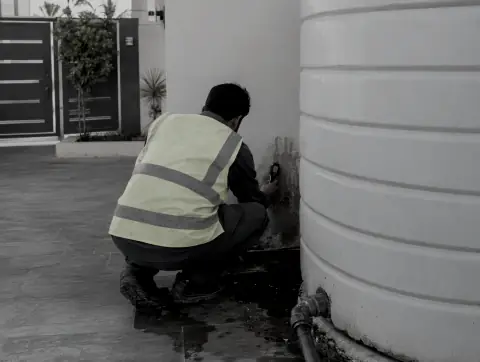
Call us or send on WhatsApp: photos of the tank if it is accessible, and a description of what you are seeing, such as the level drop or the damp ground, so we can plan where to start.
Level test with supply shut off
The water supply is shut off and the level is recorded, then read again after a set period. This confirms whether there is real loss and separates it from normal use or groundwater entering from outside.
Check the connections and pipes
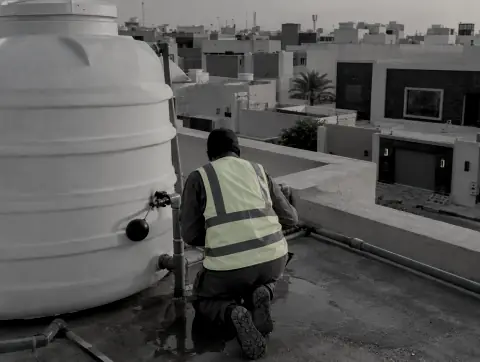
The inlet, outlet and overflow connections and the points where pipes pass through the wall are checked, as these are the spots most likely to leak in a ground tank, under movement and pressure.
Inspect the walls and floor inside
The interior is inspected for cracks, hairline cracks and seeping spots. Each point is assessed by its size and position to decide whether it is a source of loss or an entry point for outside water.
Why Abraj Al Azl?
Finding the source prevents guesswork repairsTreating the wrong spot costs time and money without stopping the loss. Accurate detection points the repair at the right place.
Ground tank leak detection in Al Bahr (near Qatif)We choose the method and the materials once we know the condition of the spot.
Start from Al Bahr (near Qatif) with one messageSend us photos of the spot on WhatsApp and we will work out the next step with you.
We reply 5 AM to 10 PMSaturday to Thursday, and Friday on its own hours.
Some of our work

















What our customers said
أفضل شركة عزل اسطح الفوم وخزانات المياه
ماشاء الله عملهم للعزل والتسريبات ممتاز وخبره ودقه في العمل انصح بالتعامل معهم موفقين يارب
اتعاملت معاهم في العوازل عند كفيلي شغل يبيض الوجه انص التعامل معهم
Real Google reviews, shown exactly as their authors wrote them.
Common questions on ground tank leak detection in Al Bahr (near Qatif)
Why are ground tanks in coastal areas more prone to leaks?
Salt and high coastal humidity accelerate concrete, metal and joint corrosion. Also, groundwater pressure and persistent moisture around the tank increase the risk of cracks and leaks. Regular photo checks help spot problems early.
Does visible dampness around a ground tank always mean an active leak?
Not always. Old dampness may be from a past leak that was fixed or seasonal passing moisture. But fresh ongoing dampness, especially in dry seasons, points to an active leak. Your current photos show the moisture level and help us tell the two apart.
What should I send you from Al Bahr (near Qatif)?
Send clear photos of the spot and a short description of the problem on WhatsApp, mention that you are in Al Bahr (near Qatif), and we will work out the next step with you.
How does a fully buried tank differ from a partly exposed ground tank when it comes to detection?
A fully buried tank cannot have its outer walls checked directly, so detection rests on the level test and an internal check of the walls and connections. A partly exposed tank lets the outer wall be read for damp marks, which narrows the search. Tell us the type and burial depth when you get in touch.
Is leak detection different for a buried tank and an above-ground tank?
A buried tank cannot have its outer walls checked directly, so detection relies more on the level test and an internal check of the walls and connections. An above-ground ground tank allows the outer wall to be read for damp marks. Tell us which type you have when you get in touch.
Why are pipe entry points through the tank wall among the most likely places to leak?
A ground tank is subject to soil movement and external pressure changes, so the concrete wall shifts slightly around the rigid pipe. That repeated movement breaks the seal at the entry point and opens a path for leakage over time, unlike an overhead tank where soil movement has no comparable effect.
Areas near Al Bahr (near Qatif)
If the site is outside Al Bahr (near Qatif), the same service is available in Ash Shamasiyyah, Al Qalah and Al Bustan Two.
More services in Al Bahr (near Qatif)