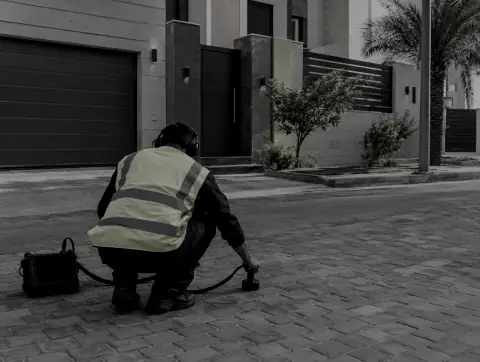
Underground pipe & network leak detection in Western Arabian Gulf
Underground network leak detection in the Western Arabian Gulf begins with photos sent by call or WhatsApp. Electronic instruments pinpoint leaks precisely without random digging, protecting infrastructure in this coastal district.
The area lies near the coast with diverse residential and commercial buildings, and its buried networks face coastal environmental effects. High humidity and salt in the air accelerate metal and joint corrosion, and soil movement or tree roots can crack pipes. Pinpointing the leak precisely before digging saves time and money and protects nearby roads and buildings.
- The Western Arabian Gulf is a district in the Eastern Province, close to the Eastern Arabian Gulf, Al Muruj and Al Faisaliyah, with residential and commercial buildings.
- Drainage networks in coastal areas face extra pressure from rare but heavy rainfall, making leaks easier to detect with electronic instruments.
The main items of underground pipe & network leak detection in Western Arabian Gulf
- Digging only at the marked point and backfilling after the repair
- Narrowing the search to one point before any digging
- Injecting tracer gas where needed and detecting where it surfaces
- Restoring the surface finish to match the opened area
The stages of the work in Western Arabian Gulf
Send photos of the problem
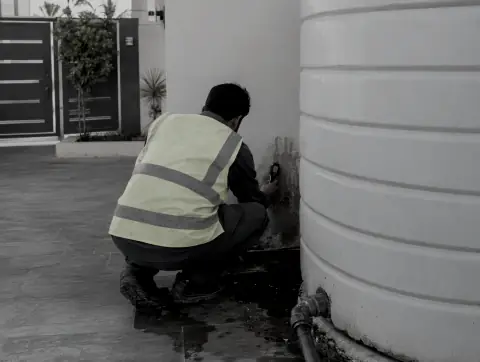
On WhatsApp: photos of the meter turning, the wet or sunken ground and any cracks in the nearby floor, so we can read the network and choose the right instruments.
Survey the site with instruments
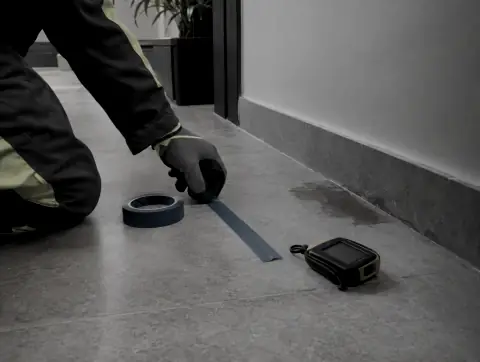
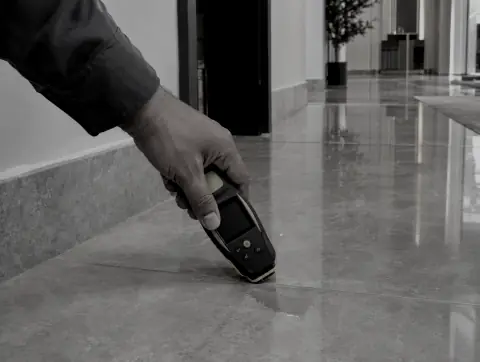
The likely pipe route is walked with a ground microphone or an acoustic correlator. Where needed, a thermal camera or tracer gas is added until the search narrows to one point.
Mark the exact point
When the instrument readings converge the point is marked on the surface. The digging plan is agreed before work starts, because precise digging limits damage and shortens the repair.
Open and repair
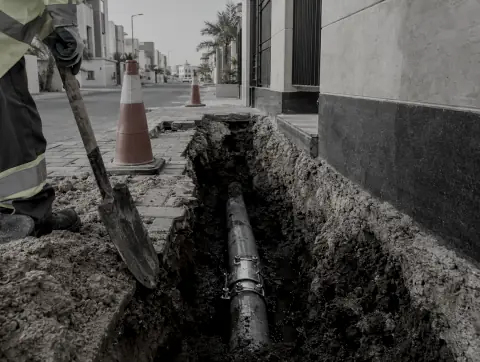
Only the marked point is opened, the pipe is exposed and repaired, the trench is filled and the surface is restored to match what was there before.
Why Abraj Al Azl?
One trench, not random diggingLocating before digging means opening the ground once, which protects the floor finish, paving and any other buried service nearby.
Western Arabian Gulf is in our service areaWe work there and across the Eastern Province, from our base in Al Uwaymiriyah, Hofuf.
We serve Western Arabian Gulf and around itIncluding Eastern Arabian Gulf, Al Muruj (near Al Khafji) and Al Faisaliyah (near Al Khafji), as part of our work across the Eastern Province.
We reply 5 AM to 10 PMSaturday to Thursday, and Friday on its own hours.
Some of our work

















What our customers said
ماشاء الله عملهم للعزل والتسريبات ممتاز وخبره ودقه في العمل انصح بالتعامل معهم
ماشاء الله تبارك الرحمن عزل اسطح ممتاز
اتعاملت معاهم في العوازل عند كفيلي شغل يبيض الوجه انص التعامل معهم
Real Google reviews, shown exactly as their authors wrote them.
Questions about underground pipe & network leak detection in Western Arabian Gulf
Does coastal humidity cause leaks faster in the Western Arabian Gulf?
High humidity and salt accelerate corrosion of joints and metal pipes, but the leak may not show outside for a while. Electronic instruments detect it before it causes major damage to infrastructure or the building.
How much digging is needed to detect a leak in an old network in the area?
Electronic instruments greatly reduce digging. We pinpoint the location first, so we may need only a small dig to confirm or access the pipe, instead of random digging that damages the area.
Do the instruments give enough accuracy to avoid excess digging?
The instruments narrow the search significantly, but the accuracy depends on the pipe depth, the soil, the pipe type and the size of the leak. In some cases the point is very precise. In others a slightly wider opening may be needed. We explain this before any digging starts.
Do you offer underground pipe & network leak detection in Western Arabian Gulf?
Yes. Western Arabian Gulf is within our service area in the Eastern Province, and we also work in Eastern Arabian Gulf, Al Muruj (near Al Khafji) and Al Faisaliyah (near Al Khafji). Call us or send photos of the spot on WhatsApp.
Does the water supply need to be cut during the survey?
The water does not usually need to be cut during a microphone or thermal camera survey because pressure helps produce the sound that identifies the leak. It may be cut briefly when tracer gas is used or when the repair is done. We clarify that once we know the network.
Can the digging affect other buried services in the same area?
That is a real risk when digging without prior location. That is why we trace the pipe route first and check the positions of other buried services as far as possible before starting, so the opening is limited to what is necessary.
Underground pipe & network leak detection near Western Arabian Gulf
If the site is outside Western Arabian Gulf, the same service is available in Eastern Arabian Gulf, Al Muruj (near Al Khafji) and Al Faisaliyah (near Al Khafji).
More services in Western Arabian Gulf