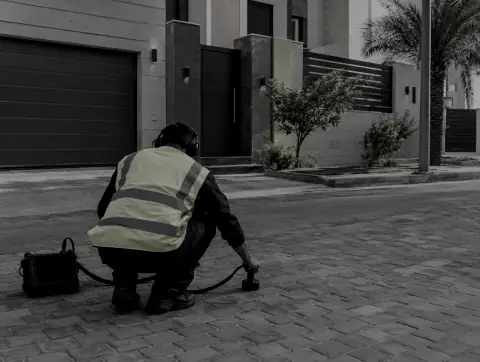
Underground pipe & network leak detection in Kuwaikib
Leak detection in buried networks and pipes in Kuwaikib starts with a site photo sent via WhatsApp or phone. The district has residential buildings and villas of varying types, with buried pipes that may be old or recent depending on when they were built.
Kuwaikib has a mix of residential buildings and villas on plots of varying size. Older pipes may show signs of rust or cracking, while newer ones can be affected by minor soil movement. Dampness around the building or low water pressure can signal a buried leak, and precise photos help pinpoint it with specialist equipment without extensive random digging.
- Kuwaikib is a district in the Eastern Province, close to Al Wadiah, Ash Shariah and Ash Shweikah, with residential buildings and villas.
- Metal pipes laid long ago may corrode from inside, causing slow leaks that are hard to detect without instruments.
The main items of underground pipe & network leak detection in Kuwaikib
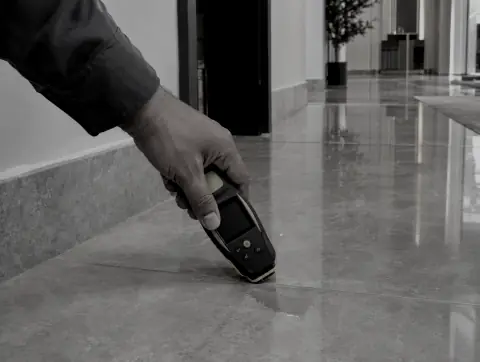
- Walking the pipe route with a ground microphone or acoustic correlator
- Restoring the surface finish to match the opened area
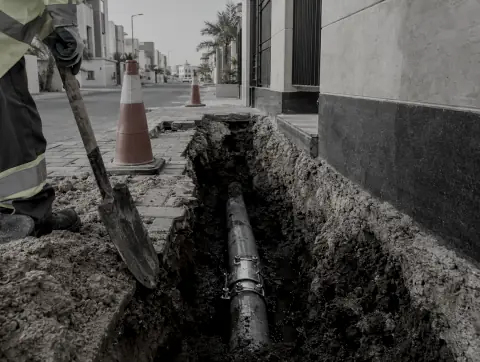
- Digging only at the marked point and backfilling after the repair
- Injecting tracer gas where needed and detecting where it surfaces
The steps of underground pipe & network leak detection in Kuwaikib
Send photos of the problem
On WhatsApp: photos of the meter turning, the wet or sunken ground and any cracks in the nearby floor, so we can read the network and choose the right instruments.
Survey the site with instruments
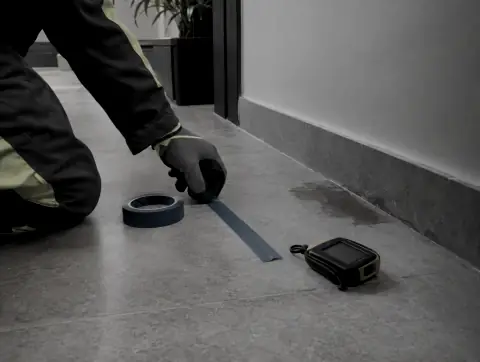
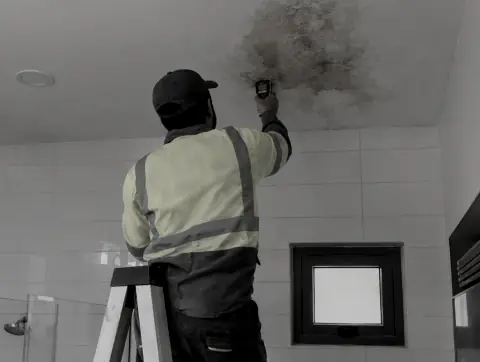
The likely pipe route is walked with a ground microphone or an acoustic correlator. Where needed, a thermal camera or tracer gas is added until the search narrows to one point.
Mark the exact point
When the instrument readings converge the point is marked on the surface. The digging plan is agreed before work starts, because precise digging limits damage and shortens the repair.
Open and repair
Only the marked point is opened, the pipe is exposed and repaired, the trench is filled and the surface is restored to match what was there before.
Why Abraj Al Azl?
One trench, not random diggingLocating before digging means opening the ground once, which protects the floor finish, paving and any other buried service nearby.
Your request from Kuwaikib comes to usCall or WhatsApp on one number, and we answer you ourselves.
We serve Kuwaikib and around itIncluding Al Wadiah, Ash Shariah and Ash Shweikah, as part of our work across the Eastern Province.
Talk to us directlyCall or WhatsApp on the same number.
Some of our work

















What our customers said
ماشاء الله عملهم للعزل والتسريبات ممتاز وخبره ودقه في العمل انصح بالتعامل معهم
ماشاء الله تبارك الرحمن عزل اسطح ممتاز
اتعاملت معاهم في العوازل عند كفيلي شغل يبيض الوجه انص التعامل معهم
Real Google reviews, shown exactly as their authors wrote them.
What customers ask in Kuwaikib
How do you know if the leak is in main water pipes rather than branch pipes in Kuwaikib?
Location, pressure and direction of dampness provide initial clues. Electronic instruments trace the network from the entry point and precisely identify which section is leaking.
Can a buried leak go unnoticed for years in Kuwaikib before symptoms appear?
Yes, slow leaks may only show as mild dampness or gradually rising water bills. Early detection with instruments prevents greater damage to foundations and the building.
Does the water supply need to be cut during the survey?
The water does not usually need to be cut during a microphone or thermal camera survey because pressure helps produce the sound that identifies the leak. It may be cut briefly when tracer gas is used or when the repair is done. We clarify that once we know the network.
How do I know the leak is in a buried pipe and not somewhere else?
Close all taps and toilets and watch the meter. If it keeps moving there is loss in the network. Then check the walls, ceilings, bathrooms and tanks visually. If nothing is visible the leak is likely in a buried pipe. Photos help us narrow it down.
Do you cover Kuwaikib?
Yes. We serve Kuwaikib and nearby areas such as Al Wadiah, Ash Shariah and Ash Shweikah, from our base in Al Uwaymiriyah, Hofuf. Start with a call or a WhatsApp message.
What instruments are used to detect leaks in underground pipes?
A ground microphone picks up the sound of water escaping from the pipe. An acoustic correlator connects two points on the line and calculates where the leak is. A thermal camera reads the temperature difference in the soil above the water. Tracer gas is pumped into the pipe and detected at the surface where it escapes. The instrument is chosen by the pipe type, its depth and the soil.
The same service in nearby areas
We also work near Kuwaikib, in Al Wadiah, Ash Shariah and Ash Shweikah.
More services in Kuwaikib