Wall insulation in Western Arabian Gulf
Wall insulation in the Western Arabian Gulf begins with a WhatsApp message with photos of the external facades. This coastal district has residential compounds, commercial and industrial buildings, where external walls withstand intense heat and high moisture from coastal proximity.
Buildings here range from older residential compounds to modern commercial structures. Seaward-facing walls suffer from salt spray and high moisture, making combined thermal and moisture insulation essential. Both boards and sprayed foam offer protection, though material choice depends on the wall condition and moisture exposure. Photos reveal existing damage and any need for prior treatment.
- The Western Arabian Gulf is a coastal district in the Eastern Province, close to the Eastern Arabian Gulf, Al Muruj and Al Faisaliyah.
- Coastal walls face high moisture and sea salt, making a moisture-resistant insulation material essential.
The main items of wall insulation in Western Arabian Gulf
- Covering the insulating layer with a protective finish suited to the facade
- Fitting insulation boards, spraying foam or applying insulating render depending on the condition
- Closing the insulation around window and door openings
- Cleaning the surface and treating cracks before the insulating layer goes on
How we carry out wall insulation in Western Arabian Gulf
Send photos of the walls on WhatsApp
Photos of the external walls, any damp patches or cracks, and a note on whether the walls are concrete, block or another material, so we can plan the right treatment.
Inspect and prepare the surface
The walls are checked for cracks, projections and weak spots, then cleaned and the cracks treated before any insulating layer, because insulation over an unsound surface will not hold.
Apply the insulating layer
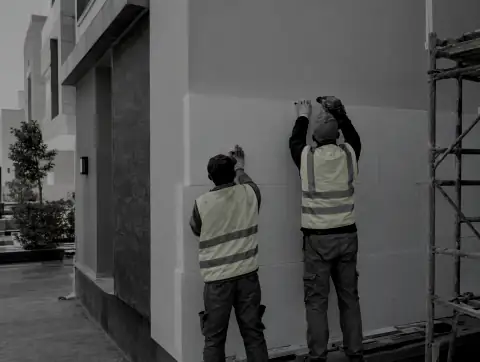
Insulation boards are fixed, foam is sprayed or insulating render is applied depending on the wall type and its position; the treatment closes around window and door openings to cut off heat paths.
Protective layer and finish
The insulating layer is left to cure, then covered with a protective or finishing layer suited to the facade, so it is not exposed directly to sun and weather.
Why Abraj Al Azl?
The wall resists moistureThe insulating layer reduces condensation on the wall and protects the render and paint from staining and peeling.
Wall insulation in Western Arabian GulfWe choose the method and the materials once we know the condition of the spot.
Start from Western Arabian Gulf with one messageSend us photos of the spot on WhatsApp and we will work out the next step with you.
Talk to us directlyCall or WhatsApp on the same number.
Some of our work

















What our customers said
ماشاء الله عملهم للعزل والتسريبات ممتاز وخبره ودقه في العمل انصح بالتعامل معهم
ماشاء الله تبارك الرحمن عزل اسطح ممتاز
اتعاملت معاهم في العوازل عند كفيلي شغل يبيض الوجه انص التعامل معهم
Real Google reviews, shown exactly as their authors wrote them.
Your questions on wall insulation in Western Arabian Gulf
Does thermal insulation protect coastal walls from salt damage?
Insulation reduces moisture and salt penetration, but walls may need prior treatment if already salt-damaged. Send photos of the external walls so we can assess the condition and suggest appropriate treatment.
Which insulation material is better for buildings on the western Gulf coast?
Material choice depends on moisture and salt intensity and the current surface condition. Sprayed foam adapts to the surface better, while boards provide uniform thickness. Photos help us choose what suits your situation.
Do you cover Western Arabian Gulf?
Yes. We serve Western Arabian Gulf and nearby areas such as Eastern Arabian Gulf, Al Muruj (near Al Khafji) and Al Faisaliyah (near Al Khafji), from our base in Al Uwaymiriyah, Hofuf. Start with a call or a WhatsApp message.
What is the difference between insulation boards and sprayed foam for walls?
Boards are fixed to the wall surface and suit flat walls with large areas. Sprayed foam reaches cavities, corners and irregular shapes and bonds to the surface without gaps. The choice depends on the wall's shape, its position and the finish required. Send photos of the walls and we will advise.
Does wall insulation stop damp patches and peeling paint?
If the patches come from condensation caused by temperature difference, insulation reduces that condensation noticeably. But if the cause is a water leak through a crack or from outside the wall, the leak is treated first and the wall is insulated after. Photos help us identify the cause.
Does the facade need repainting after the insulation is fitted?
Usually yes, because the protective layer or render that covers the insulation needs a suitable finish to protect it from sun and rain. The type of finish depends on the insulating material used and the nature of the facade.
Areas near Western Arabian Gulf
Nearby areas we also cover: Eastern Arabian Gulf, Al Muruj (near Al Khafji) and Al Faisaliyah (near Al Khafji).
More services in Western Arabian Gulf