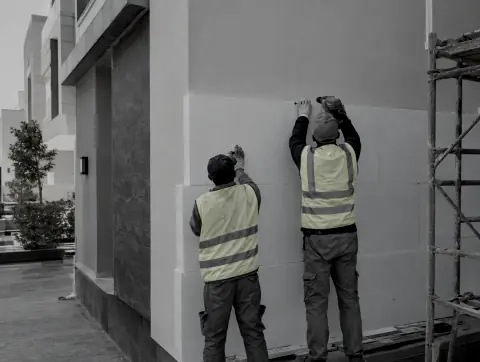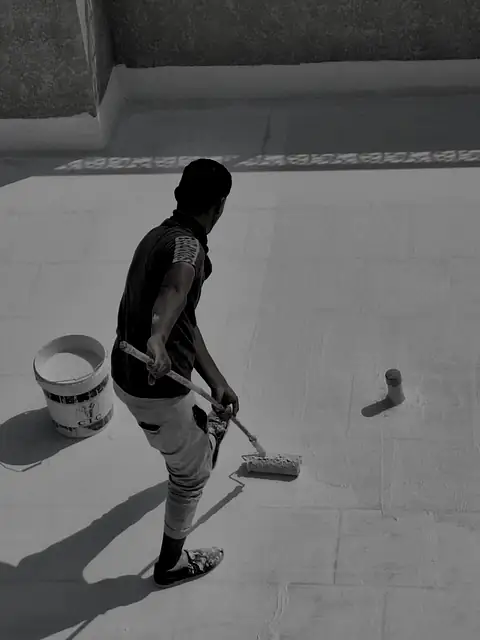
What the insulating paint work covers
- Checking the roof or wall and assessing its condition and what it needs
- Cleaning the surface and removing flaking paint and deposits
- Treating hairline cracks and joints before the coating
- Applying the primer suited to the surface type
- Rolling or spraying the full reflective insulating layer over the surface
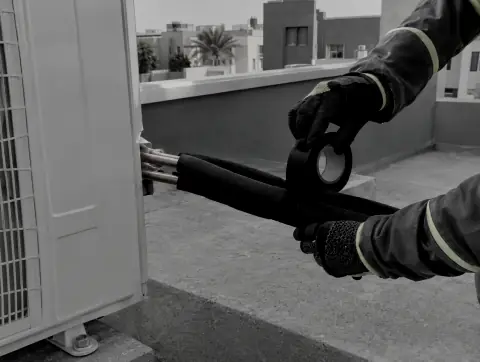
- Closing the layer around the parapet, AC bases and drain outlets
How the insulating paint work goes
Send photos of the surface
On WhatsApp: photos of the roof or the external wall, including any cracks or old paint layers, so we can read the condition and decide what preparation is needed.
Clean and prepare the surface
The surface is cleaned of dust, dirt and flaking paint, and hairline cracks and joints are treated before any coating goes on, because the paint does not bond well to an unsound surface.
Primer coat
A primer suited to the surface type is applied, whether concrete, render or an old coating, to help the insulating layer bond and prevent it lifting later.
The reflective insulating layer
The reflective insulating layer is rolled or sprayed over the whole surface, including the parapet, the AC bases and the areas around the drain outlets, then left to dry and cure.
Why Abraj Al Azl?
A cooler slab helps the ACWhen the surface reflects rather than absorbs, the slab temperature drops, less heat seeps into the rooms and the air conditioner works less hard.
Protection from heat crackingDaily expansion and contraction from the heat opens hairline cracks in the concrete. A reflective layer reduces that movement and slows crack formation.
We reply 5 AM to 10 PMSaturday to Thursday, and Friday on its own hours.
Talk to us directlyCall or WhatsApp on the same number.
Some of our work

















What our customers said
أفضل شركة عزل اسطح الفوم وخزانات المياه
ماشاء الله تبارك الرحمن عزل اسطح ممتاز
ماشاء الله عملهم للعزل والتسريبات ممتاز وخبره ودقه في العمل انصح بالتعامل معهم موفقين يارب
Real Google reviews, shown exactly as their authors wrote them.
Questions about thermal insulating paint
Does insulating paint replace foam or board insulation?
No. A reflective coating reduces the heat the surface absorbs but it does not replace a thick layer of foam or board insulation. It suits a surface in sound condition where the problem is mainly heat absorption, not where a full slab insulation is needed.
What surfaces can the insulating paint be applied to?
It suits concrete, cement render, plaster and previously painted surfaces, as long as the surface is sound and free of flaking or crumbling. It is not applied to a wet or damp surface before the moisture is treated. Send photos on WhatsApp so we can judge whether the surface is ready.
Can insulating paint be used on internal walls?
The main benefit of a reflective coating is on external surfaces exposed to the sun, because its job is to reflect radiation before it enters. On an internal wall there is no radiation to reflect, so other options are more effective there.
What decides the cost of applying insulating paint to a roof?
The size of the surface, its condition and how much repair is needed before the coating, plus how easily the site can be reached. Send photos and rough dimensions of the roof or wall on WhatsApp, tell us how many floors there are and how accessible the site is, and we will advise on the right treatment.
Does the old paint have to be removed before the insulating layer goes on?
If the old paint is firmly bonded and not flaking, cleaning and priming may be enough. If it is peeling or crumbling it must be removed, because the new layer will not bond to an unstable surface. Photos help us decide what is needed.
Can the roof be coated while AC units and tanks are in place?
Yes. The AC bases and tank stands are treated like any other detail on the roof and the coating is closed around them. We tell you if anything needs to be moved temporarily when the job is agreed, and what cannot be moved is worked around carefully.
Areas for thermal insulating paint
Choose your area to open the page for this service there.
More in Thermal insulation