Pipe insulation in Hazm
Pipe insulation in Hazm starts with WhatsApp photos of the pipes and the areas around them. The district has mixed residential and small buildings containing hot and cold water pipes and chilled lines distributed through plant rooms and open spaces.
In Hazm, pipes in older buildings may be exposed and close together, making access difficult and insulation sensitive to careful ordering. Newer buildings may have better-organised pipes but also need protection from daily temperature swings. Sun on exposed pipes raises heat loss from hot water, and night cold raises the risk of condensation on cold ones. Photos show each case and the space available for insulation.
- Hazm is a district in the Eastern Province, close to Safwa, Al Urubah and Al Marwah, with residential and small buildings.
- Pipes in tight, enclosed spaces accumulate heat and moisture, speeding oxidation and condensation.
What we do for you in Hazm
- Fitting protective cladding on sections exposed to the sun
- Closing the insulation as one continuous run with no gaps along the route
- Sealing the insulation at joints, valves and direction changes
- Removing the failed layer and treating the pipe surface before insulating
The steps of pipe insulation in Hazm
Send photos of the pipes
On WhatsApp: photos of the pipes and their routes, noting whether they are on the roof, in the plant room or buried in the wall, so we can identify the right insulation type.
Inspect the route and find the weak points
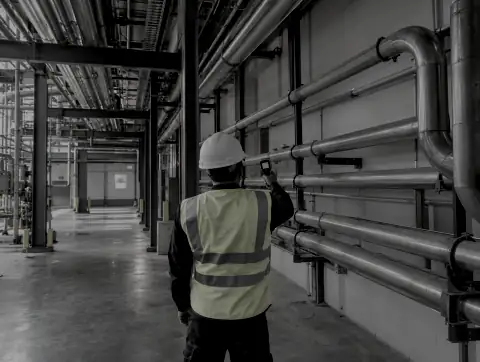
The pipes are checked along their full route: joints, elbows, valve bases and the points where they pass through walls, as these are usually where the insulation fails first.
Clean and prepare the surface
Remains of the old damaged layer, rust and dirt are removed from the pipe surface, and any rust patches are treated before the new insulation goes on so they do not continue beneath it.
Apply and clad the insulation
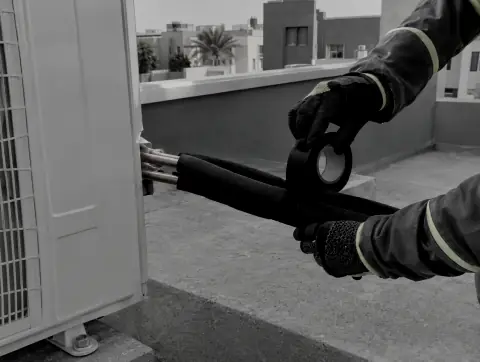
The sleeve or wrap suited to the pipe type and its location is applied, then covered with protective cladding where the pipe is exposed to sun or movement, keeping the insulation tight and continuous with no gaps.
Why Abraj Al Azl?
The water arrives at the right temperatureGood insulation on hot lines holds the heat and on cold lines holds the cold, reducing the load on pumps and heaters.
Start from Hazm with one messageSend us photos of the spot on WhatsApp and we will work out the next step with you.
Your request from Hazm comes to usCall or WhatsApp on one number, and we answer you ourselves.
We reply 5 AM to 10 PMSaturday to Thursday, and Friday on its own hours.
Some of our work

















What our customers said
ماشاء الله عملهم للعزل والتسريبات ممتاز وخبره ودقه في العمل انصح بالتعامل معهم موفقين يارب
اتعاملت معاهم في العوازل عند كفيلي شغل يبيض الوجه انص التعامل معهم
ماشاء الله تبارك الرحمن عزل اسطح ممتاز
Real Google reviews, shown exactly as their authors wrote them.
What customers ask in Hazm
Is it harder to insulate pipes in an old building with close-packed pipes in Hazm?
It depends on the space between the pipes and around the walls. Photos show the arrangement and voids, and we advise you on the best way to access and insulate based on what is there.
Do you treat condensation and damp around cold pipes in Hazm?
Yes, good insulation prevents condensation on cold pipes. If damp is already there, we treat it before insulation to ensure better adhesion.
How do I know the pipe insulation has failed and needs replacing?
Signs of failure include the layer blistering, cracking or crumbling, condensation or dripping appearing on the pipe surface, energy bills rising without a clear reason, and expansion sounds in the pipes when the temperature changes. Send photos of the sections you are worried about and we will assess their condition.
Do you offer pipe insulation in Hazm?
Yes. Hazm is within our service area in the Eastern Province, and we also work in Safwa, Al Urubah (near Safwa) and Ar Rabwah (near Safwa). Call us or send photos of the spot on WhatsApp.
Can existing pipes be insulated without breaking open the walls?
Pipes exposed in ceiling voids, plant rooms and on rooftops can be insulated directly. Pipes buried in walls usually need partial breaking-out to reach them. Send photos of the pipe routes and we will tell you what can be done without opening the wall and what needs extra work.
Why does condensation form on pipes inside the building?
When the pipe surface temperature falls below the dew point of the surrounding air, water vapour condenses on the surface and drips. This happens on cold water and chilled-water lines and is worse in humid conditions. The insulation layer raises the outer surface temperature and stops the condensation.
Areas near Hazm
We also work near Hazm, in Safwa, Al Urubah (near Safwa) and Ar Rabwah (near Safwa).
More services in Hazm