Thermal insulation in Government Departments
We insulate walls, pipes, windows and building surfaces in the Government Departments area of Hofuf, starting with photos of the building sent by call or WhatsApp. The area holds service buildings, offices and nearby residential streets, and the insulation approach depends on how each building is used.
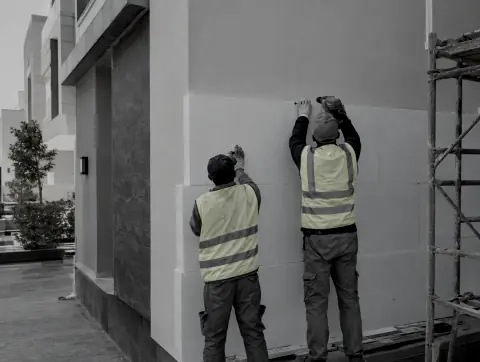
The area is made up of service buildings, offices and nearby homes, each with different facades and roofs. Administrative buildings with wide glazed frontages usually need attention to windows and adjoining walls, while the broad roofs of service buildings call for thorough insulation. The photos show whether exposed pipes or sun-facing elevations need special care.
- The Government Departments area is in Hofuf, Al-Ahsa, lying near Yebrin and Ar Rabie.
- Wide glazed facades on administrative buildings gain a lot of heat by day, affecting the interior rooms nearest them.
The scope of the work in Government Departments
- Inspecting the surface and identifying heat-entry points in the building
- Choosing the right insulating material for each surface
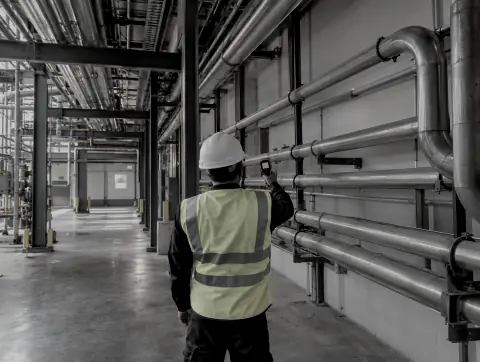
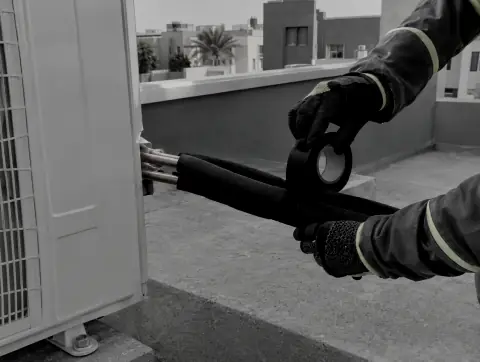
- Hot and cold water pipes, AC pipes, external walls and windows
- Cleaning the surface and treating cracks before application
From first contact to the finished job in Government Departments
Send photos and describe the problem
On WhatsApp: photos of the surface, wall, pipes or glass in question, with a short description of what you notice, so we can identify where the heat enters and what material fits.
Inspect the surface and decide the treatment
The surface is inspected and the right insulating material is chosen: foam or boards for walls, sleeves or wraps for pipes, reflective coating or film for glass. The choice turns on the surface type, its position and its sun exposure.
Prepare the surface
The surface is cleaned of dust and deposits, and any cracks or protrusions that could prevent the insulating material from bonding or reduce its effect are treated first.
Apply the insulation and finish
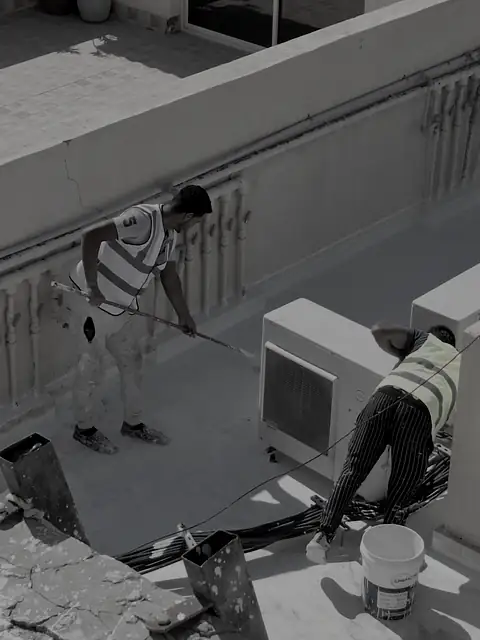
The insulating material is applied according to the surface, then left to cure, and the protective or finishing layer the material requires is added on top.
Why Abraj Al Azl?
Less strain on the ACLess heat entering means the AC reaches the set temperature sooner and stops running continuously.
Government Departments is in our service areaWe work there and across the Eastern Province, from our base in Al Uwaymiriyah, Hofuf.
Your request from Government Departments comes to usCall or WhatsApp on one number, and we answer you ourselves.
Talk to us directlyCall or WhatsApp on the same number.
Some of our work

















What our customers said
ماشاء الله عملهم للعزل والتسريبات ممتاز وخبره ودقه في العمل انصح بالتعامل معهم
اتعاملت معاهم في العوازل عند كفيلي شغل يبيض الوجه انص التعامل معهم
أفضل شركة عزل اسطح الفوم وخزانات المياه
Real Google reviews, shown exactly as their authors wrote them.
What customers ask in Government Departments
Do you insulate office buildings in the Government Departments area?
Yes, we serve the area. Send photos of the building and its facades, and tell us which parts feel hot so we can agree the right scope with you.
Does the insulation service cover glazed facades on service buildings?
Insulation covers walls and the windows around them, and the photo review sets the right solution for each glazed facade.
What materials are used in building thermal insulation?
Materials vary by surface: polyurethane foam for roofs and walls where thick insulation is needed, boards for internal and external walls, reflective coating for roofs and facades that need a light layer, sleeves and wraps for pipes, and thermal film for glass. What suits a concrete wall does not necessarily suit a copper pipe in a plant room.
What should I send you from Government Departments?
Send clear photos of the spot and a short description of the problem on WhatsApp, mention that you are in Government Departments, and we will work out the next step with you.
What is the difference between thermal insulation and waterproofing?
Waterproofing stops water moving through a surface. Thermal insulation slows heat moving through it. Some materials partly do both, such as foam applied to roofs, but each is a different material for a different purpose. If the problem is damp or a leak, it is a waterproofing question. If it is incoming heat and a high bill, it is thermal insulation.
Is reflective paint alone enough to cool the room?
Reflective paint reduces surface heat and eases the load on the AC, but it does not replace a thick insulation layer when heat gain is high. It suits surfaces where adding a thick material is not practical, or as an extra layer over existing insulation. We assess the situation and explain what is enough and what needs deeper treatment.
The same service in nearby areas
Nearby areas we also cover: Yebrin (near Al Ekhaa), Yabrin (near Al Khunn) and Ar Rabie (near Al Khunn).
More services in Government Departments