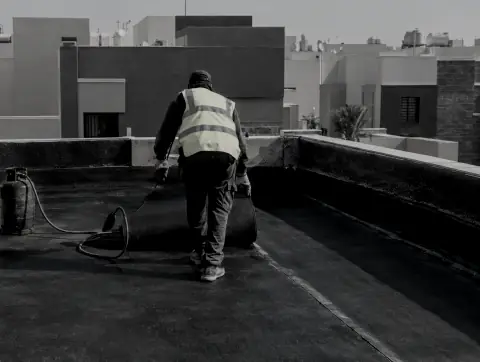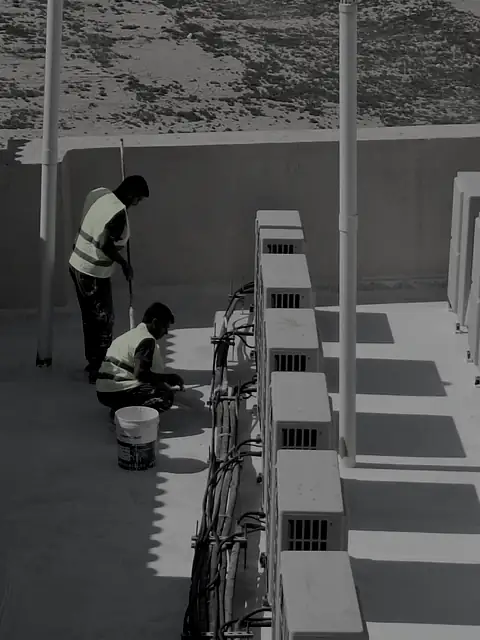
Roof heat insulation in Al Naseem
Roof heat insulation in Al Naseem begins with photos of your roof, sent by call or WhatsApp, so we can see its finish first. Al Naseem is a residential district in the Eastern Province, near Qurtubah, Al Ghadir and Al Khisab.
Al Naseem is mostly made up of family houses, some on narrow plots with a second floor added over time. Many of these roofs were built as flat slabs and later covered with a finish that has aged under the sun. Extra rooms built on an upper floor often sit beneath a roof never designed to hold heat back. The photos show whether the surface needs a reflective finish, an insulating layer or repair before either.
- Al Naseem is a residential district in the Eastern Province, close to Qurtubah, Al Ghadir and Al Khisab.
- Rooms added on an upper floor often sit under an older roof, which then carries the heat load for the rooms below.
The scope of the work in Al Naseem
- Cleaning the surface and treating cracks and joints before insulation
- Closing the insulation around AC bases, tank stands and the parapet
- A reflective coating that turns the sun's rays back from the slab
- Applying a thermal insulating layer suited to the surface type and condition
How we carry out roof heat insulation in Al Naseem
Send photos of the roof
On WhatsApp: photos of the roof surface, the AC bases, the tank stands and the parapet, so we can read the slab's condition and choose the right treatment.
Inspect and prepare the surface
The surface is checked for cracks, blisters and soft patches, the slab is cleaned, and cracks and joints are treated before any insulating layer goes on.
Apply the insulating layers
The layers are applied depending on the surface type and its condition: a reflective coating that turns the sun's rays back, a thermal insulating layer such as foam or boards, or a combination of both, as the photos and inspection show.
Cure and secure
The layers are left to cure and set fully, then the AC bases and tank stands are checked to make sure the insulation runs around them without a gap.
Why Abraj Al Azl?
A roof that transfers far less heatThe insulating layer stops the heat the slab has stored from reaching the room below.
Al Naseem is in our service areaWe work there and across the Eastern Province, from our base in Al Uwaymiriyah, Hofuf.
Start from Al Naseem with one messageSend us photos of the spot on WhatsApp and we will work out the next step with you.
We reply 5 AM to 10 PMSaturday to Thursday, and Friday on its own hours.
Some of our work

















What our customers said
ماشاء الله تبارك الرحمن عزل اسطح ممتاز
ماشاء الله عملهم للعزل والتسريبات ممتاز وخبره ودقه في العمل انصح بالتعامل معهم
اتعاملت معاهم في العوازل عند كفيلي شغل يبيض الوجه انص التعامل معهم
Real Google reviews, shown exactly as their authors wrote them.
What customers ask in Al Naseem
Can a roof above an extra floor be treated on its own?
Usually it can, since the roof is the surface through which the heat enters. The photos should show the parapet, the joints and any rooftop fixtures so we can judge what the work involves.
Do older plots in Al Naseem need different preparation?
Older roofs often need cracks and worn finishes dealt with before any new layer goes on. How much preparation is needed depends on the surface, so send close photos of the worst areas.
Do you offer roof heat insulation in Al Naseem?
Yes. Al Naseem is within our service area in the Eastern Province, and we also work in Qurtubah (near Inak), Al Ghadir and Al Khisab. Call us or send photos of the spot on WhatsApp.
What is the difference between a reflective coating and a thermal insulating layer?
A reflective coating turns the sun's rays back before the slab absorbs them, reducing how much heat the slab stores. A thermal insulating layer such as foam or boards places a physical barrier that slows heat moving inward. Both can be used together depending on the surface and what is needed.
Is roof heat insulation different from roof waterproofing?
Yes, they are different aims. Heat insulation intercepts sun heat and limits how much moves into the rooms. Waterproofing stops rain water getting in. Some systems serve both, but each has its own materials and conditions. If you have both a leak and heat, we work out the right treatment from the roof photos.
Why does the top floor get hotter at night?
The concrete slab absorbs heat during the day and stores it, then releases it slowly inward after sunset. That is why the room can feel hotter in the evening or in the middle of the night than it does during the day. Heat insulation reduces the amount the slab stores in the first place.
The same service in nearby areas
Nearby areas we also cover: Qurtubah (near Inak), Al Ghadir and Al Khisab.
More services in Al Naseem