What wall foam insulation covers
- Checking the external walls and identifying areas that need prior treatment
- Cleaning the surface and treating hairline cracks and joints
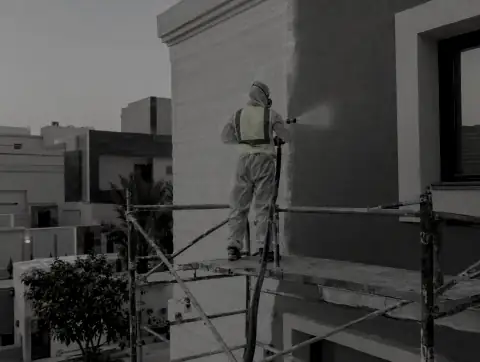
- Spraying foam on the external wall until it expands and covers the whole surface
- Leaving the foam to cure before finishing
- Covering the foam with render or the cladding suited to the building
- Confirming that all gaps and hairline cracks are fully covered
How wall foam insulation goes
Send photos of the walls
On WhatsApp: photos of the external walls from outside and inside, plus any visible cracks or problem areas, so we can assess the wall and work out the foam thickness and finish that fits.
Prepare the wall surface
The wall is cleaned of dust and loose material, hairline cracks and joints are treated, and anything unstable is fixed so the foam bonds to a sound surface.
Spray the foam
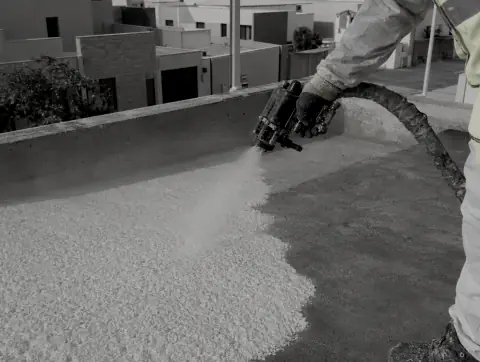
The foam is sprayed on the external face, expands to cover the whole surface and fills gaps and hairline cracks, then is left to cure before any next step.
Apply the finish
The foam is covered with render or a cladding suited to the building type, to protect it from the sun, wear and weather, and to give the wall its required appearance.
Why Abraj Al Azl?
A layer that fills the gapsFoam expands into hairline cracks and small voids that no brushed coating can reach, leaving no bare patches in the insulation.
External work with no change insideAll the work is done from outside, so the rooms and their finishes stay untouched throughout.
We reply 5 AM to 10 PMSaturday to Thursday, and Friday on its own hours.
Talk to us directlyCall or WhatsApp on the same number.
Some of our work

















What our customers said
ماشاء الله عملهم للعزل والتسريبات ممتاز وخبره ودقه في العمل انصح بالتعامل معهم موفقين يارب
أفضل شركة عزل اسطح الفوم وخزانات المياه
اتعاملت معاهم في العوازل عند كفيلي شغل يبيض الوجه انص التعامل معهم
Real Google reviews, shown exactly as their authors wrote them.
Questions about wall foam insulation
Can foam be used on any type of external wall?
Foam is used on concrete walls, brick and block, provided the surface is sound and free of loose material. Hairline cracks and joints are treated before spraying. Send photos of the wall on WhatsApp so we can tell you what the surface needs.
Does the foam change how the wall looks from outside?
Foam on its own is rough and distinctively coloured, so it is covered with a render or cladding layer that gives the wall its required look. The type of finish is decided by the building and what is agreed.
Does foam insulate from both sides or just one?
Foam is sprayed on the external face so it blocks heat before it enters the concrete. This is better than insulating from inside because it also protects the concrete slab itself from the repeated expansion and contraction caused by the sun.
Does the wall need to be broken out or stripped of old render first?
Demolition is not usually needed. Sound old render stays in place and the foam is sprayed on top. If the render is crumbling or blistered, the affected patches are removed before spraying. Photos help us assess.
What decides the cost of wall foam insulation?
The area of wall to be insulated, the condition of the surface, how many cracks and patches need prior treatment, the type of finish over the foam, and how easily the walls can be reached on upper floors. Send photos and rough dimensions on WhatsApp and we will suggest the right treatment.
Does the foam hold up in intense heat?
Foam covered with the right finishing layer is protected from ultraviolet radiation and direct heat. The finish is the first barrier against the sun, and the foam behind it does its insulating work. That is why foam is never left exposed without a cover.
Areas for wall foam insulation
Choose your area to open the page for this service there.
More in Foam insulation (polyurethane)