Foam insulation (polyurethane) in At Taraf
Foam insulation in At Taraf starts with photos of the roof, walls or metal sheeting you want treated, sent by call or on WhatsApp. The district lies close to Al Jafr, As Sabat and Al Markaz, and its buildings mix houses, shopfronts and low-rise blocks.
A district like At Taraf usually combines houses, shopfronts and low-rise buildings of mixed age, so roofs range from concrete terraces to sheet annexes added later. Older roofs have often been patched with different materials, and the spray must bond to whatever is already there. Where a sheet annex meets a concrete wall, that junction is the focus of the photos. Whether foam suits a given roof depends on its material and condition, so the photos set the method before any work is proposed.
- At Taraf is a district in the Eastern Province, lying close to Al Jafr, As Sabat and Al Markaz.
- Metal annexes added to older buildings often leave joints that need sealing before any spray goes on.
The scope of the work in At Taraf
- Closing the insulation around AC bases, drain openings and surface details
- Spraying polyurethane foam in continuous layers
- Checking the layer after curing and setting
- Inspecting the roof or wall and deciding the right foam type
From first contact to the finished job in At Taraf
Send photos of the surface
On WhatsApp: photos of the roof, wall or sheets from different angles, so we can identify the right foam type and the treatment needed before anything else.
Prepare the surface
The surface is cleaned, loose layers and dust are removed, visible cracks are treated and anything that moves is fixed, so the foam bonds to a solid base.
Spray and let it set
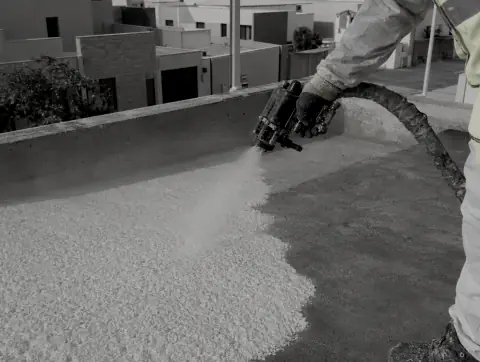
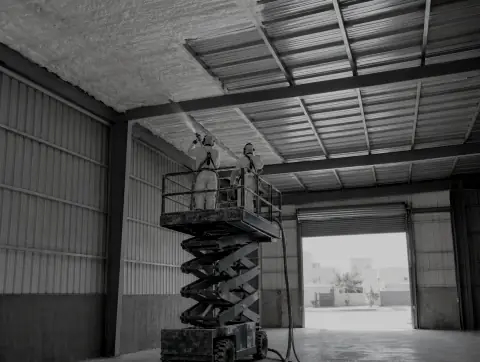
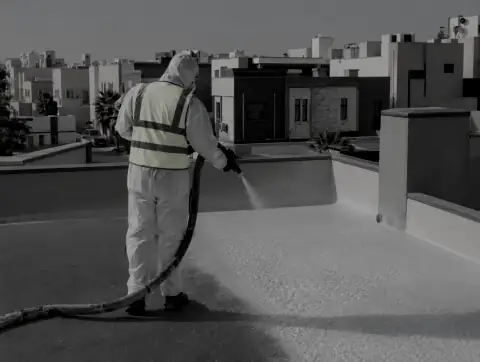
The two components are mixed and sprayed in one pass; the foam expands and covers the surface in continuous layers. It is left to cure and set hard before the next step.
The protective coat
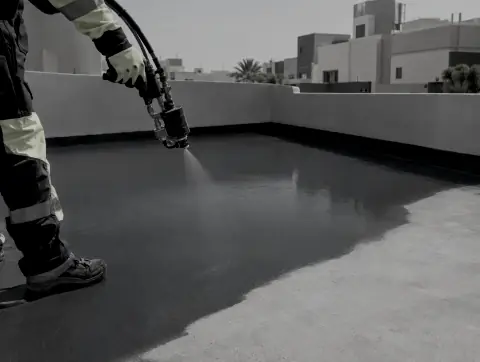
The foam is covered with a protective coat suited to the surface: a reflective paint, render or cladding. This coat shields the foam from UV and wear and extends its life.
Why Abraj Al Azl?
One seamless layer with no gapsFoam expands into every small detail and leaves no path for heat or moisture behind the layer.
At Taraf is in our service areaWe work there and across the Eastern Province, from our base in Al Uwaymiriyah, Hofuf.
We serve At Taraf and around itIncluding Al Jafr, As Sabat and Al Markaz, as part of our work across the Eastern Province.
Talk to us directlyCall or WhatsApp on the same number.
Some of our work

















What our customers said
ماشاء الله عملهم للعزل والتسريبات ممتاز وخبره ودقه في العمل انصح بالتعامل معهم موفقين يارب
أفضل شركة عزل اسطح الفوم وخزانات المياه
اتعاملت معاهم في العوازل عند كفيلي شغل يبيض الوجه انص التعامل معهم
Real Google reviews, shown exactly as their authors wrote them.
What customers ask in At Taraf
Can foam go over an existing concrete terrace?
Often yes, when the surface is sound and free of standing water. The photos show cracks, old coatings and low spots, and we will tell you what needs treating before the foam goes on.
Does foam suit a shop roof with a sheet annex?
It may, but the junction between the annex and the main wall needs careful attention. Send photos of both roofs and the joint, and we will explain whether foam is the right choice for that arrangement.
What happens if the foam is left without a protective coat?
Foam left open to direct sun is damaged by UV over time and begins to crumble at the surface. The protective coat shields it and extends its working life. In every application we choose the right coat from the photos.
What should I send you from At Taraf?
Send clear photos of the spot and a short description of the problem on WhatsApp, mention that you are in At Taraf, and we will work out the next step with you.
Can you walk on the foam after it is applied to a roof?
Foam alone does not carry regular foot traffic. After the protective coat is applied occasional walking becomes possible, but a regularly used roof needs cladding or an extra layer. The roof foam insulation application covers this in detail.
What is the difference between open-cell and closed-cell foam?
Closed-cell foam is denser and harder, resists water and gives stronger thermal performance; it is used on roofs and external walls. Open-cell foam is lighter and more flexible but does not resist water. The surface and the application decide which type is right.
More services in At Taraf