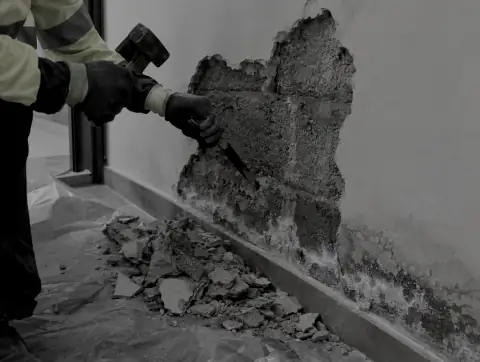
Wall damp treatment in Al Jamiyin (near Tarout)
Damp treatment on walls in Al Jamiyin begins with WhatsApp or call photos of wet areas. Al Jamiyin is a residential district with houses and villas, where damp often shows on walls from various causes needing careful inspection.
Al Jamiyin has houses and villas of different ages. Moisture may come from foundation seepage in older buildings or from exterior penetration at cracks and seams in newer ones. Coastal humidity may also affect exterior walls. White salt and peeling render and paint are clear signs, and treatment requires finding the source first, then drying the wall and applying suitable waterproofing.
- Al Jamiyin is a residential district in the Eastern Province, close to Al Muruj, Tarout and Al Nakhil, with houses and villas.
- Sequential damp rising from foundations needs deeper treatment than surface penetrating damp.
The scope of the work in Al Jamiyin (near Tarout)
- Cleaning cracks and treating the wall base or entry points
- Replastering with a damp-resistant render and leaving it to cure
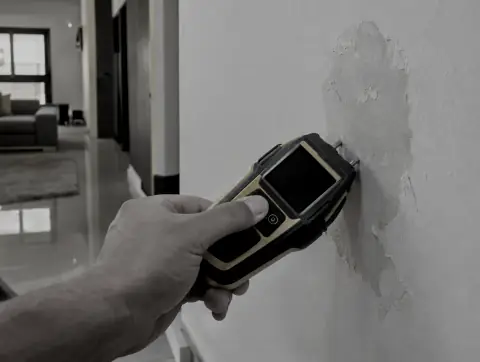
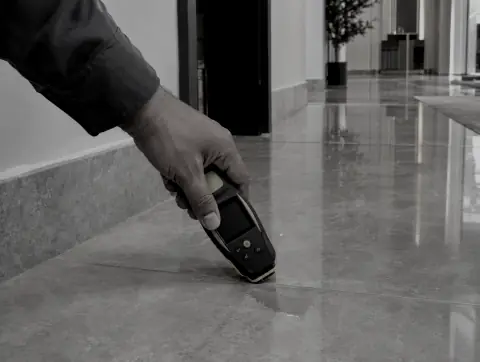
- Checking the wall and identifying the damp type and its source
- Preparing the surface for painting once drying is complete
The stages of the work in Al Jamiyin (near Tarout)
Send photos of the wall
On WhatsApp: photos of the stains, the salts, the base of the wall and the surrounding area, so we can read the type of damp and decide the right treatment steps for the situation.
Locate the source and assess the damage
All four sides of the wall are checked, and the cracks and entry points in the render and at the base are identified. Whether the source is rising from the ground or penetrating from outside is established before the treatment is chosen.
Remove damaged render and treat the base
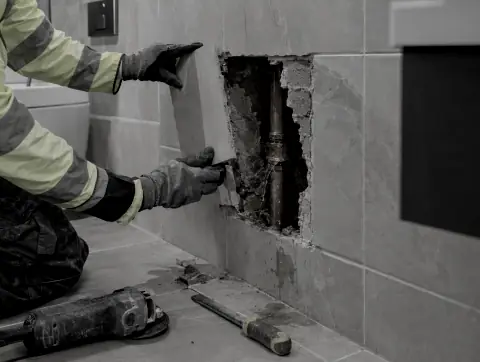
The render that has absorbed damp and salts is removed, the cracks are cleaned, and the base of the wall or the entry zone is treated with a barrier compound or a penetrating product suited to the damp type and the surface.
Damp-resistant render and finish
The wall is replastered with a damp-resistant render, left to dry and cure fully, then painted. Any residual damp that works through later shows in the new layer where it can be seen, not behind it.
Why Abraj Al Azl?
No more peeling after repaintingRemoving the damaged render and treating the source stops salts from pushing the new layers off the wall.
Your request from Al Jamiyin (near Tarout) comes to usCall or WhatsApp on one number, and we answer you ourselves.
Wall damp treatment in Al Jamiyin (near Tarout)We choose the method and the materials once we know the condition of the spot.
Talk to us directlyCall or WhatsApp on the same number.
Some of our work

















What our customers said
ماشاء الله تبارك الرحمن عزل اسطح ممتاز
اتعاملت معاهم في العوازل عند كفيلي شغل يبيض الوجه انص التعامل معهم
ماشاء الله عملهم للعزل والتسريبات ممتاز وخبره ودقه في العمل انصح بالتعامل معهم
Real Google reviews, shown exactly as their authors wrote them.
Common questions on wall damp treatment in Al Jamiyin (near Tarout)
What does a bad smell along with damp on Al Jamiyin walls mean?
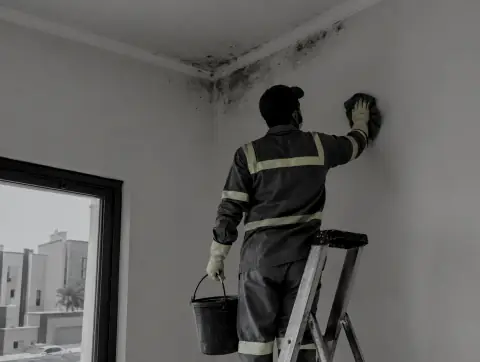
The smell usually means decay or mould growth from ongoing damp. This happens when a wall stays wet for long and does not dry enough. Treatment includes deep drying, removing any mould and applying a waterproof layer to stop damp returning.
Can damp on interior walls in Al Jamiyin come from outside or inside the house?
Both are possible. Outside damp enters through cracks and weak points in the exterior wall, while inside damp may come from water-pipe leaks or condensation. Photos and location help identify the source, and treatment varies by cause.
Do you offer wall damp treatment in Al Jamiyin (near Tarout)?
Yes. Al Jamiyin (near Tarout) is within our service area in the Eastern Province, and we also work in Al Muruj (near Tarout), Tarout and Al Nakhil (near Tarout). Call us or send photos of the spot on WhatsApp.
When does the result show on the wall?
Once the new render has dried and cured, salt deposits and peeling stop coming from the treated layer. The concrete behind the wall may take time to release the moisture already locked inside it, which is normal and does not mean the treatment has failed. Walls exposed to an ongoing external source also need that source treated from the outside.
Is a damp-proof paint enough to stop the peeling?
A damp-proof paint slows the visible signs but does not stop the source. Rising or penetrating damp keeps moving beneath the new layer until it pushes it off and the peeling returns. A lasting result starts with removing the damaged render and treating the source before the finish is reinstated.
Does wall damp always come from outside?
Not always. It may rise from the ground through the base of the wall, penetrate from outside through cracks or worn render, or come from a hidden pipe leak, which is a different case. Photos and inspection identify which direction the water has taken before the treatment is chosen.
Areas near Al Jamiyin (near Tarout)
Nearby areas we also cover: Al Muruj (near Tarout), Tarout and Al Nakhil (near Tarout).
More services in Al Jamiyin (near Tarout)