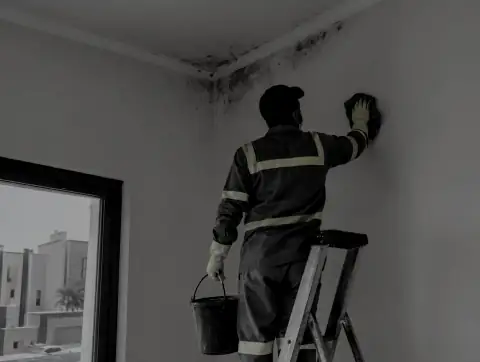
Mould & damp treatment in Thaj
We treat mould and damp in Thaj by identifying the moisture source before treating the surface, since mould on a wall usually points to a deeper problem. Send photos of the walls and ceiling by call or WhatsApp to get started.
Thaj is a village dominated by houses and small farms, where walls may sit close to irrigation water and gardens. Damp here often appears on walls backing onto gardens and green areas, and in kitchens and bathrooms against the outer wall. The photos show whether the moisture comes from outside, from an internal leak or from the ground, as each cause needs a different treatment.
- Thaj is a village in the Eastern Province, near Al Hinnah, As Sahaf and Bakha, dominated by houses and small farms.
- A wall backing onto a garden soaks up water from soil and irrigation, and needs different treatment from an interior wall.
The scope of the work in Thaj
- Reinstating the finish after the surface has dried fully
- Telling condensation from a leak to choose the right treatment
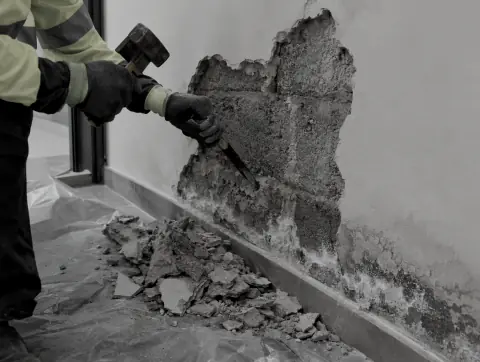
- Removing the affected render or paint layer in the damaged area
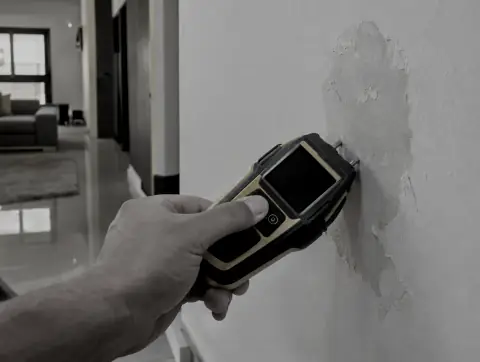
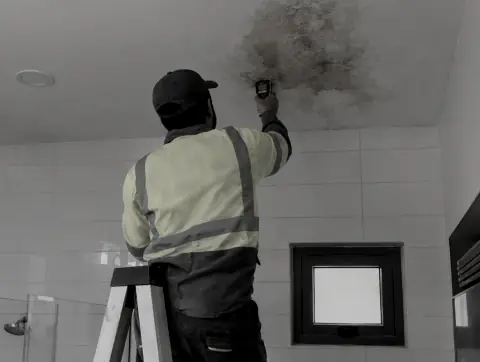
- Checking the wall or ceiling and identifying the moisture source
The steps of mould & damp treatment in Thaj
Send photos of the wall or ceiling
On WhatsApp: photos of the patches, the area around them and any nearby cracks or peeling, so we can read the situation and plan the treatment.
Identify the moisture source
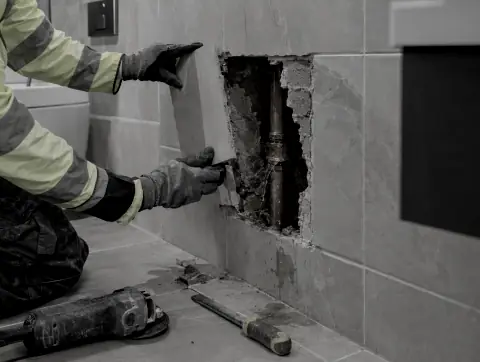
The wall and ceiling are checked to tell whether the moisture is coming from a leak outside, from condensation caused by a temperature difference or from poor ventilation, because the treatment depends on the cause.
Remove the mould and treat the surface
The affected render or paint layer is removed and the surface is treated with anti-mould material that penetrates the pores, then left to dry before any finishing coat. Where the moisture source is a leak, the leak is treated first.
Close the moisture path
The moisture path is closed with a barrier layer or appropriate treatment depending on the cause, then the finish is reinstated. Where the cause is condensation, we advise on improving ventilation because a barrier alone is not enough.
Why Abraj Al Azl?
Treatment at the source, not the surfaceRemoving mould without cutting off what feeds it repeats the problem. The right treatment cuts the moisture first.
Thaj is in our service areaWe work there and across the Eastern Province, from our base in Al Uwaymiriyah, Hofuf.
We serve Thaj and around itIncluding Al Hinnah, As Sahaf and Bakha, as part of our work across the Eastern Province.
Talk to us directlyCall or WhatsApp on the same number.
Some of our work

















What our customers said
ماشاء الله تبارك الرحمن عزل اسطح ممتاز
اتعاملت معاهم في العوازل عند كفيلي شغل يبيض الوجه انص التعامل معهم
ماشاء الله عملهم للعزل والتسريبات ممتاز وخبره ودقه في العمل انصح بالتعامل معهم موفقين يارب
Real Google reviews, shown exactly as their authors wrote them.
Questions about mould & damp treatment in Thaj
Is damp in Thaj caused by irrigation and gardens?
It can be one of the causes, especially for walls backing onto a garden. From the photos we determine whether water reaches the wall from the soil or from an internal leak, then suggest the right treatment.
What information helps for a house in Thaj?
Tell us which walls show mould, whether they back onto a garden, kitchen or bathroom, and photograph the base of the wall so the damp is clear.
Do I need to clear the room before treatment?
It is best to move furniture away from the affected walls and ceilings so the work can reach the whole area without obstruction. When the job is agreed we go through what needs to be shifted, and anything fixed in place is worked around with care.
Do you cover Thaj?
Yes. We serve Thaj and nearby areas such as Al Hinnah, As Sahaf and Bakha, from our base in Al Uwaymiriyah, Hofuf. Start with a call or a WhatsApp message.
Can mould be treated without removing all the tiles or render?
It depends on how deep the mould has gone. If it is surface only and the render beneath is sound, removing the outer layer and treating is enough. If it has reached the render or the render is separating from the wall, the affected area needs to be taken off. Photos help us assess this before we start.
Is ventilation alone enough to clear condensation mould?
Better ventilation reduces future condensation but does not remove the mould already there. The affected surface needs treatment first to clear the mould and clean the pores, then good ventilation limits its return. Combining both is the right approach for condensation mould.
More services in Thaj