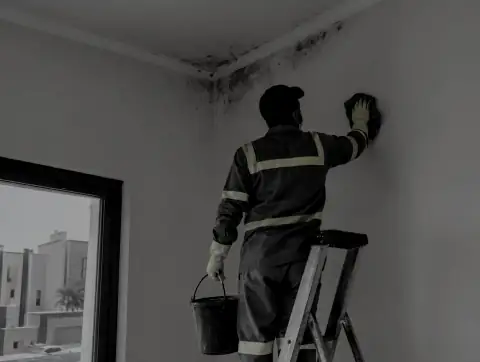
Mould & damp treatment in Historical Center Hafuf District
Mould and damp treatment in Historical Centre Hafuf District starts with WhatsApp photos of affected areas. The district has old buildings alongside some newer ones, and old walls leak and allow damp that promotes mould growth. We understand moisture sources in old buildings and treat them carefully.
Historical Hafuf Centre mixes very old buildings with thick brick and stone walls and newer houses sometimes on the same street. Old buildings suffer cracks in walls and foundations as the structure ages, and damp rises from the ground or seeps from roofs and outer walls. Damp areas may be widespread or confined to a corner or around a window. Old floors and simple concrete allow capillary damp to rise easily. Photos from inside and outside help us understand the building's condition and age and choose the right method.
- Historical Centre Hafuf District is a district in the Eastern Province, next to An Nasriyah, Al-Hofuf and As Salhiyah districts, with old and newer buildings.
- Old buildings in historic centres suffer foundation and wall decay and rising damp due to their age.
The mould & damp treatment work in Historical Center Hafuf District
- Treating the surface with anti-mould material that penetrates the pores
- Closing the moisture path with a barrier or a treatment suited to the cause
- Reinstating the finish after the surface has dried fully
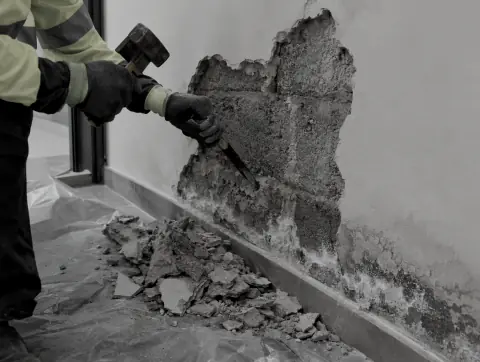
- Removing the affected render or paint layer in the damaged area
From first contact to the finished job in Historical Center Hafuf District
Send photos of the wall or ceiling
On WhatsApp: photos of the patches, the area around them and any nearby cracks or peeling, so we can read the situation and plan the treatment.
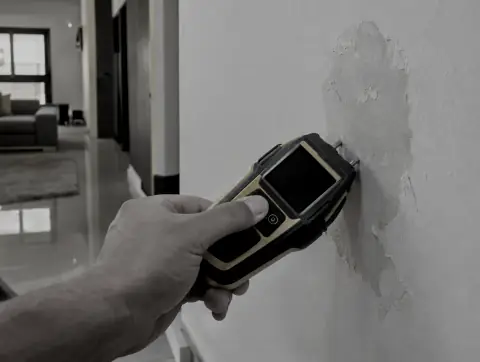
Identify the moisture source
The wall and ceiling are checked to tell whether the moisture is coming from a leak outside, from condensation caused by a temperature difference or from poor ventilation, because the treatment depends on the cause.
Remove the mould and treat the surface
The affected render or paint layer is removed and the surface is treated with anti-mould material that penetrates the pores, then left to dry before any finishing coat. Where the moisture source is a leak, the leak is treated first.
Close the moisture path
The moisture path is closed with a barrier layer or appropriate treatment depending on the cause, then the finish is reinstated. Where the cause is condensation, we advise on improving ventilation because a barrier alone is not enough.
Why Abraj Al Azl?
Protecting the render and the finishOngoing moisture eats into the render and separates it from the wall. Early treatment saves the finish and avoids a larger reinstatement later.
Your request from Historical Center Hafuf District comes to usCall or WhatsApp on one number, and we answer you ourselves.
Historical Center Hafuf District is in our service areaWe work there and across the Eastern Province, from our base in Al Uwaymiriyah, Hofuf.
Talk to us directlyCall or WhatsApp on the same number.
Some of our work

















What our customers said
ماشاء الله تبارك الرحمن عزل اسطح ممتاز
ماشاء الله عملهم للعزل والتسريبات ممتاز وخبره ودقه في العمل انصح بالتعامل معهم
أفضل شركة عزل اسطح الفوم وخزانات المياه
Real Google reviews, shown exactly as their authors wrote them.
Before you book mould & damp treatment in Historical Center Hafuf District
Is treating damp in an old building different from a new one?
Yes, old buildings may have weakened materials, uneven walls, and cracked foundations. We use methods suited to old building characteristics and preservation. Photos help us assess the structure before choosing a solution.
Does damp in old buildings in Hafuf Centre always come from the foundation?
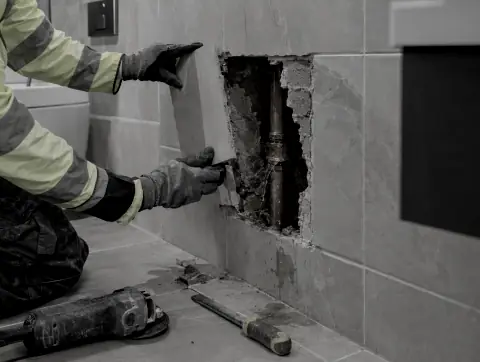
No, it may come from a crumbling roof, cracked outer walls, or old pipes inside the walls. Photos and inspection reveal the actual source, and there may be more than one.
Is ventilation alone enough to clear condensation mould?
Better ventilation reduces future condensation but does not remove the mould already there. The affected surface needs treatment first to clear the mould and clean the pores, then good ventilation limits its return. Combining both is the right approach for condensation mould.
Why does mould come back shortly after painting?
Paint covers the visible mould but does not remove the fine threads rooted in the pores, and it does not stop the moisture coming from behind. Within weeks the moisture breaks through the new coat and the mould grows again. The right treatment starts by removing the affected surface, then treating the pores, then closing the source.
Do you cover Historical Center Hafuf District?
Yes. We serve Historical Center Hafuf District and nearby areas such as An Nasriyah District, Al-Hofuf and As Salhiyah District, from our base in Al Uwaymiriyah, Hofuf. Start with a call or a WhatsApp message.
Can mould be treated without removing all the tiles or render?
It depends on how deep the mould has gone. If it is surface only and the render beneath is sound, removing the outer layer and treating is enough. If it has reached the render or the render is separating from the wall, the affected area needs to be taken off. Photos help us assess this before we start.
Mould & damp treatment near Historical Center Hafuf District
We also work near Historical Center Hafuf District, in An Nasriyah District, Al-Hofuf and As Salhiyah District.
More services in Historical Center Hafuf District