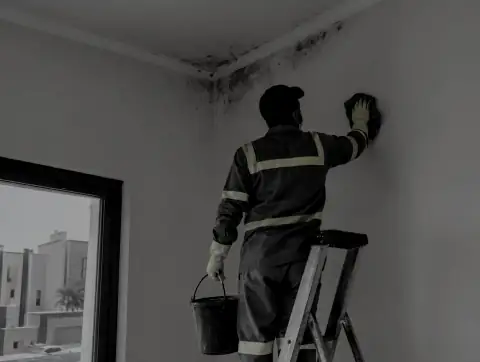
Mould & damp treatment in Down Town
Mould and damp treatment in Down Town begins with photos of affected walls or ceilings sent by call or WhatsApp. The area has closely packed older buildings and multi-storey apartment blocks, many facing complex moisture challenges. We find the cause and treat the damp and mould with methods suited to the old structure and its setting.
Down Town is an old urban area with closely packed and adjoining buildings that may share water and moisture between them. Older buildings often suffer from high groundwater and weak foundations, causing rising damp on lower walls. Tight spaces between buildings may hold moisture and shadow for long periods. Roofs and joints in old buildings may be damaged or cracked. Coastal humidity can worsen the problem. Photos show us the state of walls, roof and surroundings to find the best solution.
- Down Town is an old urban area in the Eastern Province, near Ar Rafiah, Al Zuhur and Al Andalus, with closely packed older buildings.
- Old adjoining buildings can transfer moisture from one to the next through shared walls.
The main items of mould & damp treatment in Down Town
- Reinstating the finish after the surface has dried fully
- Removing the affected render or paint layer in the damaged area
- Treating the surface with anti-mould material that penetrates the pores
- Closing the moisture path with a barrier or a treatment suited to the cause
The stages of the work in Down Town
Send photos of the wall or ceiling
On WhatsApp: photos of the patches, the area around them and any nearby cracks or peeling, so we can read the situation and plan the treatment.
Identify the moisture source
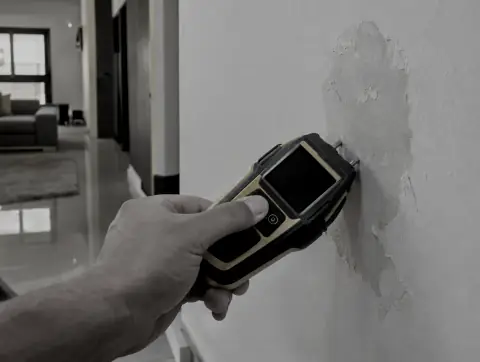
The wall and ceiling are checked to tell whether the moisture is coming from a leak outside, from condensation caused by a temperature difference or from poor ventilation, because the treatment depends on the cause.
Remove the mould and treat the surface
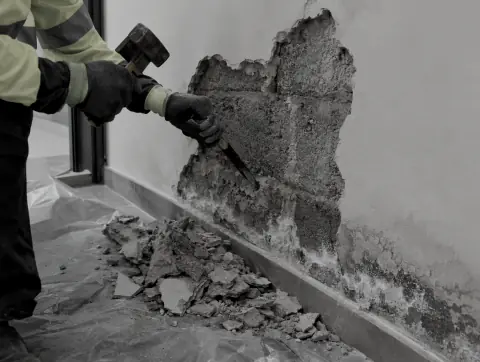
The affected render or paint layer is removed and the surface is treated with anti-mould material that penetrates the pores, then left to dry before any finishing coat. Where the moisture source is a leak, the leak is treated first.
Close the moisture path
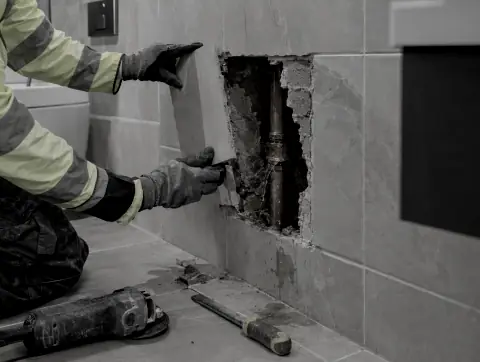
The moisture path is closed with a barrier layer or appropriate treatment depending on the cause, then the finish is reinstated. Where the cause is condensation, we advise on improving ventilation because a barrier alone is not enough.
Why Abraj Al Azl?
Treatment at the source, not the surfaceRemoving mould without cutting off what feeds it repeats the problem. The right treatment cuts the moisture first.
Mould & damp treatment in Down TownWe choose the method and the materials once we know the condition of the spot.
We serve Down Town and around itIncluding Ar Rafiah, Al Zuhur (near Ar Rafiah) and Al Andalus (near Ar Rafiah), as part of our work across the Eastern Province.
Talk to us directlyCall or WhatsApp on the same number.
Some of our work

















What our customers said
ماشاء الله عملهم للعزل والتسريبات ممتاز وخبره ودقه في العمل انصح بالتعامل معهم
أفضل شركة عزل اسطح الفوم وخزانات المياه
اتعاملت معاهم في العوازل عند كفيلي شغل يبيض الوجه انص التعامل معهم
Real Google reviews, shown exactly as their authors wrote them.
Questions about mould & damp treatment in Down Town
Can damp in Down Town be treated without demolition or rebuilding?
Mostly yes. We repair leaks and cracks and direct water away from foundations with methods that do not need extensive demolition. Photos tell us whether the structure is sound enough to be treated.
Why does moisture move between adjoining buildings in Down Town?
Shared walls and connected foundations allow water and moisture to move from one building to its neighbour. Groundwater may enter from one side and rise in the next building. Treating the source on both sides or at the shared foundation may need coordination.
How do I request mould & damp treatment in Down Town?
Call us, or send clear photos of the spot and its location in Down Town on WhatsApp, and we will work out the next step with you.
Why does mould come back shortly after painting?
Paint covers the visible mould but does not remove the fine threads rooted in the pores, and it does not stop the moisture coming from behind. Within weeks the moisture breaks through the new coat and the mould grows again. The right treatment starts by removing the affected surface, then treating the pores, then closing the source.
What is the difference between condensation mould and leak mould?
Condensation mould usually appears in the upper corners of rooms and behind furniture where damp air cools and condenses on a cold surface, often in poorly ventilated rooms. Leak mould appears as growing patches, usually linked to rain or a leak in a nearby roof or wall. Telling them apart changes the treatment.
Is ventilation alone enough to clear condensation mould?
Better ventilation reduces future condensation but does not remove the mould already there. The affected surface needs treatment first to clear the mould and clean the pores, then good ventilation limits its return. Combining both is the right approach for condensation mould.
Mould & damp treatment near Down Town
We also work near Down Town, in Ar Rafiah, Al Zuhur (near Ar Rafiah) and Al Andalus (near Ar Rafiah).
More services in Down Town