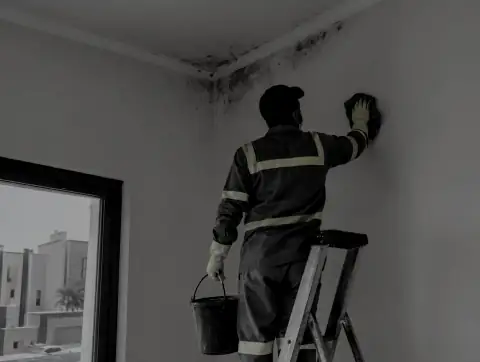
Mould & damp treatment in Ayn Dar al Qadimah
Mould and damp treatment in Ayn Dar al Qadimah begins with photos sent by call or WhatsApp. The hamlet is small with scattered houses that may be old, and walls and ceilings face coastal humid air and rare heavy rains. We identify the cause from photos and choose the right treatment.
Hamlet houses are typically old and scattered on wide land, with old stone or clay walls that may be cracked. Mould and damp appear on lower wall corners, around openings and on interior ceilings, especially where moisture pools. Humid winds from the coast seep through cracks and small openings, and night dew settles on cool walls. Very old homes may suffer from foundation seepage. Photos show the mould location and severity and any signs of leaks.
- Ayn Dar al Qadimah is a hamlet in the Eastern Province, near Ayn Dar and Ash Shuhayla', with scattered old houses.
- Old stone and clay walls absorb moisture easily and may retain it for a long time before drying.
The scope of the work in Ayn Dar al Qadimah
- Checking the wall or ceiling and identifying the moisture source
- Closing the moisture path with a barrier or a treatment suited to the cause
- Treating the surface with anti-mould material that penetrates the pores
- Reinstating the finish after the surface has dried fully
From first contact to the finished job in Ayn Dar al Qadimah
Send photos of the wall or ceiling
On WhatsApp: photos of the patches, the area around them and any nearby cracks or peeling, so we can read the situation and plan the treatment.
Identify the moisture source
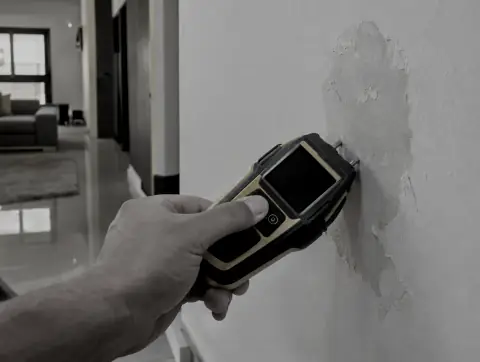
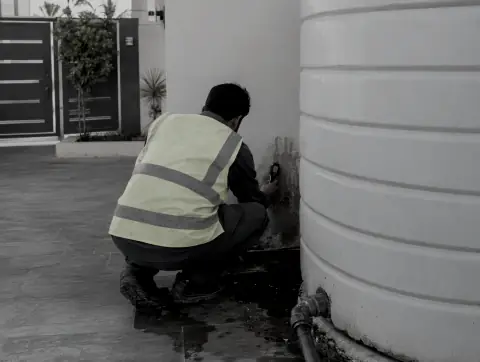
The wall and ceiling are checked to tell whether the moisture is coming from a leak outside, from condensation caused by a temperature difference or from poor ventilation, because the treatment depends on the cause.
Remove the mould and treat the surface
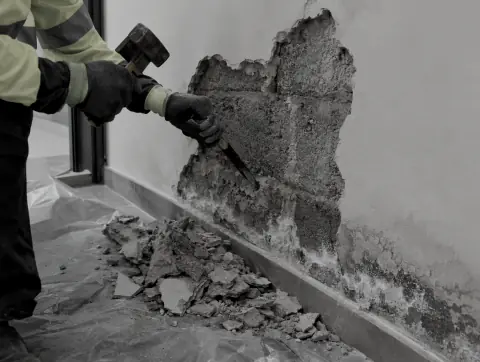
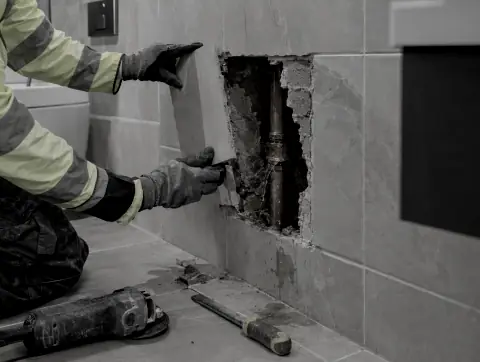
The affected render or paint layer is removed and the surface is treated with anti-mould material that penetrates the pores, then left to dry before any finishing coat. Where the moisture source is a leak, the leak is treated first.
Close the moisture path
The moisture path is closed with a barrier layer or appropriate treatment depending on the cause, then the finish is reinstated. Where the cause is condensation, we advise on improving ventilation because a barrier alone is not enough.
Why Abraj Al Azl?
Treatment at the source, not the surfaceRemoving mould without cutting off what feeds it repeats the problem. The right treatment cuts the moisture first.
We serve Ayn Dar al Qadimah and around itIncluding Ayn Dar, Ash Shuhayla' and Qusayba', as part of our work across the Eastern Province.
Ayn Dar al Qadimah is in our service areaWe work there and across the Eastern Province, from our base in Al Uwaymiriyah, Hofuf.
Talk to us directlyCall or WhatsApp on the same number.
Some of our work

















What our customers said
ماشاء الله تبارك الرحمن عزل اسطح ممتاز
أفضل شركة عزل اسطح الفوم وخزانات المياه
ماشاء الله عملهم للعزل والتسريبات ممتاز وخبره ودقه في العمل انصح بالتعامل معهم موفقين يارب
Real Google reviews, shown exactly as their authors wrote them.
What customers ask in Ayn Dar al Qadimah
Can foundation damp in a very old house in Ayn Dar al Qadimah be treated?
Yes, but first you need to understand the moisture source. If it is from groundwater seepage, deeper treatment may be needed, and if it is from surface moisture, treatment is simpler. Send photos of the lower walls and damaged corners so we can assess the situation.
Are old stone walls harder to treat for damp than modern walls?
Old stone walls absorb damp more deeply and may need repeated treatment. The first step is to identify the moisture source from photos; if it is from humid air alone, treatment is straightforward, and if it is from a leak, that must be fixed first.
What should I send you from Ayn Dar al Qadimah?
Send clear photos of the spot and a short description of the problem on WhatsApp, mention that you are in Ayn Dar al Qadimah, and we will work out the next step with you.
Is ventilation alone enough to clear condensation mould?
Better ventilation reduces future condensation but does not remove the mould already there. The affected surface needs treatment first to clear the mould and clean the pores, then good ventilation limits its return. Combining both is the right approach for condensation mould.
Why does mould come back shortly after painting?
Paint covers the visible mould but does not remove the fine threads rooted in the pores, and it does not stop the moisture coming from behind. Within weeks the moisture breaks through the new coat and the mould grows again. The right treatment starts by removing the affected surface, then treating the pores, then closing the source.
Can mould be treated without removing all the tiles or render?
It depends on how deep the mould has gone. If it is surface only and the render beneath is sound, removing the outer layer and treating is enough. If it has reached the render or the render is separating from the wall, the affected area needs to be taken off. Photos help us assess this before we start.
The same service in nearby areas
Nearby areas we also cover: Ayn Dar, Ash Shuhayla' and Qusayba'.
More services in Ayn Dar al Qadimah