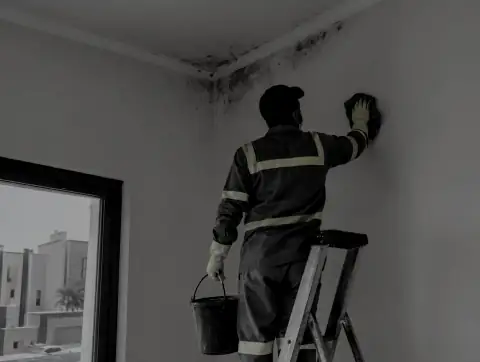
Mould & damp treatment in As Sabat
Mould and damp treatment in As Sabat starts with a photo of the affected walls or ceiling sent by call or WhatsApp. The key is to identify the moisture source first, whether it is seepage or elevated humidity around the building.
As Sabat has houses and farms on scattered plots in a relatively dry inland area. Mould and damp here often stem from seeping underground pipes or the building's perimeter, or from walls near damp soil. We repair cracks and joints in walls and ceilings, remove the visible mould, then block moisture flow with sealed coatings. Photos show us where the problem is and how far it has spread before we choose the method.
- As Sabat is a hamlet in the Eastern Province near Al Jafr, Al Markaz and At Taraf, with houses and farms on scattered plots.
- Old underground pipes in rural houses often seep over time, raising humidity around the footings and lower walls.
The main items of mould & damp treatment in As Sabat
- Treating the surface with anti-mould material that penetrates the pores
- Removing the affected render or paint layer in the damaged area
- Closing the moisture path with a barrier or a treatment suited to the cause
- Checking the wall or ceiling and identifying the moisture source
The stages of the work in As Sabat
Send photos of the wall or ceiling
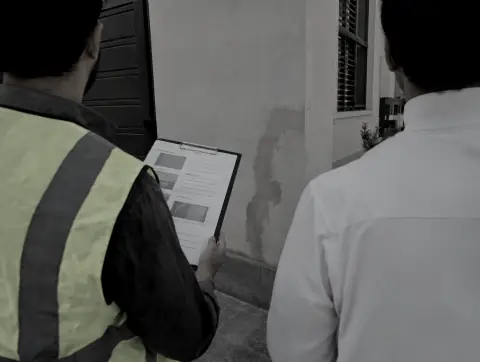
On WhatsApp: photos of the patches, the area around them and any nearby cracks or peeling, so we can read the situation and plan the treatment.
Identify the moisture source
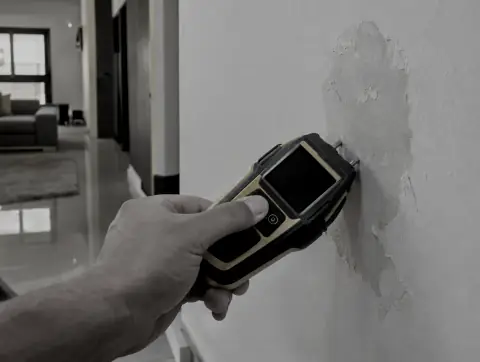
The wall and ceiling are checked to tell whether the moisture is coming from a leak outside, from condensation caused by a temperature difference or from poor ventilation, because the treatment depends on the cause.
Remove the mould and treat the surface
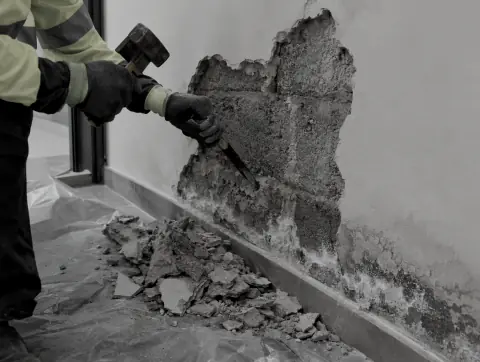
The affected render or paint layer is removed and the surface is treated with anti-mould material that penetrates the pores, then left to dry before any finishing coat. Where the moisture source is a leak, the leak is treated first.
Close the moisture path
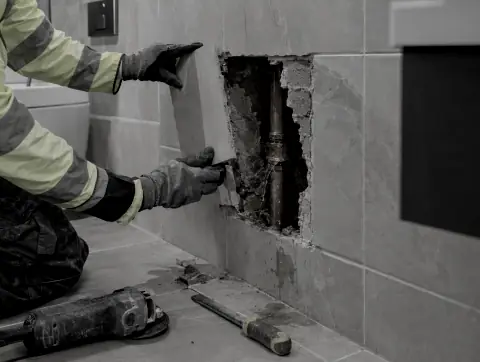
The moisture path is closed with a barrier layer or appropriate treatment depending on the cause, then the finish is reinstated. Where the cause is condensation, we advise on improving ventilation because a barrier alone is not enough.
Why Abraj Al Azl?
Treatment at the source, not the surfaceRemoving mould without cutting off what feeds it repeats the problem. The right treatment cuts the moisture first.
Start from As Sabat with one messageSend us photos of the spot on WhatsApp and we will work out the next step with you.
Your request from As Sabat comes to usCall or WhatsApp on one number, and we answer you ourselves.
We reply 5 AM to 10 PMSaturday to Thursday, and Friday on its own hours.
Some of our work

















What our customers said
ماشاء الله تبارك الرحمن عزل اسطح ممتاز
اتعاملت معاهم في العوازل عند كفيلي شغل يبيض الوجه انص التعامل معهم
ماشاء الله عملهم للعزل والتسريبات ممتاز وخبره ودقه في العمل انصح بالتعامل معهم موفقين يارب
Real Google reviews, shown exactly as their authors wrote them.
Before you book mould & damp treatment in As Sabat
How do we tell if the damp comes from seepage rather than humid air?
The photos you send show us the pattern and location of the dampness. Seepage leaves concentrated marks on walls closer to soil or pipes, while air humidity appears in corners and ceilings. We also ask you about any changes you have noticed around the site.
Does the damp return after treatment in As Sabat?
If we treat its actual source, the damp is prevented from returning. But if the pipe or underlying crack is not fixed, it may come back. We therefore focus on the root cause and tell you plainly what it is.
Can mould be treated without removing all the tiles or render?
It depends on how deep the mould has gone. If it is surface only and the render beneath is sound, removing the outer layer and treating is enough. If it has reached the render or the render is separating from the wall, the affected area needs to be taken off. Photos help us assess this before we start.
Why does mould come back shortly after painting?
Paint covers the visible mould but does not remove the fine threads rooted in the pores, and it does not stop the moisture coming from behind. Within weeks the moisture breaks through the new coat and the mould grows again. The right treatment starts by removing the affected surface, then treating the pores, then closing the source.
What is the difference between condensation mould and leak mould?
Condensation mould usually appears in the upper corners of rooms and behind furniture where damp air cools and condenses on a cold surface, often in poorly ventilated rooms. Leak mould appears as growing patches, usually linked to rain or a leak in a nearby roof or wall. Telling them apart changes the treatment.
Do you offer mould & damp treatment in As Sabat?
Yes. As Sabat is within our service area in the Eastern Province, and we also work in Al Jafr, Al Markaz and At Taraf. Call us or send photos of the spot on WhatsApp.
More services in As Sabat