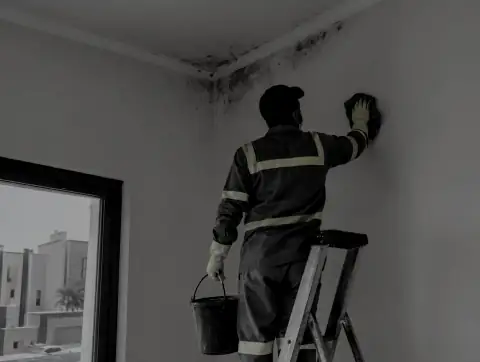
Mould & damp treatment in Al Khafji Customs
Mould and damp treatment at Al Khafji Customs begins with photos of affected walls and ceilings sent by call or WhatsApp. The village has administrative and small residential buildings constantly exposed to Gulf humidity and salt that accelerate wall and foundation deterioration.
The village sits on the Gulf coast, housing administrative and small residential buildings exposed to intense humidity and salt. Walls of these buildings suffer from the chemical reaction between salt and moisture, causing flaking, deterioration and mould. Moisture collects around foundations easily too, especially during the rare rainy winter months. Older buildings and those exposed to sea winds suffer worst. Photos show where the damp is and how salt has affected the building material so the right treatment can be chosen.
- Al Khafji Customs is a coastal village in the Eastern Province near Al Muruj and the Arabian Gulf, with small administrative and residential buildings.
- Salt carried in air from the Gulf reacts with moisture on walls and accelerates mould growth and structural deterioration.
The main items of mould & damp treatment in Al Khafji Customs
- Checking the wall or ceiling and identifying the moisture source
- Treating the surface with anti-mould material that penetrates the pores
- Telling condensation from a leak to choose the right treatment
- Closing the moisture path with a barrier or a treatment suited to the cause
How we carry out mould & damp treatment in Al Khafji Customs
Send photos of the wall or ceiling
On WhatsApp: photos of the patches, the area around them and any nearby cracks or peeling, so we can read the situation and plan the treatment.
Identify the moisture source
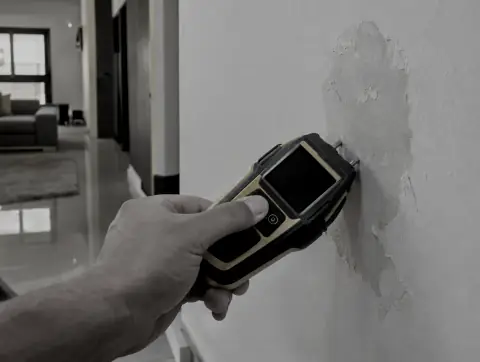
The wall and ceiling are checked to tell whether the moisture is coming from a leak outside, from condensation caused by a temperature difference or from poor ventilation, because the treatment depends on the cause.
Remove the mould and treat the surface
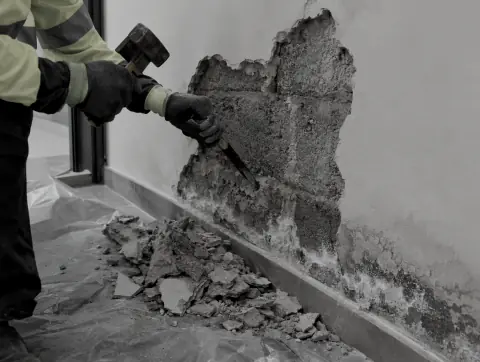
The affected render or paint layer is removed and the surface is treated with anti-mould material that penetrates the pores, then left to dry before any finishing coat. Where the moisture source is a leak, the leak is treated first.
Close the moisture path
The moisture path is closed with a barrier layer or appropriate treatment depending on the cause, then the finish is reinstated. Where the cause is condensation, we advise on improving ventilation because a barrier alone is not enough.
Why Abraj Al Azl?
Protecting the render and the finishOngoing moisture eats into the render and separates it from the wall. Early treatment saves the finish and avoids a larger reinstatement later.
Start from Al Khafji Customs with one messageSend us photos of the spot on WhatsApp and we will work out the next step with you.
Al Khafji Customs is in our service areaWe work there and across the Eastern Province, from our base in Al Uwaymiriyah, Hofuf.
We reply 5 AM to 10 PMSaturday to Thursday, and Friday on its own hours.
Some of our work

















What our customers said
ماشاء الله عملهم للعزل والتسريبات ممتاز وخبره ودقه في العمل انصح بالتعامل معهم موفقين يارب
ماشاء الله تبارك الرحمن عزل اسطح ممتاز
اتعاملت معاهم في العوازل عند كفيلي شغل يبيض الوجه انص التعامل معهم
Real Google reviews, shown exactly as their authors wrote them.
Questions about mould & damp treatment in Al Khafji Customs
Does treating salt and mould at Al Khafji Customs differ from other areas?
Yes, salt requires special treatment. Salt residue must be removed from the surface first before any damp or mould treatment is applied. Photos help us assess how much salt damage exists and whether the building material needs reinforcement alongside moisture treatment.
Do walls directly exposed to the sea at Al Khafji Customs need extra protection?
Yes, buildings facing the sea directly need extra layers to withstand persistent salt and moisture. Special treatments are applied to repel both salt and water, but photos first show the degree of exposure and what damage already exists.
How do I request mould & damp treatment in Al Khafji Customs?
Call us, or send clear photos of the spot and its location in Al Khafji Customs on WhatsApp, and we will work out the next step with you.
What is the difference between condensation mould and leak mould?
Condensation mould usually appears in the upper corners of rooms and behind furniture where damp air cools and condenses on a cold surface, often in poorly ventilated rooms. Leak mould appears as growing patches, usually linked to rain or a leak in a nearby roof or wall. Telling them apart changes the treatment.
Can mould be treated without removing all the tiles or render?
It depends on how deep the mould has gone. If it is surface only and the render beneath is sound, removing the outer layer and treating is enough. If it has reached the render or the render is separating from the wall, the affected area needs to be taken off. Photos help us assess this before we start.
Do I need to clear the room before treatment?
It is best to move furniture away from the affected walls and ceilings so the work can reach the whole area without obstruction. When the job is agreed we go through what needs to be shifted, and anything fixed in place is worked around with care.
We also offer it in neighbouring areas
We also offer mould & damp treatment in Western Arabian Gulf, Eastern Arabian Gulf and Al Muruj (near Al Khafji), among the closest areas to Al Khafji Customs.
More services in Al Khafji Customs