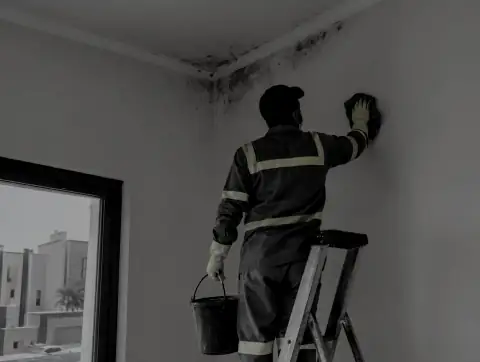
Mould & damp treatment in Al Faisaliyah (near Al Khafji)
Mould and damp treatment in Al Faisaliyah begins with photos of affected walls and ceilings sent to us via WhatsApp or phone. We identify the moisture source and then select the right method to remove the mould and prevent the damp.
Al Faisaliyah is a district near the coast and the Gulf, with varied residential buildings of different sizes and standards. Mould and damp here are fed by salty air from the sea, pipe leaks and condensation in bathrooms. Both interior and exterior walls can develop mould, especially in corners and ceilings that dry slowly. We repair cracks and leak points first, then remove visible mould and apply sealing layers to keep the damp from returning.
- Al Faisaliyah is a district in the Eastern Province near the Gulf coast, with varied residential buildings of different sizes.
- Walls near salty coastal air tend to absorb moisture faster, which speeds up mould growth.
The scope of the work in Al Faisaliyah (near Al Khafji)
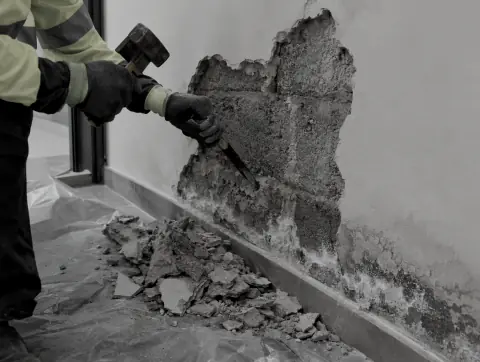
- Removing the affected render or paint layer in the damaged area
- Telling condensation from a leak to choose the right treatment
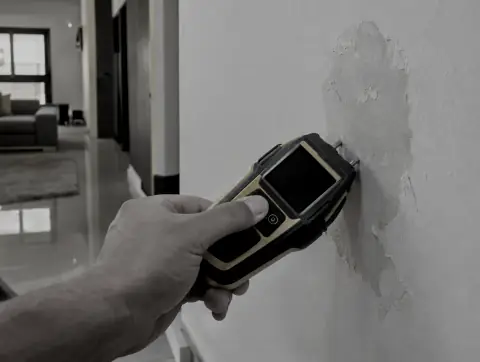
- Checking the wall or ceiling and identifying the moisture source
- Treating the surface with anti-mould material that penetrates the pores
From first contact to the finished job in Al Faisaliyah (near Al Khafji)
Send photos of the wall or ceiling
On WhatsApp: photos of the patches, the area around them and any nearby cracks or peeling, so we can read the situation and plan the treatment.
Identify the moisture source
The wall and ceiling are checked to tell whether the moisture is coming from a leak outside, from condensation caused by a temperature difference or from poor ventilation, because the treatment depends on the cause.
Remove the mould and treat the surface
The affected render or paint layer is removed and the surface is treated with anti-mould material that penetrates the pores, then left to dry before any finishing coat. Where the moisture source is a leak, the leak is treated first.
Close the moisture path
The moisture path is closed with a barrier layer or appropriate treatment depending on the cause, then the finish is reinstated. Where the cause is condensation, we advise on improving ventilation because a barrier alone is not enough.
Why Abraj Al Azl?
Treatment at the source, not the surfaceRemoving mould without cutting off what feeds it repeats the problem. The right treatment cuts the moisture first.
Mould & damp treatment in Al Faisaliyah (near Al Khafji)We choose the method and the materials once we know the condition of the spot.
We serve Al Faisaliyah (near Al Khafji) and around itIncluding Al Muruj (near Al Khafji), Eastern Arabian Gulf and Ash Shati (near Al Khafji), as part of our work across the Eastern Province.
We reply 5 AM to 10 PMSaturday to Thursday, and Friday on its own hours.
Some of our work

















What our customers said
ماشاء الله تبارك الرحمن عزل اسطح ممتاز
ماشاء الله عملهم للعزل والتسريبات ممتاز وخبره ودقه في العمل انصح بالتعامل معهم
اتعاملت معاهم في العوازل عند كفيلي شغل يبيض الوجه انص التعامل معهم
Real Google reviews, shown exactly as their authors wrote them.
Before you book mould & damp treatment in Al Faisaliyah (near Al Khafji)
Why does mould grow faster in Al Faisaliyah than elsewhere?
Proximity to the sea means higher humidity in the air penetrates walls and ceilings. Constant coastal moisture provides the ideal conditions for mould to grow. Treatment focuses on stopping moisture entry first, then removing what is already there.
Do you treat bathrooms in Al Faisaliyah for mould and damp?
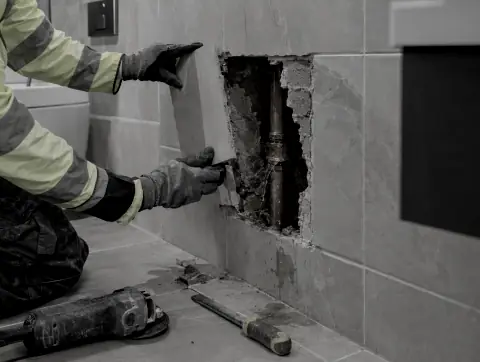
Yes, bathrooms are highly vulnerable to mould here. We treat condensation and leaks from pipes and floors, remove the mould and apply sealing coatings to walls and ceilings. Send photos of the affected areas and tell us about the existing ventilation.
Can mould be treated without removing all the tiles or render?
It depends on how deep the mould has gone. If it is surface only and the render beneath is sound, removing the outer layer and treating is enough. If it has reached the render or the render is separating from the wall, the affected area needs to be taken off. Photos help us assess this before we start.
Is Al Faisaliyah (near Al Khafji) within your service area?
Yes, Al Faisaliyah (near Al Khafji) is one of the areas we work in, as are Al Muruj (near Al Khafji), Eastern Arabian Gulf and Ash Shati (near Al Khafji). To start, call us or message us on WhatsApp.
Why does mould come back shortly after painting?
Paint covers the visible mould but does not remove the fine threads rooted in the pores, and it does not stop the moisture coming from behind. Within weeks the moisture breaks through the new coat and the mould grows again. The right treatment starts by removing the affected surface, then treating the pores, then closing the source.
What is the difference between condensation mould and leak mould?
Condensation mould usually appears in the upper corners of rooms and behind furniture where damp air cools and condenses on a cold surface, often in poorly ventilated rooms. Leak mould appears as growing patches, usually linked to rain or a leak in a nearby roof or wall. Telling them apart changes the treatment.
The same service in nearby areas
We also offer mould & damp treatment in Al Muruj (near Al Khafji), Eastern Arabian Gulf and Ash Shati (near Al Khafji), among the closest areas to Al Faisaliyah (near Al Khafji).
More services in Al Faisaliyah (near Al Khafji)