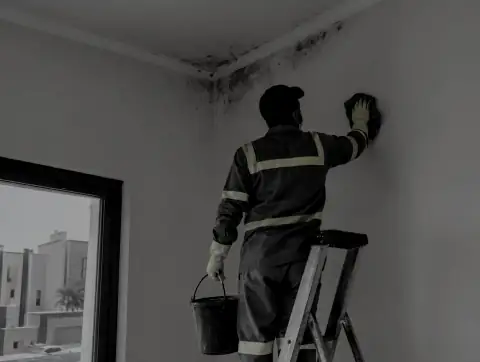
Mould & damp treatment in Ad Dabab (near Dammam)
Mould and damp treatment in Ad Dabab begins with messages and photos sent by call or WhatsApp. The district lies near the port and industrial areas, with villas and apartment buildings, where coastal humidity and leaks create conditions favourable for mould.
Ad Dabab is a coastal district near the port and industrial areas, with villas and mixed apartment buildings. High humidity from proximity to the sea penetrates building walls easily, especially older buildings or those with poor maintenance. Exterior walls and foundations face constant dampness, facilitating mould growth. Bathrooms, kitchens and interior rooms are also at risk due to water condensation and weak ventilation. Removing mould here requires thorough treatment of moisture from its source, whether from outside the building or from poor indoor ventilation. Detailed photos of the affected areas and surroundings help identify the cause and treatment.
- Ad Dabab is a coastal district in the Eastern Province near King Abdul Aziz Seaport and industrial areas, with villas and mixed apartment buildings.
- High coastal humidity and proximity to the port accelerate mould and rust growth in buildings.
What we do for you in Ad Dabab (near Dammam)
- Telling condensation from a leak to choose the right treatment
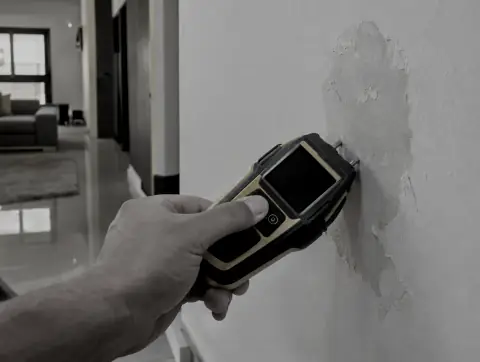
- Checking the wall or ceiling and identifying the moisture source
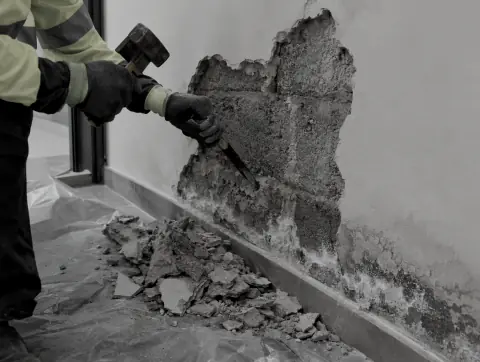
- Removing the affected render or paint layer in the damaged area
- Reinstating the finish after the surface has dried fully
The steps of mould & damp treatment in Ad Dabab (near Dammam)
Send photos of the wall or ceiling
On WhatsApp: photos of the patches, the area around them and any nearby cracks or peeling, so we can read the situation and plan the treatment.
Identify the moisture source
The wall and ceiling are checked to tell whether the moisture is coming from a leak outside, from condensation caused by a temperature difference or from poor ventilation, because the treatment depends on the cause.
Remove the mould and treat the surface
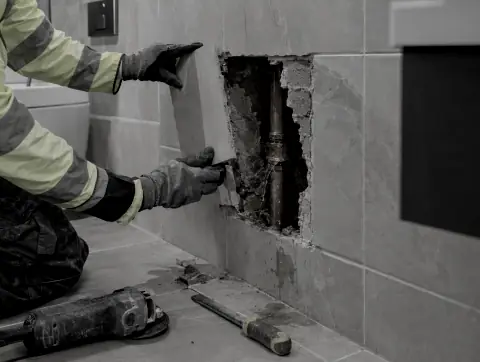
The affected render or paint layer is removed and the surface is treated with anti-mould material that penetrates the pores, then left to dry before any finishing coat. Where the moisture source is a leak, the leak is treated first.
Close the moisture path
The moisture path is closed with a barrier layer or appropriate treatment depending on the cause, then the finish is reinstated. Where the cause is condensation, we advise on improving ventilation because a barrier alone is not enough.
Why Abraj Al Azl?
Protecting the render and the finishOngoing moisture eats into the render and separates it from the wall. Early treatment saves the finish and avoids a larger reinstatement later.
Ad Dabab (near Dammam) is in our service areaWe work there and across the Eastern Province, from our base in Al Uwaymiriyah, Hofuf.
Start from Ad Dabab (near Dammam) with one messageSend us photos of the spot on WhatsApp and we will work out the next step with you.
Talk to us directlyCall or WhatsApp on the same number.
Some of our work

















What our customers said
ماشاء الله عملهم للعزل والتسريبات ممتاز وخبره ودقه في العمل انصح بالتعامل معهم
ماشاء الله تبارك الرحمن عزل اسطح ممتاز
أفضل شركة عزل اسطح الفوم وخزانات المياه
Real Google reviews, shown exactly as their authors wrote them.
Your questions on mould & damp treatment in Ad Dabab (near Dammam)
Is damp on a villa's walls in Ad Dabab from the coast or the foundations?
It could be from both. Coastal humidity penetrates exterior walls, and groundwater or foundation cracks may bring water from below. We need to see which walls are worst affected and where damp appears first to identify the source.
Is mould treatment in Ad Dabab harder than in other areas?
High coastal humidity makes keeping things dry more challenging, so preventing mould requires ongoing moisture management, not just a one-time fix. Stopping leaks and improving ventilation with regular airflow are more essential here than elsewhere.
Why does mould come back shortly after painting?
Paint covers the visible mould but does not remove the fine threads rooted in the pores, and it does not stop the moisture coming from behind. Within weeks the moisture breaks through the new coat and the mould grows again. The right treatment starts by removing the affected surface, then treating the pores, then closing the source.
What is the difference between condensation mould and leak mould?
Condensation mould usually appears in the upper corners of rooms and behind furniture where damp air cools and condenses on a cold surface, often in poorly ventilated rooms. Leak mould appears as growing patches, usually linked to rain or a leak in a nearby roof or wall. Telling them apart changes the treatment.
Do you offer mould & damp treatment in Ad Dabab (near Dammam)?
Yes. Ad Dabab (near Dammam) is within our service area in the Eastern Province, and we also work in King Abdul Aziz Seaport, Al Mazruiyah and At Tubayshi. Call us or send photos of the spot on WhatsApp.
Can mould be treated without removing all the tiles or render?
It depends on how deep the mould has gone. If it is surface only and the render beneath is sound, removing the outer layer and treating is enough. If it has reached the render or the render is separating from the wall, the affected area needs to be taken off. Photos help us assess this before we start.
Areas near Ad Dabab (near Dammam)
We also work near Ad Dabab (near Dammam), in King Abdul Aziz Seaport, Al Mazruiyah and At Tubayshi.
More services in Ad Dabab (near Dammam)