Damp & moisture detection and treatment in Imhaish
Damp detection and treatment in Imhaish begins with photos of affected walls, roofs and floors sent by call or WhatsApp. Imhaish is a small hamlet with simple houses where damp can come from several sources such as plumbing, tanks or seepage from outside.
Imhaish has simple, often older houses where foundations and outer walls are exposed to damp directly. A water tank may be on the roof or near the outer walls, raising the chance of leaks and wetness. Intense heat and desert dryness affect evaporation speed, but seeping damp can stay trapped in walls and ceilings for long periods. Detailed photos of each wet spot help us understand the problem and its cause more clearly.
- Imhaish is a hamlet in the Eastern Province near Halat Mahish, Al Jarudiyah and Az Zomorod Two, with simple scattered houses.
- In simple houses with direct outer walls, rain and wind-driven damp seeps in more easily.
The main items of damp & moisture detection and treatment in Imhaish
- Identifying the type of damp: rising, penetrating, condensation or a pipe leak
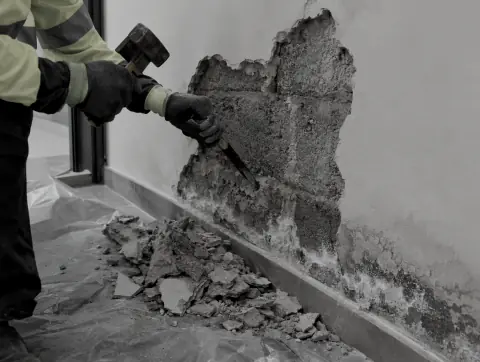
- Removing salt-damaged and saturated render
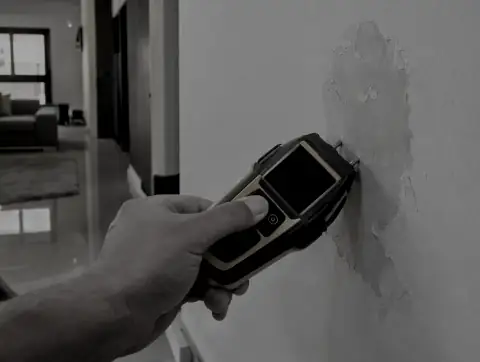
- Measuring moisture levels in walls, ceilings and floors
- Covering work on walls, pools, tanks, bathrooms and roofs
From first contact to the finished job in Imhaish
Send photos on WhatsApp
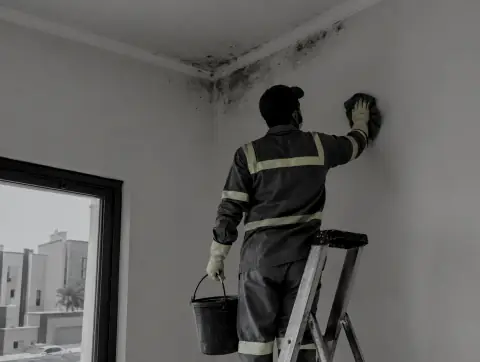
Photos of the patches, the salts, the peeling paint and where the smell is strongest help us read the type of damp and decide what instruments and treatment are needed.
Measure and locate the moisture
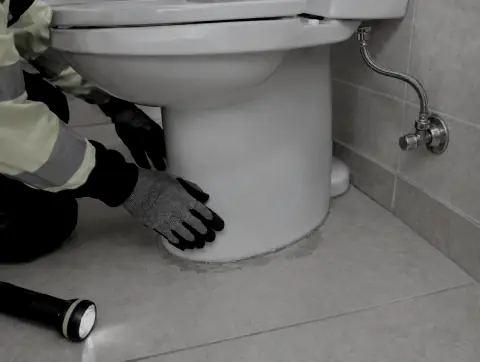
Moisture levels in the wall or ceiling are measured with instruments. The source is identified: rising damp, penetrating damp, condensation or a pipe leak. The treatment follows the source, not the surface sign.
Treat the real cause
Depending on the source: damaged render is removed and cracks are treated, or the pipe fault is repaired, or the wall and ceiling are sealed. The render and paint are reinstated once the cause is gone.
Finish the surface after drying
The area is left to dry and set before the final render and paint, because coating a surface that is still damp only brings back the peeling.
Why Abraj Al Azl?
Treatment starts at the causeLocating the moisture source before starting prevents the problem recurring after finishing and determines the right barrier material and method.
Your request from Imhaish comes to usCall or WhatsApp on one number, and we answer you ourselves.
Start from Imhaish with one messageSend us photos of the spot on WhatsApp and we will work out the next step with you.
We reply 5 AM to 10 PMSaturday to Thursday, and Friday on its own hours.
Some of our work

















What our customers said
أفضل شركة عزل اسطح الفوم وخزانات المياه
ماشاء الله عملهم للعزل والتسريبات ممتاز وخبره ودقه في العمل انصح بالتعامل معهم
اتعاملت معاهم في العوازل عند كفيلي شغل يبيض الوجه انص التعامل معهم
Real Google reviews, shown exactly as their authors wrote them.
Your questions on damp & moisture detection and treatment in Imhaish
Does a simple house in Imhaish need different damp treatment than a modern one?
Usually, yes. Simple houses may lack moisture barriers or good drainage, so they need deeper and wider treatment. Photos show the construction and condition, and we pick the right method for each building.
Can damp in outer walls in Imhaish be treated without too much disruption?
That depends on where the damp is and how bad it is. Some treatments need drilling or material application, but we try to keep disruption to a minimum. The first inspection and photos show exactly what will be needed.
What decides the cost of damp treatment?
The size of the affected area, the type and source of the damp, how deep the damage goes into the render or the concrete, and whether a pipe repair, a surface seal or a wall treatment alone is needed. Send clear photos of the damaged areas on WhatsApp and we will advise on the treatment and the likely cost.
What should I send you from Imhaish?
Send clear photos of the spot and a short description of the problem on WhatsApp, mention that you are in Imhaish, and we will work out the next step with you.
What is the difference between rising damp and penetrating damp?
Rising damp comes from the ground and climbs the wall from below. Its signs are white salts and peeling paint in the lower third of the wall. Penetrating damp enters from outside through the facade, the roof or cracks, and appears near the water source such as below a window or on the wall that faces the rain. Each needs a different treatment material.
Can damp be treated without removing the tiles or the render?
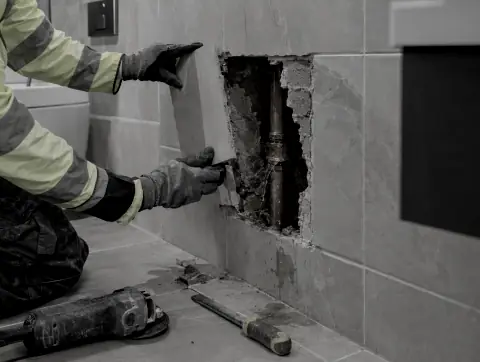
Sometimes a barrier material can be injected into the wall without removing all the render, or the surface can be treated from outside if the source is penetrating damp. But if the render is salt-damaged and crumbling, removing it is necessary because a sealing material cannot bond to a friable surface. Photos of the surface show whether removal is needed.
The same service in nearby areas
If the site is outside Imhaish, the same service is available in Halat Mahish, Al Jarudiyah (near Imhaish) and Az Zomorod Two.
More services in Imhaish