Damp & moisture detection and treatment in Badr
Damp detection and treatment in Badr starts with photos sent by call or WhatsApp. The district has houses and villas on varied plots, and moisture may appear in walls, roofs and floors for different reasons that need careful examination.
Badr is a residential district with houses and villas on plots of varying size and height, so buildings' exposure to moisture varies. Houses on low ground may suffer water pooling at the foundation and rising damp from soil, while problems in other houses appear around windows, pipes or roof leaks. Intense heat may mask early signs, but photos clearly reveal damp details and location.
- Badr is a district in the Eastern Province, near Ohod, An Noor and Al Manar, with houses and villas on varied plots.
- Houses on low ground or near damp areas may need periodic damp treatment.
The damp & moisture detection and treatment work in Badr
- Treating cracks and applying the right barrier for the moisture source
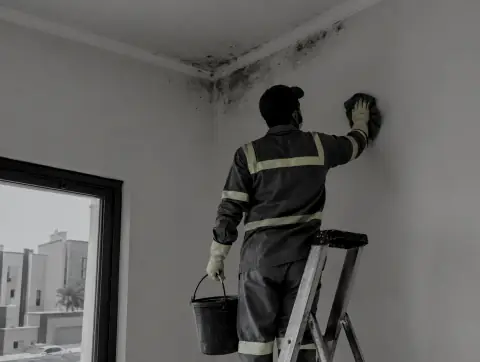
- Reinstating the render and finish after the surface has dried
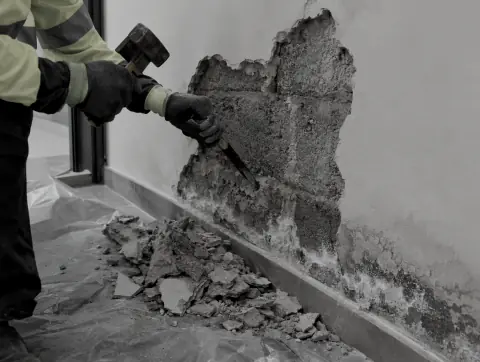
- Removing salt-damaged and saturated render
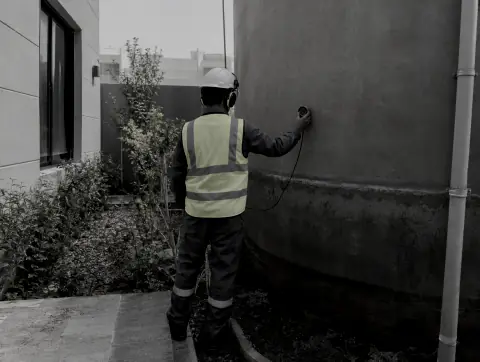
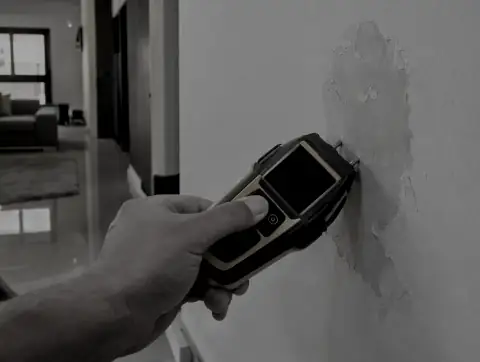
- Measuring moisture levels in walls, ceilings and floors
The stages of the work in Badr
Send photos on WhatsApp
Photos of the patches, the salts, the peeling paint and where the smell is strongest help us read the type of damp and decide what instruments and treatment are needed.
Measure and locate the moisture
Moisture levels in the wall or ceiling are measured with instruments. The source is identified: rising damp, penetrating damp, condensation or a pipe leak. The treatment follows the source, not the surface sign.
Treat the real cause
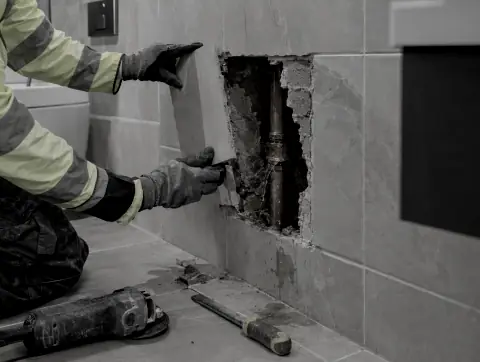
Depending on the source: damaged render is removed and cracks are treated, or the pipe fault is repaired, or the wall and ceiling are sealed. The render and paint are reinstated once the cause is gone.
Finish the surface after drying
The area is left to dry and set before the final render and paint, because coating a surface that is still damp only brings back the peeling.
Why Abraj Al Azl?
Treatment starts at the causeLocating the moisture source before starting prevents the problem recurring after finishing and determines the right barrier material and method.
Badr is in our service areaWe work there and across the Eastern Province, from our base in Al Uwaymiriyah, Hofuf.
Damp & moisture detection and treatment in BadrWe choose the method and the materials once we know the condition of the spot.
Talk to us directlyCall or WhatsApp on the same number.
Some of our work

















What our customers said
ماشاء الله تبارك الرحمن عزل اسطح ممتاز
ماشاء الله عملهم للعزل والتسريبات ممتاز وخبره ودقه في العمل انصح بالتعامل معهم
اتعاملت معاهم في العوازل عند كفيلي شغل يبيض الوجه انص التعامل معهم
Real Google reviews, shown exactly as their authors wrote them.
Common questions on damp & moisture detection and treatment in Badr
Can damp in the walls of an older villa in Badr be treated without demolition and rebuilding?
Yes, in most cases. We treat cracks and joints, apply waterproofing materials and improve drainage around the foundation. Photos show the wall and concrete condition and tell us whether the structure is sound enough for treatment.
When does damp in a Badr home indicate a deeper foundation problem?
If damp persistently shows on lower walls or there are wide cracks in the foundation itself or soil erosion around the building. Detailed photos and description help us assess whether the issue is superficial or needs deeper intervention.
What decides the cost of damp treatment?
The size of the affected area, the type and source of the damp, how deep the damage goes into the render or the concrete, and whether a pipe repair, a surface seal or a wall treatment alone is needed. Send clear photos of the damaged areas on WhatsApp and we will advise on the treatment and the likely cost.
Do you cover Badr?
Yes. We serve Badr and nearby areas such as Ohod, An Noor (near Ohod) and Al Manar (near Dammam), from our base in Al Uwaymiriyah, Hofuf. Start with a call or a WhatsApp message.
What is the difference between rising damp and penetrating damp?
Rising damp comes from the ground and climbs the wall from below. Its signs are white salts and peeling paint in the lower third of the wall. Penetrating damp enters from outside through the facade, the roof or cracks, and appears near the water source such as below a window or on the wall that faces the rain. Each needs a different treatment material.
Can damp be treated without removing the tiles or the render?
Sometimes a barrier material can be injected into the wall without removing all the render, or the surface can be treated from outside if the source is penetrating damp. But if the render is salt-damaged and crumbling, removing it is necessary because a sealing material cannot bond to a friable surface. Photos of the surface show whether removal is needed.
We also offer it in neighbouring areas
If the site is outside Badr, the same service is available in Ohod, An Noor (near Ohod) and Al Manar (near Dammam).
More services in Badr