Damp & moisture detection and treatment in Ash Shati (near Al Khafji)
Damp detection and treatment in Ash Shati begins with photos of walls, ceilings and floors sent by call or WhatsApp. The district has diverse residential buildings, and coastal humidity and moisture affect both interior and exterior walls.
Ash Shati lies near the coast and has multi-storey residential buildings, both old and new. Humid air penetrates outer and inner walls, and damp can collect behind paint and in corners and joints. Cracks in concrete let water in during rare rain, and old ceilings may leak and keep upper floors damp. Photos reveal the source of the damp and help us choose the right treatment.
- Ash Shati is a district in the Eastern Province, close to An Nuzhah, Al Fayha and Al Faisaliyah, with diverse residential buildings.
- Coastal humidity accelerates paint deterioration and interior materials, and increases the likelihood of damp appearing in walls.
The scope of the work in Ash Shati (near Al Khafji)
- Reinstating the render and finish after the surface has dried
- Covering work on walls, pools, tanks, bathrooms and roofs
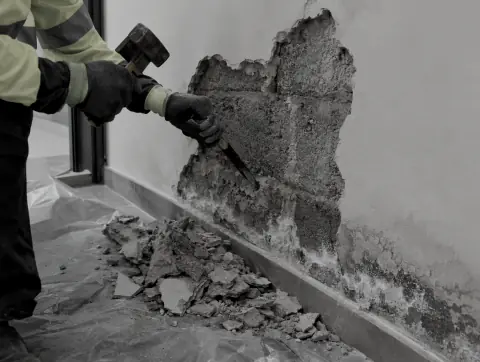
- Removing salt-damaged and saturated render
- Treating cracks and applying the right barrier for the moisture source
The stages of the work in Ash Shati (near Al Khafji)
Send photos on WhatsApp
Photos of the patches, the salts, the peeling paint and where the smell is strongest help us read the type of damp and decide what instruments and treatment are needed.
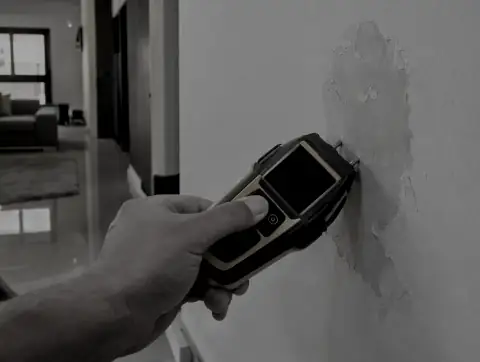
Measure and locate the moisture
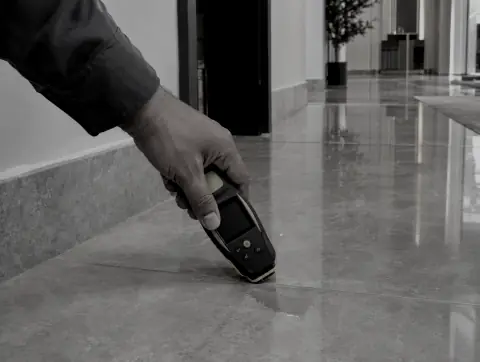
Moisture levels in the wall or ceiling are measured with instruments. The source is identified: rising damp, penetrating damp, condensation or a pipe leak. The treatment follows the source, not the surface sign.
Treat the real cause
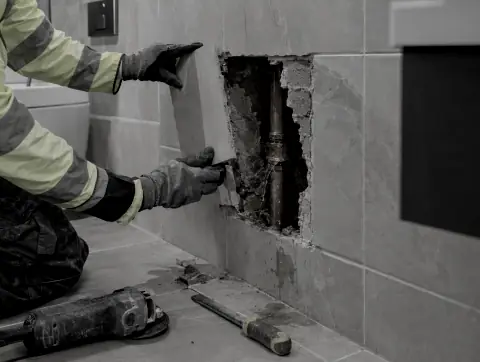
Depending on the source: damaged render is removed and cracks are treated, or the pipe fault is repaired, or the wall and ceiling are sealed. The render and paint are reinstated once the cause is gone.
Finish the surface after drying
The area is left to dry and set before the final render and paint, because coating a surface that is still damp only brings back the peeling.
Why Abraj Al Azl?
Treatment starts at the causeLocating the moisture source before starting prevents the problem recurring after finishing and determines the right barrier material and method.
Your request from Ash Shati (near Al Khafji) comes to usCall or WhatsApp on one number, and we answer you ourselves.
Start from Ash Shati (near Al Khafji) with one messageSend us photos of the spot on WhatsApp and we will work out the next step with you.
We reply 5 AM to 10 PMSaturday to Thursday, and Friday on its own hours.
Some of our work

















What our customers said
ماشاء الله تبارك الرحمن عزل اسطح ممتاز
أفضل شركة عزل اسطح الفوم وخزانات المياه
ماشاء الله عملهم للعزل والتسريبات ممتاز وخبره ودقه في العمل انصح بالتعامل معهم
Real Google reviews, shown exactly as their authors wrote them.
What customers ask in Ash Shati (near Al Khafji)
Does the moisture in my flat come from outside air or from the foundation?
In a coastal area like Ash Shati, it can be both. Air humidity dampens outer walls, and rising damp comes up through inner walls. Photos and description clarify which source is primary.
Is treating coastal damp different from treating ordinary damp?
Yes, coastal humidity is relentless and intense, so it needs materials and methods that tolerate salt and high moisture. Photos and location help us pick the right solution for you.
Do you offer damp & moisture detection and treatment in Ash Shati (near Al Khafji)?
Yes. Ash Shati (near Al Khafji) is within our service area in the Eastern Province, and we also work in An Nuzhah (near Al Khafji), Al Fayha (near Al Khafji) and Al Faisaliyah (near Al Khafji). Call us or send photos of the spot on WhatsApp.
What are the early signs of damp that should not be ignored?
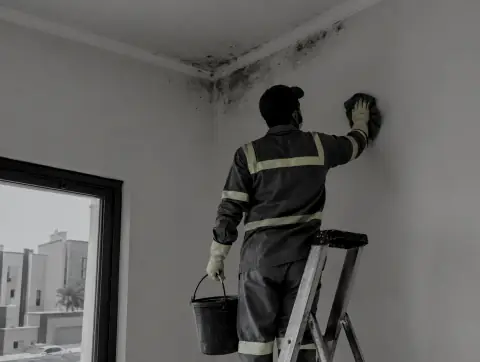
Paint peeling near the floor or in a wall corner, white salts on concrete or render, a musty smell in a closed room, and dark patches that appear after rain or in winter. These are early signs of active damp that needs to be measured and sourced.
What is the difference between rising damp and penetrating damp?
Rising damp comes from the ground and climbs the wall from below. Its signs are white salts and peeling paint in the lower third of the wall. Penetrating damp enters from outside through the facade, the roof or cracks, and appears near the water source such as below a window or on the wall that faces the rain. Each needs a different treatment material.
Can damp be treated without removing the tiles or the render?
Sometimes a barrier material can be injected into the wall without removing all the render, or the surface can be treated from outside if the source is penetrating damp. But if the render is salt-damaged and crumbling, removing it is necessary because a sealing material cannot bond to a friable surface. Photos of the surface show whether removal is needed.
Damp & moisture detection and treatment near Ash Shati (near Al Khafji)
If the site is outside Ash Shati (near Al Khafji), the same service is available in An Nuzhah (near Al Khafji), Al Fayha (near Al Khafji) and Al Faisaliyah (near Al Khafji).
More services in Ash Shati (near Al Khafji)