Cementitious waterproofing in Makkah
Cementitious waterproofing for tanks, bathrooms and walls in Makkah begins with a phone call and photos of affected areas sent via WhatsApp. Makkah is a district with houses and villas of many types and sizes, many of them old and needing damp and seepage treatment.
Makkah has a mix of modern villas and old houses, and many older buildings there suffer from foundation and lower wall problems. Underground and roof tanks both may need cementitious waterproofing to protect the concrete from decay and seepage. Bathrooms and kitchens face constant moisture, and internal walls need reliable protection against damp and water. Cementitious waterproofing is applied directly to the concrete surface and forms a strong protection layer, and photos help identify the problem's extent and location, then choose the right solution.
- Makkah is a district in the Eastern Province, located near Al Fanatir, Najd and Al Hijaz, made up of houses and villas distributed throughout the district.
- Older buildings in residential districts often need their tanks, walls and bathrooms re-waterproofed because original materials deteriorate over time.
What the service covers in Makkah
- Leaving the layer to dry and harden fully before any finish or filling
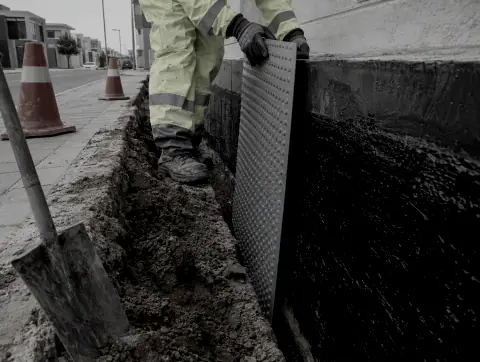
- Treating cracks, corners, drain openings and pipe runs
- Cleaning the surface and removing loose or flaking layers
- Turning the coat up at corners and fixture openings to close every weak point
The stages of the work in Makkah
Send photos of the area
Call us or send photos of the wall, tank or bathroom on WhatsApp, so we can read the surface and decide whether a rigid or flexible cementitious type suits best.
Prepare and clean the surface
The surface is cleaned of dust, grease and loose layers, and cracks, joints and voids are treated with a suitable filler so the coating bonds firmly.
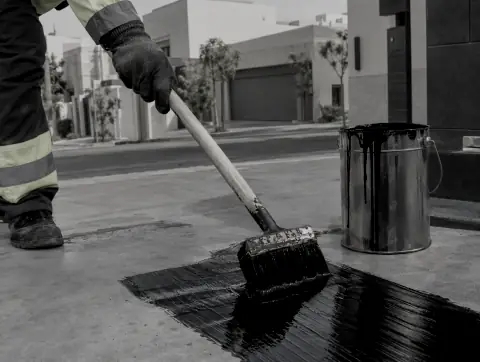
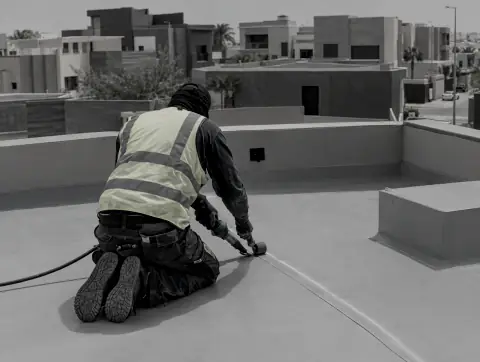
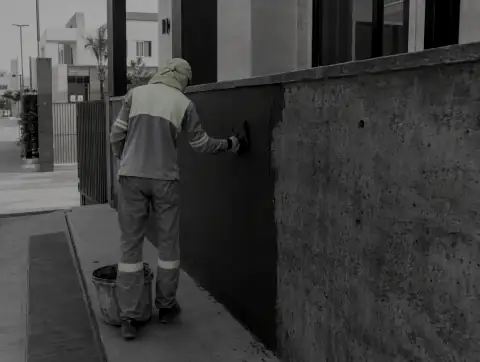
Mix and apply the coating
The cementitious material is mixed to the right consistency, then brushed or sprayed depending on the surface, and turned up at corners and joints to close every weak point.
Cure and protect
The layer is left to dry and harden, and is not exposed to water or load before it is fully set. The final finish above it is decided by the location.
Why Abraj Al Azl?
It resists pressure from both sidesUnlike materials that can be pushed off by water pressure, the cementitious coat stays bonded to the concrete whether the water comes from inside or outside.
Your request from Makkah comes to usCall or WhatsApp on one number, and we answer you ourselves.
We serve Makkah and around itIncluding Al Fanatir, Najd and Al Hijaz, as part of our work across the Eastern Province.
We reply 5 AM to 10 PMSaturday to Thursday, and Friday on its own hours.
Some of our work

















What our customers said
ماشاء الله تبارك الرحمن عزل اسطح ممتاز
اتعاملت معاهم في العوازل عند كفيلي شغل يبيض الوجه انص التعامل معهم
ماشاء الله عملهم للعزل والتسريبات ممتاز وخبره ودقه في العمل انصح بالتعامل معهم
Real Google reviews, shown exactly as their authors wrote them.
Questions about cementitious waterproofing in Makkah
What damp signs indicate a need for urgent cementitious waterproofing?
Horizontal or vertical cracks in walls, spreading dark damp patches, or musty odour are all signs of serious seepage. Send clear photos of affected areas and tell us their location and extent so we can assess urgency and choose the right solution.
Does cementitious waterproofing tolerate temperature swings between seasons?
Cementitious waterproofing is a strong mineral material that tolerates heat and moisture swings. But existing cracks in concrete may expand or contract with temperature changes, so they must be treated before waterproofing to ensure effective, long-term protection.
Does the surface have to be dry before application?
This is one advantage of cementitious waterproofing: it tolerates a damp surface and sometimes needs it for good adhesion. However, standing water or an active leak means the source must be treated first. Send photos of the leak or the stains and we will say whether the coating can go on directly or needs a prior stage.
Which weak points are treated before the cementitious coat goes on?
Cracks and hairline cracks in the concrete, wall-to-floor corners, drain openings, pipe runs and fixture bases, and structural joint positions. These are filled and treated first, because the cementitious coat on its own cannot bridge a wide gap.
Is cementitious waterproofing safe for drinking water tanks?
Yes. The material is mineral-based and contains no solvents or chemicals that migrate into the water, so it is widely used to line drinking water tanks. It must be fully cured and set before the tank is filled. Send a photo of the tank on WhatsApp and we will advise the right treatment.
How do I request cementitious waterproofing in Makkah?
Call us, or send clear photos of the spot and its location in Makkah on WhatsApp, and we will work out the next step with you.
Areas near Makkah
We also offer cementitious waterproofing in Al Fanatir, Najd and Al Hijaz, among the closest areas to Makkah.
More services in Makkah