Cementitious waterproofing in Al Wadi
Cementitious waterproofing of tanks and internal walls in Al Wadi begins with photos sent by WhatsApp or call. The district contains houses and villas on plots, many with internal walls prone to dampness from natural moisture or leaks. Photo inspection identifies the problem location and severity.
Al Wadi has houses and villas of varying ages, some older and some newly built. Concrete tanks are prone to cracks, especially at joints and pipe entries, while lower-floor internal walls suffer from rising dampness from the ground. Bathrooms and kitchens have pipes and openings that may leak water into adjacent walls. Cementitious waterproofing protects concrete and walls from leaks, dampness and deterioration over time.
- Al Wadi is a district in the Eastern Province, adjacent to Al Nakhil, Ar Rayan and An Nayfiyah, with houses and villas on scattered plots.
- Internal walls absorb moisture through foundations and floors, and dampness may show in them before appearing outside.
The cementitious waterproofing work in Al Wadi
- Leaving the layer to dry and harden fully before any finish or filling
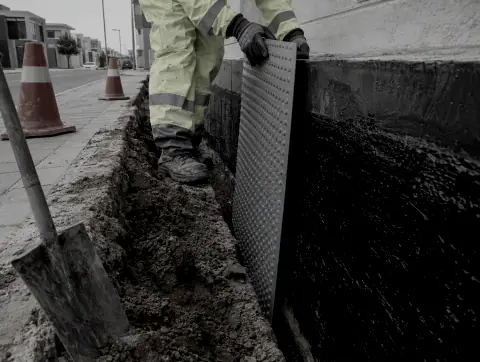
- Inspecting the surface and identifying cracks and weak points
- Treating cracks, corners, drain openings and pipe runs
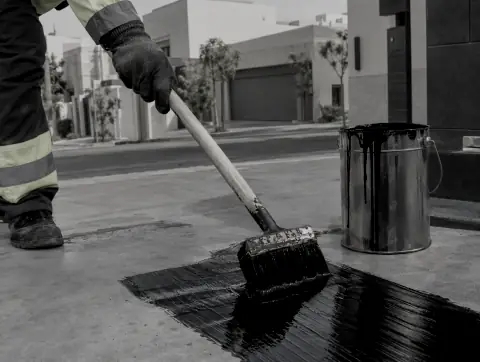
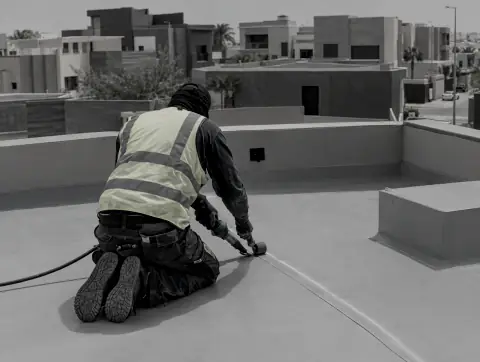
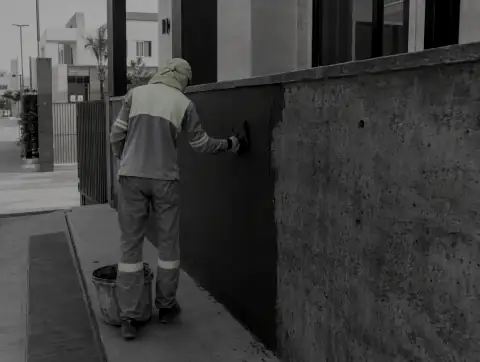
- Mixing and applying the cementitious material by brush or spray to suit the surface
From first contact to the finished job in Al Wadi
Send photos of the area
Call us or send photos of the wall, tank or bathroom on WhatsApp, so we can read the surface and decide whether a rigid or flexible cementitious type suits best.
Prepare and clean the surface
The surface is cleaned of dust, grease and loose layers, and cracks, joints and voids are treated with a suitable filler so the coating bonds firmly.
Mix and apply the coating
The cementitious material is mixed to the right consistency, then brushed or sprayed depending on the surface, and turned up at corners and joints to close every weak point.
Cure and protect
The layer is left to dry and harden, and is not exposed to water or load before it is fully set. The final finish above it is decided by the location.
Why Abraj Al Azl?
A surface ready for finishingThe coating accepts tiles, render and paint directly on top, so it adds no visible build-up and does not change how the surface looks.
Al Wadi is in our service areaWe work there and across the Eastern Province, from our base in Al Uwaymiriyah, Hofuf.
Cementitious waterproofing in Al WadiWe choose the method and the materials once we know the condition of the spot.
Talk to us directlyCall or WhatsApp on the same number.
Some of our work

















What our customers said
ماشاء الله تبارك الرحمن عزل اسطح ممتاز
ماشاء الله عملهم للعزل والتسريبات ممتاز وخبره ودقه في العمل انصح بالتعامل معهم موفقين يارب
أفضل شركة عزل اسطح الفوم وخزانات المياه
Real Google reviews, shown exactly as their authors wrote them.
Before you book cementitious waterproofing in Al Wadi
How is dampness in internal walls of a house in Al Wadi treated?
We start by examining photos to find the damp source: is it a leak from above, rising ground moisture, or a pipe leak? Then we clean the wall, repair cracks and apply a cementitious layer to protect the surface from water and dampness.
Does cementitious waterproofing stop rising dampness from the foundation?
Cementitious waterproofing protects the wall from external moisture and stops water absorption at the surface. If rising damp from the foundation is severe, additional measures such as ventilation or foundation treatment may be needed. Photos show the problem severity and help determine the solution.
Do you offer cementitious waterproofing in Al Wadi?
Yes. Al Wadi is within our service area in the Eastern Province, and we also work in Al Nakhil (near Hafar Al-Batin), Ar Rayan (near Hafar Al-Batin) and An Nayfiyah (near Hafar Al-Batin). Call us or send photos of the spot on WhatsApp.
What decides the cost of cementitious waterproofing?
The size of the surface to be treated, its condition in terms of cracks and damage, how many corners and openings need extra treatment, how easily the site can be reached, and whether tiles must be lifted or prior preparation is needed. Send photos and rough dimensions of the tank, bathroom or wall on WhatsApp and we will advise on the treatment and the cost.
Is cementitious waterproofing safe for drinking water tanks?
Yes. The material is mineral-based and contains no solvents or chemicals that migrate into the water, so it is widely used to line drinking water tanks. It must be fully cured and set before the tank is filled. Send a photo of the tank on WhatsApp and we will advise the right treatment.
Can tiles be laid directly over cementitious waterproofing?
Yes, and this is one reason it is chosen for bathrooms and floors: it accepts render, tiles and adhesive directly over it once set, with no intermediate layer needed. The right time to start tiling is after the coating is fully cured.
We also offer it in neighbouring areas
Nearby areas we also cover: Al Nakhil (near Hafar Al-Batin), Ar Rayan (near Hafar Al-Batin) and An Nayfiyah (near Hafar Al-Batin).
More services in Al Wadi