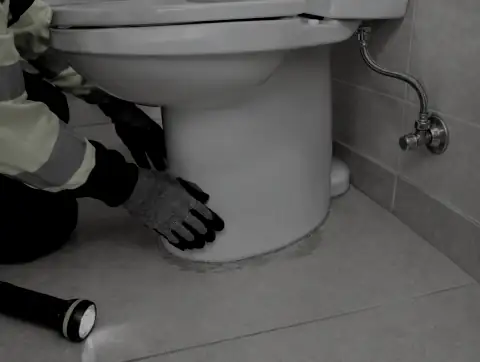
Toilet base leak detection in Thaj
Toilet base leak detection in Thaj begins with photos of the toilet base and its joints, sent by call or WhatsApp. The village is made up of scattered homes, and water there usually escapes from the supply hose or from the drain joint at the base.
Thaj is a village of scattered homes, most with at least one bathroom, and supply pipes reach them across varied distances. When a base leaks, the first sign is a damp patch on the floor around the toilet, and the moisture then spreads to the wall or foundation. Each case needs a look at the joint itself, and the photos show exactly where the leak sits.
- Thaj is a village in the Al-Ahsa governorate of the Eastern Province, lying near Al Hinnah, As Sahaf and Bakha.
- Damp often stays under the base for a long time before it is seen, so visible damage lags behind the start of the leak.
What we do for you in Thaj
- Telling condensation on the cistern from a real leak
- Watching the pan-to-drain seal during a flush
- A report on the leak source and what the repair requires
- Determining whether the leak is visible or inside the wall
How we carry out toilet base leak detection in Thaj
Send photos on WhatsApp
Photos of the toilet base, the wet floor, the supply hose and the cistern, so we can see where the damp is and decide where to start the check.
Tell condensation from a real leak
The outside of the cistern is dried and watched. If water returns on the cold surface without a flush, it is condensation. If water appears only after flushing, the check moves to the other sources.
Check the supply hose and the bolts
The supply hose is checked at both ends, at the stop valve and at the cistern, and the cistern fixing bolts and the pan floor bolts are checked for wetness or rust marks to find which is the source.
Check the pan-to-drain seal
What comes from under the pan base during a flush is observed. Clear water or a damp trace near the base points to the seal between the pan and the drain pipe, and that determines what the repair needs.
Why Abraj Al Azl?
Source found before any breakingSystematic detection pinpoints the leak, so no tile is broken except where the work requires it.
Toilet base leak detection in ThajWe choose the method and the materials once we know the condition of the spot.
Your request from Thaj comes to usCall or WhatsApp on one number, and we answer you ourselves.
Talk to us directlyCall or WhatsApp on the same number.
Some of our work

















What our customers said
ماشاء الله عملهم للعزل والتسريبات ممتاز وخبره ودقه في العمل انصح بالتعامل معهم موفقين يارب
ماشاء الله تبارك الرحمن عزل اسطح ممتاز
اتعاملت معاهم في العوازل عند كفيلي شغل يبيض الوجه انص التعامل معهم
Real Google reviews, shown exactly as their authors wrote them.
Your questions on toilet base leak detection in Thaj
Can a toilet base leak in Thaj damage the floor or wall?
Yes, if the leak continues, the tiles, bedding and nearby wall can be damaged over time. Send photos of the spot and we will indicate from them whether the damage is visible or still at an early stage.
What do you need from us to start leak detection in Thaj?
We need clear photos of the toilet and its surroundings from several angles, plus any damp mark you see on the floor or wall. Send them by call or WhatsApp and we will reply with the next step.
Should I turn off the water before the check?
There is no need to turn the water off before we arrive. What helps us before we start is photos of the toilet, the wet area and the supply hose if it is visible, and a note of whether the damp grows after flushing or is always there. Tell us that when you get in touch.
Do you cover Thaj?
Yes. We serve Thaj and nearby areas such as Al Hinnah, As Sahaf and Bakha, from our base in Al Uwaymiriyah, Hofuf. Start with a call or a WhatsApp message.
Can condensation on the cistern cause real damage?
Yes. Steady condensation wets the floor and damages the render and the tiles over time, and can reach the concrete slab. Telling it from a real leak matters because each has a different fix. Detection separates the two before any work starts.
How do I know the water is from the toilet and not the shower or the basin?
Turn off every other water source in the bathroom and watch whether the damp appears near the toilet base after flushing or is there all the time. If the damp is confined around the base and follows a flush, the toilet is most likely the source. Send a photo showing where the damp is on WhatsApp.
More services in Thaj