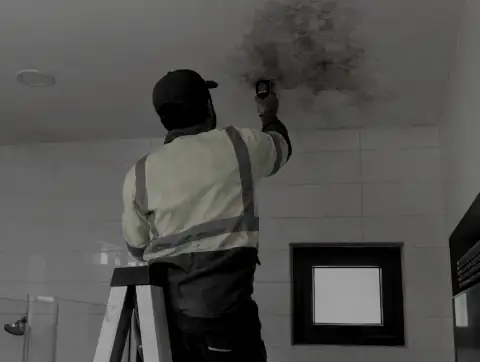
Bathroom ceiling leak detection in Juba District
Bathroom ceiling leak detection in Juba District starts with photos sent by call or WhatsApp. The district has villas, houses and small apartment blocks of different ages. The leak may come from an upper-floor bathroom, from pipes in walls or from weak joints.
Juba District has houses, villas and medium-sized apartment blocks of different ages and designs. The bathroom may be in older build with metal pipes corroded from inside, or in newer build but with joints that are not tight. Damp in the ceiling may come directly from a bathroom above, or water may have travelled through a wall cavity from far away. Sometimes the leak is from drain pipes under the tile that are old or poorly joined. Photos show where the damp is and we trace the water through the building to find the true source.
- Juba District is a residential area in the Eastern Province near Al Mirqab District, Ladhah District and Al Marbidia District.
- In buildings of mixed ages, old and new pipes may be joined with weak connections, a common source of slow leaks.
What we do for you in Juba District
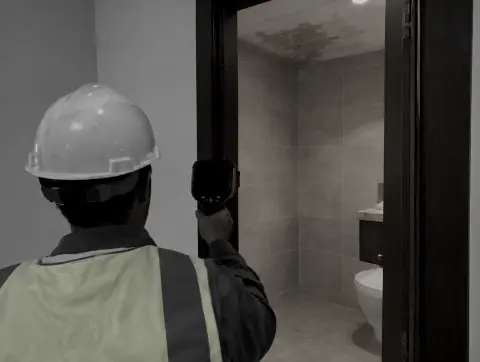
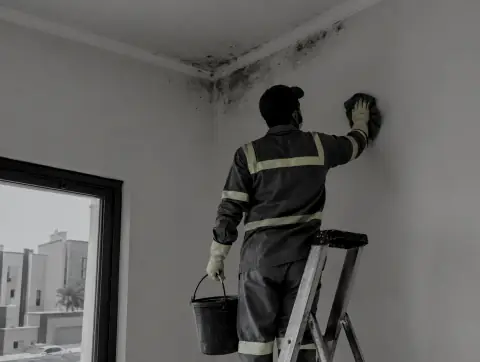
- Checking the stain on the ceiling and mapping its extent
- Checking for a pipe dripping inside the slab
- Identifying the source and explaining the right treatment for the case
- Holding water on the floor to tell surface waterproofing faults from pipe leaks
The stages of the work in Juba District
Send photos of the stain
On WhatsApp: a photo of the stain on the ceiling and a photo of the floor and drain of the bathroom above, so we can read the situation and set the starting point.
Check the bathroom floor above
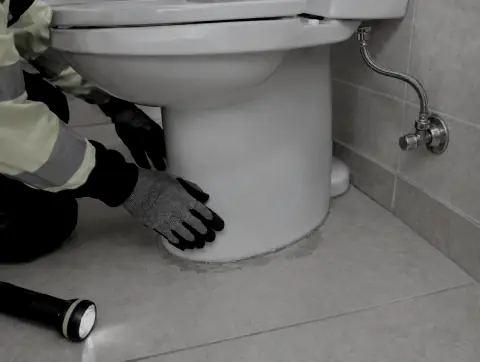
The floor is checked for cracks and blisters in the waterproofing, and the tiles around the drain and at the wall-to-floor corners are inspected, as most surface leaks start there.
Isolate the possible sources
Each source is isolated in turn: the drain opening is blocked temporarily and the ceiling watched, then the floor is held under water for a period, which shows whether the source is the drain, the floor itself or the pipes inside the slab.
Report the source and the right treatment
Once the source is found we explain what needs treatment and what kind, whether waterproofing, pipe repair or crack treatment, without going beyond what is needed.
Why Abraj Al Azl?
Protecting the slab from damageA leak that reaches the reinforcement starts to corrode it, and repairing the steel is far heavier work than fixing the waterproofing.
Your request from Juba District comes to usCall or WhatsApp on one number, and we answer you ourselves.
Juba District is in our service areaWe work there and across the Eastern Province, from our base in Al Uwaymiriyah, Hofuf.
Talk to us directlyCall or WhatsApp on the same number.
Some of our work

















What our customers said
ماشاء الله عملهم للعزل والتسريبات ممتاز وخبره ودقه في العمل انصح بالتعامل معهم موفقين يارب
أفضل شركة عزل اسطح الفوم وخزانات المياه
اتعاملت معاهم في العوازل عند كفيلي شغل يبيض الوجه انص التعامل معهم
Real Google reviews, shown exactly as their authors wrote them.
Your questions on bathroom ceiling leak detection in Juba District
When is a leak from the bathroom itself and not from above?
If the damp is confined to a small area near the plumbing location it may be the bathroom itself. Photos show the damp's shape and position, and we may need to inspect pipes under the tile or joints where water enters.
Do old metal pipes leak more than plastic ones?
Metals corrode from inside slowly, so they may leak even if not visibly broken. Plastic pipes are newer but their joints may be weak if not properly sealed. Each case depends on the pipes' age, installation and maintenance.
How do I request bathroom ceiling leak detection in Juba District?
Call us, or send clear photos of the spot and its location in Juba District on WhatsApp, and we will work out the next step with you.
How do I know the stain comes from the bathroom above and not something else?
If the stain appears or grows after the bathroom above is used and dries out later, the floor or the drain is the most likely source. If it stays wet regardless of use, a pipe inside the slab may be the cause. The photos and observations you send help us narrow down the possibilities before we arrive.
Does the tiling have to be broken to find the source?
Not always. Many surface leaks are found by visual inspection and by blocking the drain and holding water on the floor, without touching the tiles. Breaking is needed only when the tests point to a pipe inside the slab or a crack beneath the tiles that cannot be reached from above.
What is the difference between a leak that appears after use and one that is always there?
A leak that appears after use usually means surface water is finding a way through a fault in the waterproofing or around the drain. A permanent wet patch that never dries points to a pressure or drain pipe that is constantly dripping inside the slab. The detection method differs between the two types.
Areas near Juba District
If the site is outside Juba District, the same service is available in Al Mirqab District, Ladhah District and Al Marbidia District.
More services in Juba District